Ribble estuary
One of our favourite walks is from St Annes across the vast sands of the Ribble estuary to the deep-water channel. We check the tide times first. Essential. We don wellies. Essential.
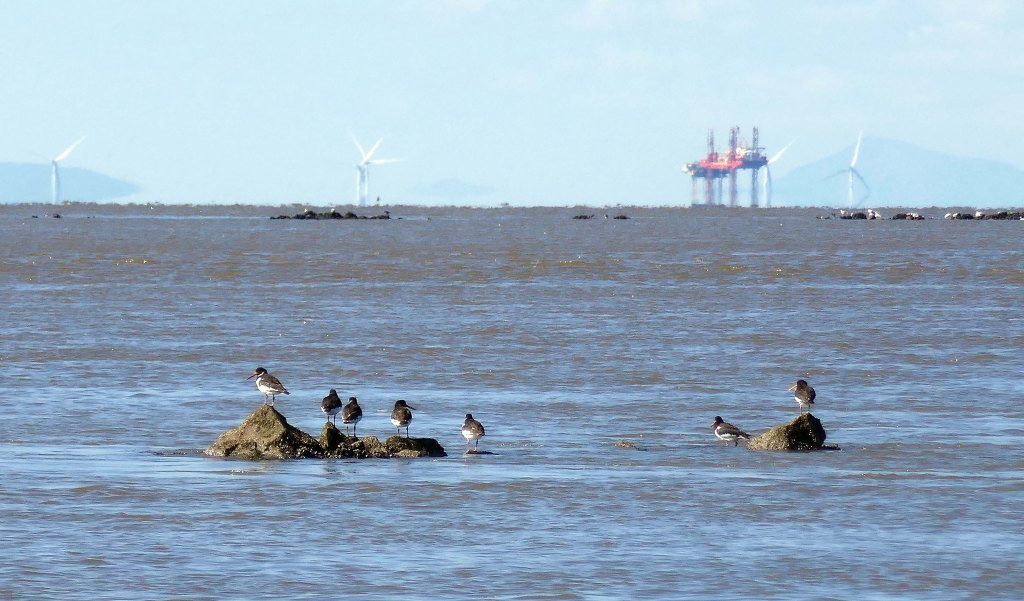
The views are stunning and the birdlife spectacular any time of the year. We’re getting much better at identifying those little grey waders that all look the same. We’ve seen redshanks, cormorants, eiders, pintails, curlews, oystercatchers, terns, peregrines, turnstones, sanderlings, knots and dunlins. See – getting better!
The Ribble estuary is one of the most important wetland sites in Britain with an average of 340,000 water birds over-wintering here. And it’s on our doorstep ready to explore.

Deep-water channel – Ribble Estuary
The River Ribble deep-water channel was constructed in the 1890s to improve navigation from the Port of Preston to the Irish Sea.

Lost beaches of Lytham and Fairhaven – Ribble Estuary
The Port of Preston closed in the 1980s and the river was no longer dredged. As a result, silt deposits ravaged the once-sandy beaches at Lytham and Fairhaven.
Today, spartina grass, rushes and reeds form a well-established clumpy marsh. A wonderful habitat for flowers, insects, birds and butterflies. Watery pools left by the tide create larders teeming with larvae and other small organisms, vital food for redshanks, curlews, shelducks, turnstones, godwits. Pipits, stonechats and linnets twitter in the reeds. Birds of prey hover overhead.
An established salt marsh absorbs carbon from the atmosphere. These boggy grasslands can only be a good thing – but they do need to be managed otherwise the art of sand-castle building will be lost forever.
Immersive art installation – Ribble Estuary
Those impressive River Ribble ironwork channel markers, seen from the promenade at Fairhaven and Lytham, resemble an immersive art installation dotted along the river.
The mussel and barnacle-clad north training wall, exposed at low tide, is a favourite haunt of noisy oystercatchers.



River Ribble – source to sea
The River Ribble starts as a little trickle near the Ribblehead Viaduct in Yorkshire. It continues its journey through Lancashire. Seventy-five miles later the River Ribble eventually gushes into the Irish Sea.
This 10-mile wide estuary with Southport on one side and Lytham on the other is a fantastic habitat for those 340,000 visiting birds. And it’s on our doorstep ready to explore.

Other Bea Pool Blogs you might enjoy…
While you’re here…
Have a look at the homepage of the Visit Fylde Coast website for more of the latest updates.
Love the Fylde Coast? Sign up for your weekly email newsletter. Packed full of interesting things it arrives in your inbox all 52 weeks of the year.
Join us on Facebook at our Visit Fylde Coast Facebook Group
Don’t forget to follow us on Twitter @visitFyldeCoast