


HM Coastguard & RNLI work together to save lives at sea. Here on the Fylde Coast, Fleetwood and Lytham Coastguards look after safety. There are RNLI stations at Lytham, St Annes, Blackpool and Fleetwood.
Did you know? HM Coastguard (HMCG) is the Only National 999 Service?
Around 5% of the UK population live near the coast. A large number of people are also unaware that HMCG is the only national 999 service and has no county boundaries. Every part of the service is the same, from kit to training.
- If you are in difficulty at or near the coast, dial 999 and ask for the Coastguard.
- They’ll be there and arrange for other services to attend
- HM Coastguard – To Search, To Rescue, To Save.

Dial 999 and ask for the Coastguard
If you ring 999 and ask for the Coastguard or set off a distress alert at sea, what happens next?
Your call is first connected to a Coastguard Officer at the Contact Centre at Holyhead (below). They’ll ask you a series of detailed and structured questions to establish exactly where you are what help you need.
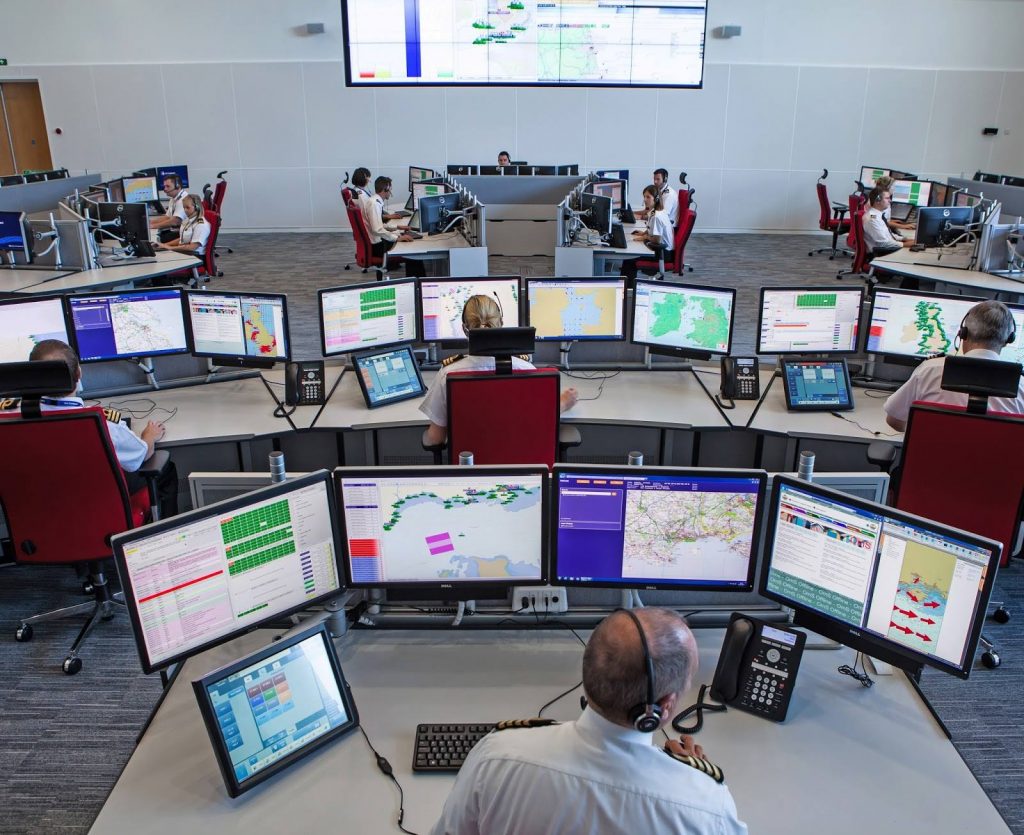
A lot of places in the UK have very similar, or even exactly the same name. So the Coastguard uses a highly detailed mapping system along with their questions to confirm your exact location. Then they send the right people with the right equipment to help you, using their search and rescue planning expertise.
- Among other things, Coastguard Rescue teams search for missing people or rescue people from coastal mud and cliffs.
- If you are on a lifeguarded beach the Coastguard will contact the lifeguard service.
- Or the RNLI lifeboat is despatched to help, if you’re in difficulty at sea.
- Or if you need urgent medical attention, or are missing at sea, one of the specialist search and rescue helicopters will be deployed.
Your Local RNLI Stations & Shops
Here on the Fylde Coast there are RNLI stations from north to south, each with the latest equipment. Most of the stations include RNLI shops. Call in and choose from the excellent range on sale – with all profits supporting the service.
Fleetwood Lifeboat shares the seafront station with HM Coastguard, at their base at The Esplanade.

Blackpool Lifeboat is based in the distinctive building on Central Promenade, opposite SEA LIFE Centre.

St Annes Lifeboat Station is at the outer promenade, close to the boating pool nearby The Island.

And not forgetting Lytham Lifeboat Station, near the Windmill at Lytham Green.

Look Around HM Coastguard & RNLI
Each year, the local lifeboat stations hold an open day. It’s always a day of fun for all of the family, with lots going on.
But it has a serious point too. Each open day enables the station to welcome in the public to see their work, spread the message about keeping safe on the beach, and raise vital funds.
You’ll find details about this years open days in the Visit Fylde Coast what’s on guide.
More about the Coastguard
Nationally, around 3500 volunteers staff HM Coastguard and they’re on call 365 days of the year. Together they operate 350 teams across the UK. Our local ones – Lytham and Fleetwood – are two of them. The centre at Holyhead organises their activity.
The Lytham team is based at St Annes and covers 40 miles of coast and river Ribble estuary, to Preston and Blackpool as far as the Gynn.
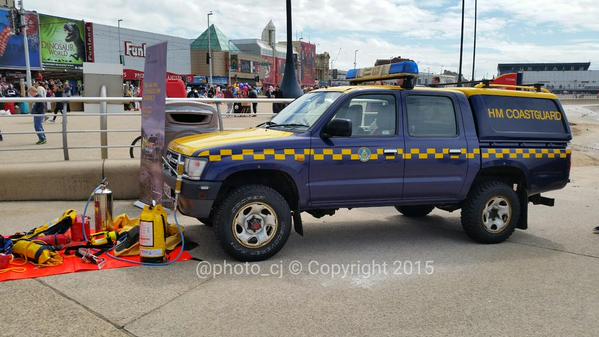
The Fleetwood Coastguard team share the lifeboat station on the Esplanade at Fleetwood with the RNLI. They cover the area from the Gynn heading north along the Cleveleys and Fleetwood coastline, the River Wyre and as far as Cartford. The two teams often work together.
- Above the high water mark, the Police are responsible for incidents.
- Below high water mark is the remit of the Coastguard.
- Obviously the Police and Coastguard will often work together.
- The Coastguard calls for the RNLI when incident takes place in the sea.
Coastguard teams train in search, water and mud rescue and regularly practice their skills. Training helps them to do things automatically in an emergency. All the Coastguard teams undergo exactly the same training, and they all use exactly the same kit. That way when they work together their interchangeable skills and equipment enable them to carry out a rescue seamlessly.
Every three years volunteers are requalified. Over time they progress in their training to become a technician who is the person who actually carries out a rescue on site.
…and Finally
If you spend much time on the beach, you’ll know the oddest of things can be washed ashore!
Every so often someone finds an incendiary device. Usually with much excitement, quickly followed by the arrival of the bomb squad! But do you know where they come from?
Apparently, fishermen were paid to dispose of old bombs at the end of the war. They were paid to take them far out to sea and drop them into the depths of Lune Deep. There they would be no trouble to anyone, or so they thought.
Unfortunately a lot of fishermen took a short-cut, because they were paid per trip. Some bombs didn’t quite make the safety of the depths, which is probably why every so often one washes back to shore.
Related content
- Beach safety
- Sandbanks and Tidal Pools
- Weather and Webcams
- How the weather affects the beach
- Weather tales from old wives!
While you’re here…
Have a look at the homepage of the Visit Fylde Coast website for more of the latest updates.
Love the Fylde Coast? Sign up for your weekly email newsletter. Packed full of interesting things it arrives in your inbox all 52 weeks of the year.
Join us on Facebook at our Visit Fylde Coast Facebook Group
Don’t forget to follow us on Twitter @visitFyldeCoast


