Discover the joys of beachcombing on the Fylde Coast. Find shells, sea glass and interesting treasures, with our guide to practical tips, beach safety advice and rules.
Beachcombing Guide: Rules, Tips, Treasures and Beach Etiquette
Have you ever wandered along the beach, looking down at the sand and shingle to see what the sea has washed up? Perhaps you’ve spotted a beautiful shell, an unusual piece of driftwood or a colourful piece of sea glass? If so, you’ve already discovered the simple pleasure of beachcombing!
Beachcombing is a lovely way to spend time outdoors. It’s free, suitable for all ages and gives you a completely different reason to explore the coastline. You never quite know what you’ll find, and that’s part of the fun.
Whether you’re exploring the beaches at Blackpool, Cleveleys, Fleetwood, St Annes or somewhere else along the Fylde Coast, here’s our guide to getting the most out of a beachcombing adventure.
Beachcombing Rules: The Coastal Protection Act – 1949
Created in 1949, the Coastal Protection Act amended the existing law relating to the protection of coasts in Great Britain. The Act aims to protect the coast from erosion, ie when the sea wears away at the land.
The Coast Protection Act also states that in the UK, it is unlawful to take any natural materials like sand and pebbles from the beach, no matter the amount. You can be at fault for taking just one pebble from the beach. This law is in place to protect the natural environment. It can be enforced by local councils and result in a fine of up to £1000.
You might see beaches around the UK with signs to explain these rules, but not here on the Fylde Coast. If caught, you may be forced to return all of these materials – and people have been.
Sea-glass is a man-made material (litter) so there is no law against taking it. You are free to take as much sea-glass from the beach as you wish.
Driftwood and seashells aren’t currently protected by law so you can collect and take them home. But please use your judgement. If your find is inhabited by animals or looks like an important part of the environment, leave it be.
What is beachcombing?
Beachcombing is the activity of searching along the beach for interesting things that have been washed ashore by the sea. It’s a bit like a seaside treasure hunt. You might discover shells, interesting pebbles, driftwood, sea glass, feathers, fossils or unusual natural objects.
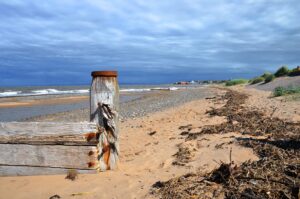
The best time to go is often after a high tide or a period of unsettled weather, when the waves have deposited fresh material along the tideline. Look carefully along the line of seaweed, shells and other debris left behind as the water retreats. You don’t need expensive equipment or specialist knowledge. Just a keen eye, a little patience and a willingness to explore!
What can you find beachcombing?
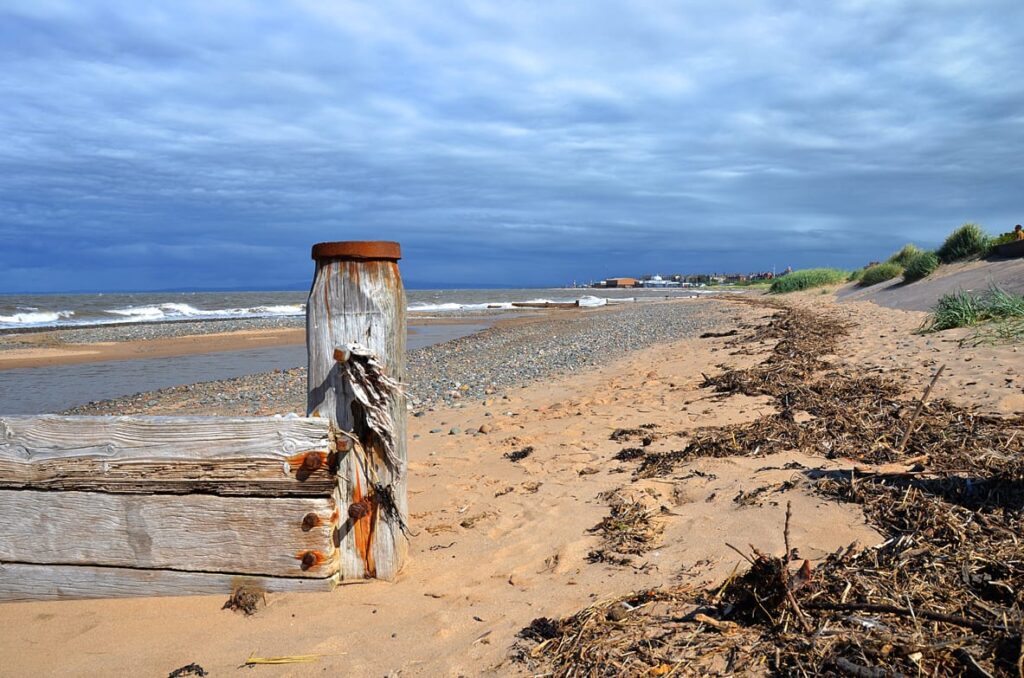
Every beach is different, and the things you discover will depend on the weather, tides, geology and type of coastline. Just here on the Fylde Coast, you’ll find better pickings at some beaches than others. The ones where the tide doesn’t come up to the wall are generally the best – like Fleetwood, Cleveleys and St Annes. Look out for a strandline, it’s where the high tide drops the things that it’s carrying. That’s going to be the most interesting place for beachcombing!
Here are some things to look out for:
Seashells
Shells are among the most popular beachcombing finds. Look for cockle shells, mussel shells, slipper limpets and other interesting shapes and patterns. Some may be beautifully coloured, while others have unusual textures.
Sea glass
Sea glass is one of the most exciting things to find. These are pieces of discarded glass which have been tumbled around by the sea, sand and stones until their sharp edges become smooth and frosted. Green, brown and clear glass are relatively common, while blue, turquoise and other unusual colours can be particularly exciting discoveries. More about sea glass and where to find it
Not all glass is treasure. If a piece isn’t quite ready, it’s best to leave it in the sea for a final tumbling. But if you find newly broken glass on a dry beach it’s a good idea to make it safe or visible in some way. Don’t bury it. It’s a good idea to put it in an empty can or bottle, if you can safely do so.
Interesting pebbles and stones
Look for unusual colours, patterns, shapes and textures. Some stones have beautiful natural markings, while others have been polished smooth by years of movement in the sea.
Driftwood
Pieces of wood washed ashore by the sea can have wonderful shapes and textures. Smaller pieces can make interesting photographic subjects or natural decorations.
Fossils
The Fylde Coast isn’t known for fossil finds, but if you’re lucky you might come across fossils or fossil-bearing stones. Always check local collecting restrictions. It’s not relevant here on the Fylde, but never try to remove fossils from cliffs. If you do discover a fossil that is of serious size or rarity, please report it to the scientific community. It provides the opportunity to study them and potentially find out new information.
Feathers and natural treasures
You might also find interesting feathers, seaweed and other natural materials. These are lovely things to photograph and learn about, but remember that some may be important to local wildlife.
The best time to go beachcombing
Although you can go beachcombing at any time, a little planning can improve your chances of finding something interesting.
- After high tide: Look along the tideline where the sea has deposited shells, seaweed and other material.
- After a storm: Stronger waves can bring interesting objects ashore, although you should avoid visiting during dangerous weather or rough seas.
- At low tide: More of the beach is exposed, giving you a larger area to explore.
- Early in the morning: You may find undisturbed areas of beach before the day’s visitors arrive.
Always check the local tide times before setting off. It’s a good idea to get a tide app for your phone or watch. Never venture too far across sandbanks or into areas where an incoming tide could cut you off.
Beachcombing rules and etiquette
Beachcombing should be enjoyable for everyone, but it’s important to remember that the beach is also a natural habitat for wildlife. A few simple rules will help you enjoy your discoveries without damaging the environment.
1. Leave wildlife alone
Never disturb birds, seals or other animals. If you spot wildlife resting on the beach, give it plenty of space. Government guidance recommends keeping at least 100 metres away from marine wildlife where possible. Never touch, chase, feed or attempt to move animals.
2. Take your litter home
If you bring food, drinks or packaging onto the beach, take everything away with you. Better still, pick up a little extra litter while you’re there, provided it’s safe to do so. Never handle sharp objects, chemicals, medical waste or anything suspicious. Report dangerous rubbish to the relevant local authority. Remember: Only leave footprints behind.
3. Be careful what you collect
It’s tempting to take home everything you find, but please be selective. Check local bylaws and any conservation restrictions before removing natural materials. Some beaches have special protections, and collecting may be restricted or prohibited. Avoid taking living shells, creatures, seaweed from sensitive habitats or anything that might be providing shelter for wildlife. Photographs are a wonderful way of recording your finds without removing them from their natural environment. If something is already dead, removing it from the beach shouldn’t be a problem. Just remember that any flesh will rot and smell!
4. Respect other beach users
Remember that beaches are shared spaces. Be considerate of families, dog walkers, anglers, horse riders and anyone else enjoying the coastline. Don’t spread your belongings across busy areas, and be mindful of other people’s space. Say hello and chat to other beachcombers – people are usually eager to share their discoveries with likeminded souls!
5. Don’t damage the beach
We don’t have them here on the Fylde, but never dig into cliffs. Things you should remember are not to disturb dunes or remove large quantities of stones and pebbles. These features are important parts of the coastal environment and provide habitats for wildlife. Dunes and beach material are especially important on the Fylde for the part they play as natural sea defences.
6. Follow local signs and restrictions
As different beaches have different rules it’s worth reading the official notices when you visit. Pay attention to notices about dogs, protected areas, access restrictions and other activities.
Beach safety – things to remember
A lovely day beachcombing can quickly become unpleasant if you don’t take a few precautions.
The most important thing is to understand the tides. The sea can come in surprisingly quickly, and channels and sandbanks can leave you cut off from the main beach.
Before you go:
- Check local tide times and plan your visit accordingly.
- Check the weather forecast.
- Take a fully charged mobile phone.
- Wear suitable footwear, particularly on rocky or uneven ground.
- Keep children within sight and away from the water’s edge.
- Stay well away from unstable cliffs and rockfalls.
- Avoid exploring slippery rocks and areas covered in seaweed.
- Tell someone where you’re going if you’re exploring a remote stretch of coastline.
If you see someone in difficulty in the water, call 999 and ask for the Coastguard. Don’t put yourself in danger by attempting a rescue.
What should you take beachcombing?
You really don’t need much, but a few essentials can make your day more comfortable.
- A small bag for carrying any permitted finds.
- A camera or smartphone for photographing interesting discoveries.
- A magnifying glass for examining tiny details.
- Comfortable footwear.
- Weather-appropriate clothing.
- Drinking water and a snack.
- Sun cream and a hat on sunny days. A raincoat and warm clothes for winter.
- A small rubbish bag for litter you can safely collect.
- A little notebook can also be useful if you want to record where you found particular items.
Make a day of it!
Beachcombing doesn’t have to be a quick stroll along the shoreline. Why not turn it into a proper family day out?
Challenge the children to find five different types of shells, the most unusual pebble or a piece of sea glass. Take photographs of your discoveries and see who can spot the most interesting things. You could even create a beachcombing photo diary, recording your finds throughout the year and noticing how the beach changes with the seasons.
Along the Fylde Coast, there are miles of coastline to explore, from the wide sandy beaches of Blackpool and Cleveleys to the beaches around Fleetwood and the expansive sands of St Annes. Every visit is different. The tides, weather and seasons continually change what you might discover.
Enjoy the simple pleasure of the seaside
One of the best things about beachcombing is that you don’t have to find anything particularly special to enjoy it. It’s about slowing down, getting some fresh air, spending time together and appreciating the natural world around you. You might come home with a beautiful piece of sea glass, a photograph of an unusual shell or simply some lovely memories of time spent beside the sea.
So next time you’re visiting the Fylde Coast, take a little time to look down as you walk along the beach. You never know what treasures the tide might have left behind! Happy beachcombing!
While you’re here…
Go to the homepage of the Visit Fylde Coast website for the latest updates.
Love the Fylde Coast? Sign up for your email newsletter. Packed full of interesting things it arrives in your inbox all 52 weeks of the year.
👉Join us on Facebook at our Visit Fylde Coast Facebook Group. Plus hundreds of videos to watch on our YouTube channel – from all over the Fylde Coast!
📣JOIN our new VFC WhatsApp Channel for what’s happening, interesting local information, history, communities, events and much more.
Booking a stay? Pick a safe, clean and legal place to stay, at the very best price. Book using the Visit Fylde Coast Accommodation guide.