


Want to try somewhere different for your next seaside staycation? Booking your next holiday can be a minefield, especially as the Fylde Coast offers a quality establishment to suit every pocket. We’ve done some research and put together some tips for understanding hotel reviews, star ratings and accreditation.
- Understanding Hotel Reviews, Star Ratings and Accreditation
- 1. Look for Official Accreditation and Star Ratings
- 2. Look at the Hygiene Rating
- 3. Read the Reviews
- 4. Where TripAdvisor (and others) Fit In
- 5. Consumer Rights when Holidays go Wrong
- 6. Don't fall for a Holiday Scam
- The difference between a hotel and guest accommodation – important when understanding Hotel Reviews and Star Ratings
- Looking for somewhere to stay?
- While you’re here…
Understanding Hotel Reviews, Star Ratings and Accreditation
In the ‘olden days’ it was much simpler to understand whether holiday accommodation was any good. AA and VisitEngland/Britain were the plaques you’d usually see at the front door, with a variety of stars. Accreditations and star ratings were easy to follow – and they helped you to understand what to expect.
Then along came the internet and everything went topsy-turvy. Accommodation providers started to drift away from the traditional accreditation and star rating systems, relying instead on online reviews. TripAdvisor, Facebook and Google reviews have gradually become the norm.
But now we know that online reviews aren’t a perfect, or always fair, science. It’s not uncommon for people to write poor ‘revenge reviews’ to get their own back after a clash with an owner – or maybe even a bit of business sabotage!
So if you’re a punter looking for a great place to stay, just how do you make sense of it all?
1. Look for Official Accreditation and Star Ratings
It’s still the best place to begin when you’re trying to understand hotel reviews and star ratings. Why? Because official accreditation takes a lot of effort and a fair amount of money to achieve. Which means that it’s only going to be secured by the businesses who are serious and care about what they do.
VisitEngland
This is the official, government funded tourism organisation here in the UK. They operate an accreditation system for all different types of accommodation and tourism providers – from visitor attractions to glamping sites! Star ratings are awarded based on the quality of facilities, services and hospitality. These providers undergo annual assessments.
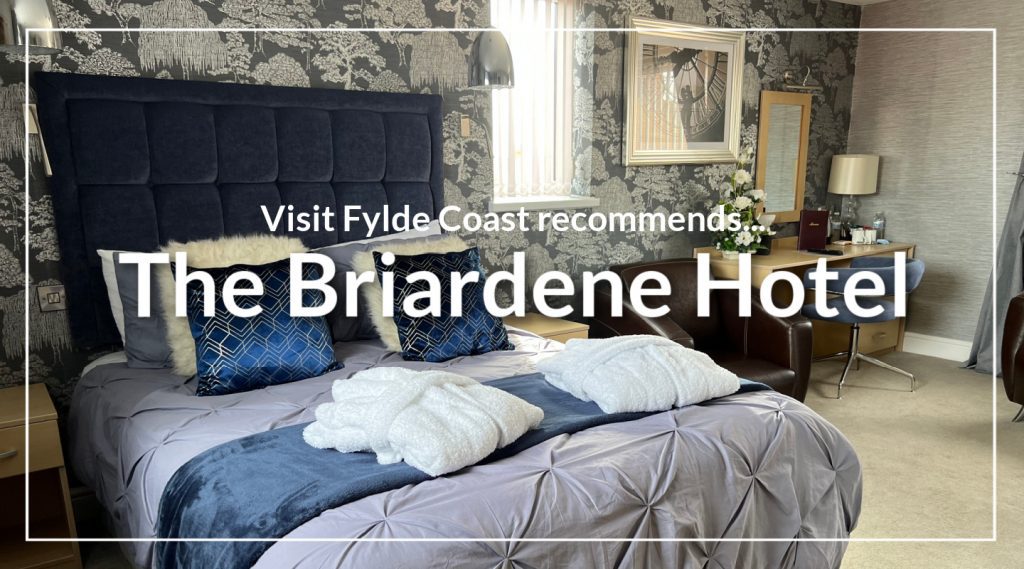
Did you know? The Briardene Hotel is the only small three star Visit England accredited hotel in Blackpool?
(And there are only three more large ones!)

AA
The AA has been recognising accommodation since 1908 and first introduced the star rating scheme in 1912, recognising and rewarding establishments for the quality and range of their services and facilities. In collaboration with VisitEngland, VisitScotland, VisitWales and the Northern Ireland Tourist Board, they have developed Common Quality Standards for inspecting and rating hotels, guest accommodation and self-catering properties.
Meeting the Standards
From a five star Visit England at the top end of the scale, all of these establishments have put money and effort into their business.
First of all they’ve spent time and money in complying with the requirements placed upon an accommodation provider. Their compliance is a long list which includes health and safety, fire safety, insurance, licenses to operate TVs and play music and much more.
Star ratings require certain standards of hospitality and welcome, cleanliness, facilities, guest provision. It’s all checked and assessed which is a time consuming and costly process. Accreditation is a badge of honour which providers proudly wear.
But not all Official Accreditation is Equal…
Bear in mind when you’re looking at accreditation that different rating systems operate in parallel to each other.
- Self Catering: properties with their own kitchen and bathroom facilities, usually booked by the week.
- Guest Accommodation: is for less formal places to stay without full service, including bed and breakfast, guest houses and inns.
- Hotel: formal accommodation with full service – if ‘Hotel’ is in the name this is the category it should be assessed under. The criteria is more strict, it’s a tougher rating to get and the application process is more expensive.
To achieve a star rating, hotels are marked on a full range of features, from friendliness to bathrooms. Including an overnight visit from an assessor and rigorous inspection. That’s after complying with 50-pages of Hotel Standards – including everything from bedside water glasses to advertising standards!
2. Look at the Hygiene Rating
Staying in a property which offers breakfast/meals/food? Take a look at the latest food hygiene rating. Find it easily by Googling the name of the property/food hygiene rating.
3. Read the Reviews
Now go hunting for the online reviews! There are probably three places that you’d want to look – TripAdvisor, Google and Facebook.
- TripAdvisor lists and rates pretty much everything, everywhere.
- All businesses should be located on Google maps. This is accompanied with a ‘knowledge panel’ the information box that appears on Google when you search for entities (people, places, organisations, things). And that box should also include reviews from users just like you.
- A Facebook search is a good acid test. Not all accommodation owners are comfortable with or have time for social media. But if you just do a general search in the Facebook search bar you’ll find out what other people have posted, anywhere on the platform.
4. Where TripAdvisor (and others) Fit In
VisitEngland, AA Stars, or any other official accreditation means a property has been inspected. It provides proof that it meets relevant laws and rules, with at least minimum standards. Including fire, health and safety, maintains proper cleanliness and is a properly run business.
Platforms like TripAdvisor complement official accreditation in that reviews on these sites are purely about the guest experience.
The two together give a prospective guest an excellent picture of a property and what to expect.
BUT currently there isn’t one site that combines both.
The best thing to do is to find a prospective property from any source. Then ensure it has some form of official accreditation i.e. VisitEngland or AA Stars. Next, look at the reviews on a different platform like TripAdvisor. Only then do you get the whole picture.
It’s also worth mentioning that platforms like Booking.com may give properties a rating, but it may not be official! Many of these booking platforms allow a property to rate itself! Always check the rating to see if it’s official. You can usually do this by looking at the property’s own website. Acquiring accreditation is quite a big financial commitment and takes a lot of work and effort. It means the logos will be clearly displayed because it’s something to shout about.
Looking for somewhere to stay?
Book your stay with the Visit Fylde Coast accommodation guide and know that you’ll have a great place to stay.
Bookings via Visit Fylde Coast are zero commission. This means that more of the money from your booking helps to support the local economy.
[sv_search_form]
5. Consumer Rights when Holidays go Wrong
You’ve done your homework and your holiday has arrived. You did your best when understanding Hotel Reviews and Star Ratings but it still wasn’t what you expected. Here’s some Consumer Rights Advice Advice from the Trading Standards team at Blackpool Council, regarding how to complain about not-so-lovely hotels.
“The Consumer Rights Act 2015 states that ‘a service should be delivered with reasonable care and skill’. So if a hotel fails to provide a service that a reasonable person would expect, and the consumer makes a complaint at the time, (time must be given to allow the poor service to be remedied)
and the service does not improve, a consumer has a right to a full or partial refund for the resultant breach of contract.”
From that statement the individual must report their issues to a member of staff. Keep a record of who (a name would be great) you spoke to, the time and date. For your own record you should take pictures. Make a written note of the details of your complaint, while it’s still fresh in your mind.
Give staff a suitable length of time to remedy your issues. As stated, if no action has been taken, you have a legal right to either a full or partial refund even where the booking is a non-refundable one. If booked through an Online Travel Agent (OTA) you must notify them, again recording who you spoke to and when. You still need to give time for a remedy to be achieved. But if you haven’t yet received a refund the OTA should be responsible for resolving it.
Sharing your Experience
You have a right to share your experience on review sites and might consider sharing on the social media pages of the OTA’s. Especially if the OTA lets you down as well.
You can also complain to Visit Blackpool and Trading Standards. However if complaining to Trading Standards it’s your home town council team that should be taking up the case. Your best chance of getting a favourable result is when you can produce photographic and written evidence.
Where payment has been made using a credit card “Section 75 of the Consumer Credit Act 1974” applies. This puts the liability of a breach of contract on the credit card company, as well as the accommodation supplier for contracts costing over £100. Under UK law the time limit to make a civil claim is 6 years but this does not mean that you can make a claim for poor service years after the breach. Any claim must be made within a reasonable time. BUT, even though the amount of the purchase must be over £100, the amount paid with a credit card can be as little as 1p. This means that with documented and photographic evidence as suggested, you have the right to pursue the credit card company for the refund of your money
6. Don’t fall for a Holiday Scam
To help save you from losing your holiday and your money, Get Safe Online website has put together some expert tips on safely searching and booking holidays and travel with confidence.
- Thoroughly research your package holiday, flight, accommodation, cruise, pilgrimage or other break/travel to make sure it’s authentic.
- Be wary of unusually cheap holidays/flights or high deposits.
- Check that accommodation actually exists by finding it on Google Maps and looking for independent reviews and recommendations. Make sure there’s a phone number. Then call the owner/agent directly to find out if the person you’re booking the holiday with is authorised to sell it to you. If the number isn’t provided, email and request it. Ask questions to see if they have knowledge of the area.
- Check reviews on TripAdvisor or similar sites.
- If you’re booking accommodation via Airbnb, always keep communications and payment on the Airbnb platform. Don’t be tempted away from the proper website – it may indicate an attempt at fraud. You can find online safety advice at www.airbnb.co.uk
Careful how you pay…
- Never pay by bank transfer to a company or person you haven’t had personal experience of buying from previously. If it’s a fraud, you may never get your money back. Paying by credit card means more chance of getting your money back if something goes wrong.
- Check that travel agents and tour operators you book holidays and travel through are members of trade associations such as ABTA or ATOL, by checking on these bodies’ websites.
- Enter the address of the website you plan to book a holiday through, at www.getsafeonline.org/checkawebsite to check if it is likely to be legitimate or fraudulent.
- Check terms and conditions prior to making any payment.
- Before paying online or providing any confidential details, type in the website address you know to be correct (instead of following a link) and ensure the payment page is secure (begins with ‘https’ and has a locked padlock in the browser window frame).
- Keep confirmations and payment receipts, and check bank / credit card statements for irregular entries.
- If you lose money to fraud, always report it immediately to your bank. This will increase your chance of getting your money back and tracing the fraudster. Also report it to Action Fraud, the UK’s national fraud and cybercrime reporting centre, on 0300 123 20 40 or at www.actionfraud.police.uk. In Scotland, report fraud to Police Scotland by calling 101.
The difference between a hotel and guest accommodation – important when understanding Hotel Reviews and Star Ratings
It’s another minefield trying to understand what all the different terms and names mean when you’re booking a holiday! Here’s a guide:
- Hotel: Formal accommodation with full service. Minimum six guest bedrooms but more likely in excess of 20, be licensed and offer dinner. Also all bedrooms must be ensuite or have a private bathroom.
- Guest Accommodation: Any establishment that meets the minimum entry requirements is eligible for this general sub category. Guest Accommodation properties are likely to be smaller than hotels with perhaps more of a family home feel and approach, and a less structured service.
- B&B: Accommodation provided in a private house, run by the owner and with no more than six paying guests.
- Guest House: Accommodation provided for more than six paying guests and run on a more commercial basis than a B&B. Usually more services, for example dinner, provided by staff as well as the owner.
- Restaurant with Rooms: Destination restaurant offering overnight accommodation with the restaurant being the main business and open to non-residents. The restaurant should offer a high standard of food and restaurant service at least five nights a week and have a liquor licence. The property may have no more than a maximum of 12 bedrooms.
While you’re here…
Go to the homepage of the Visit Fylde Coast website for the latest updates.
Love the Fylde Coast? Sign up for your email newsletter. Packed full of interesting things it arrives in your inbox all 52 weeks of the year.
👉Join us on Facebook at our Visit Fylde Coast Facebook Group. Plus hundreds of videos to watch on our YouTube channel – from all over the Fylde Coast!
📣JOIN our new VFC WhatsApp Channel for what’s happening, interesting local information, history, communities, events and much more.
Booking a stay? Pick a safe, clean and legal place to stay, at the very best price. Book using the Visit Fylde Coast Accommodation guide.


