


Buying a house at the coast can present you with all kinds of problems that you’d never experience inland. This isn’t intended to be a technically perfect guide to seaside house maintenance, more a practical look at some of the things you might need to do. Having lived across the road from the sea for more than 20 years, here at Visit Fylde Coast we’re reasonably qualified to know what we’re talking about!
Seaside House Maintenance
The first thing to say is never underestimate the effect of the weather at the seaside, and just how it knocks the living daylights out of your property!
With this in mind, it makes sense to take some steps to weatherproof your house when you carry out repairs or new building work. It will reduce the frequency with which you need to do routine maintenance. It might fly in the face of normal building convention, but it will save you time, effort and money in the long run. In no particular order:
Sand
It gets everywhere, and I mean everywhere. If you’re suffering from damp patches inside and you can’t understand why, there’s likely to be a build-up of sand in the cavity. It blows in through the air bricks and collects above the damp course, breaching it and allowing water to gradually seep from outside to inside.
The remedy is a slow and painstaking one. You need to take out one external brick at a time, just above the damp course, and then broddle all the sand out from inside the cavity. Work your way around the house, one brick at a time, taking out every other few bricks so that you get all the sand out. There aren’t any specialist tools for this job, you have to make your own from bits of wire and adapted gadgets. We even ended up using an old hoover!
It’s not a bad idea to have cavity wall insulation after you’ve done this. It will not only reduce your energy bills, but also stop sand from blowing back in again.
You can also expect to get a build up of sand in external drains around your house, which can block them. You might need rods to get them cleared, or sometimes jetting them down with a jet wash will do the trick. It will also build up in your gutters, so you’ll need to keep an eye on them too.
Sandblasting
Still with the sand, strong winds blow it everywhere and with quite some force. It might not be as strong as proper sandblasting equipment, but over time the effect is the same – everything gets a gentle sandblasting. This means that anything which is less than robust will wear, so your external finishes need to be strong enough to withstand it.
uPVC might not be everyone’s dream choice for windows and doors, but the closer to the seafront that you are, the more practical it becomes. Anything which is varnished will need yearly maintenance as the varnish will come off. That’s fine if you are prepared to do the work!
Powder coating is another finish which will often be recommended. It’s not a great idea – most companies will tell you when pushed that the surface paint will come off after a few years. You’ll probably find them very reluctant to provide a guarantee. If you do have anything powder coated, make sure that the base metal is one which won’t rust. Also that it’s been treated to prevent corrosion – and try to get a good guarantee on the product too.
Pointing
Another victim of sandblasting. It’s the weakest part of your brick walls and the constant action of the weather will wear it away – usually in patches. If you know anything about physics you’ll know that wind blows with more force through small gaps. So mortar joints behind drain pipes and such like are particularly prone to erosion.
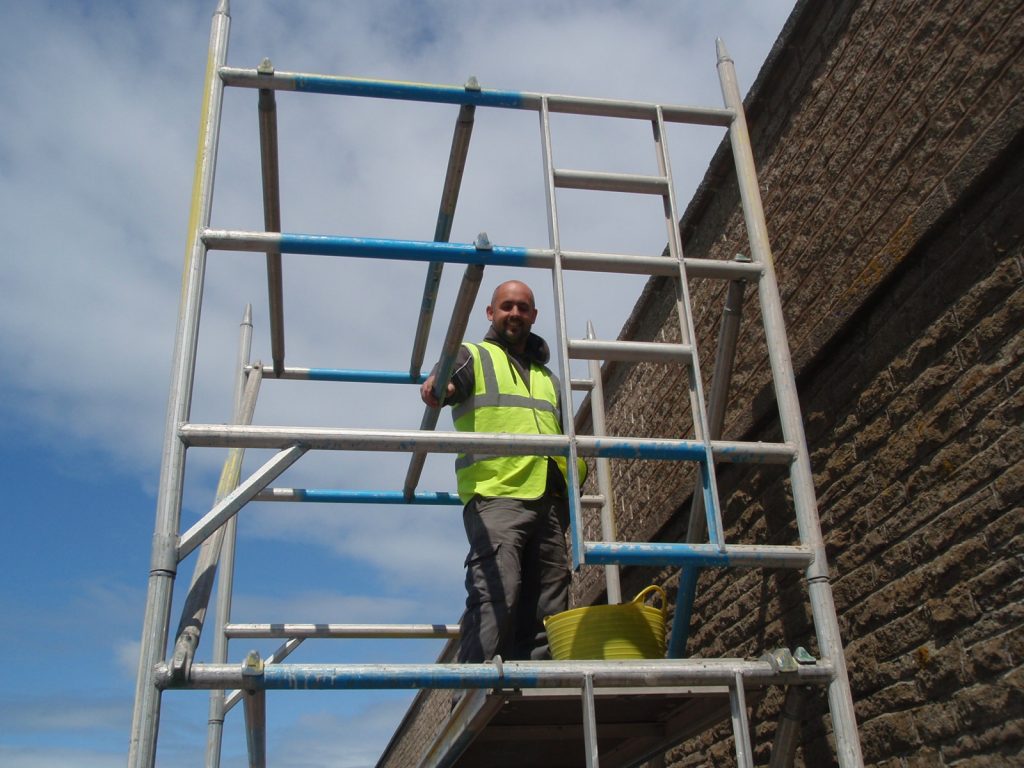
Ideally, if you’re skilled enough, repoint your house yourself then you know you’ve done it thoroughly. That’s not always possible. So try to get someone who comes recommended, and whose work has been proven to last in seaside conditions.
Make sure that the old pointing is raked out to quite a depth. It’s likely that there’s erosion to your pointing on the inside face of the wall in the cavity, so the more that can be raked out from outside and replaced with new, the more stable your wall will remain.
Strong pointing mix
If you were pointing a wall somewhere inland you’d use quite a sandy mix. That’s easier to rake out again when it needs redoing 20 years later. If you use a sandy mix here it will be blown out inside five years and need doing again. In coastal areas you’ll need a much stronger mix of up to 3 parts sand to one part cement. Many builders may grumble at doing this, but the choice is yours! And if you employ someone to do the task, keep an eye on them and make sure they are doing it as you wish. It will take a bit longer and cost a little more, but it will save you from doing it all again in a few years time.
Once your whole house has been repointed, it’s much easier to patch point and keep up with little bits as they come out each year. It’s also less expensive than doing a complete re-point further down the line. Make it an annual job to get the ladders out and do a little bit – a stitch in time save nine as they say. There’s often no rhyme or reason to the areas that need redoing first.
Balconies and Window Frames
It’s a lovely thing, having a balcony on your coastal house. They’re common on the coast and many houses have them, even those further inland than the seafront. When you’re building yours make sure it’s an asset – not a seaside house maintenance nightmare!
The important thing is to make sure it’s strong enough. That is, physically strong enough to stand up! Depending on how wide your balcony is and how much strain the longest sections will take, you might be advised to erect a steel frame first. Your balcony can be made of a number of materials, to suit your taste. The same issues apply to balcony frames, in that they will need maintenance depending on the material which you use to build it. Some materials will wear better than others.
Expect to frequently repaint a wooden balcony, which might not be funny if you use spindles or similar. If your spindles are metal then you might be better off with galvanised (more about that later). Stainless steel is prone to losing it’s good looks after a couple of years and is far from perfect. Again, uPVC is a good choice if you want something that will continue to look good over time.
uPVC Window Frames
These might be the environmentalists nightmare, but in the long run they must surely be a better option in this context. Although they’ll keep your house warm and be much easier to look after, they will need frequent cleaning if you want they to stay white. Or the colour they were when installed.
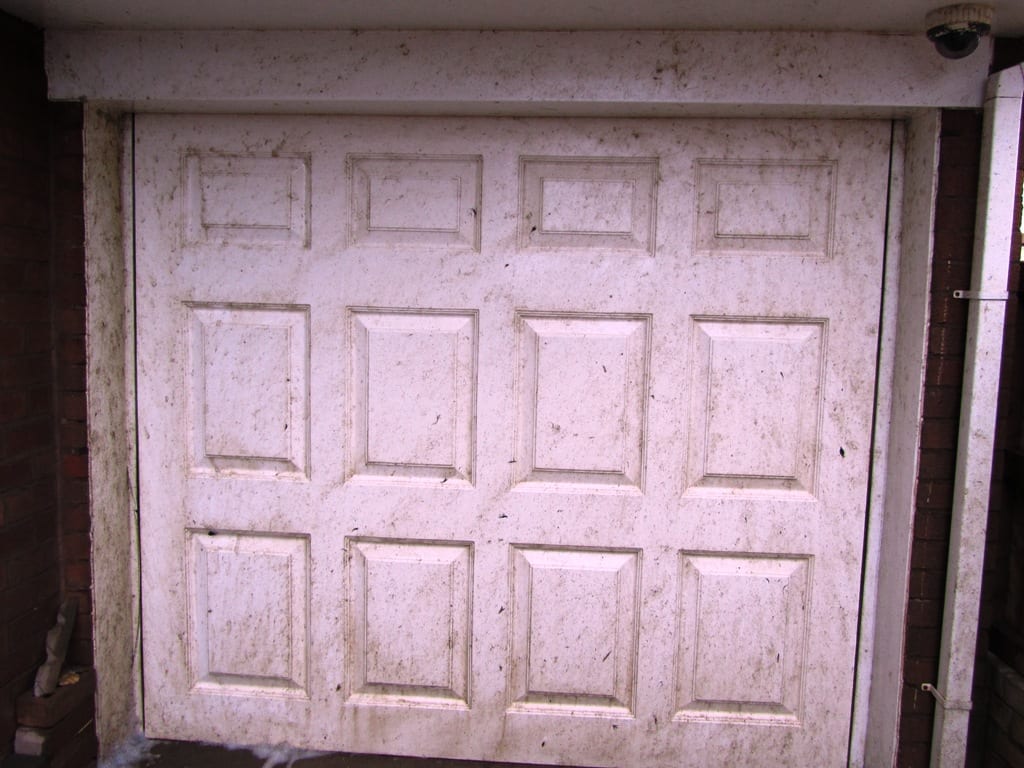
Warm soapy water is excellent at cleaning off the salty, sandy residue that you’ve seen in the first photo on this page. Followed by a spray of clean water from the hosepipe. Left untouched, the salty, sandy residue will turn your white uPVC an unpleasant, stained shade of peachy/sandy coloured!
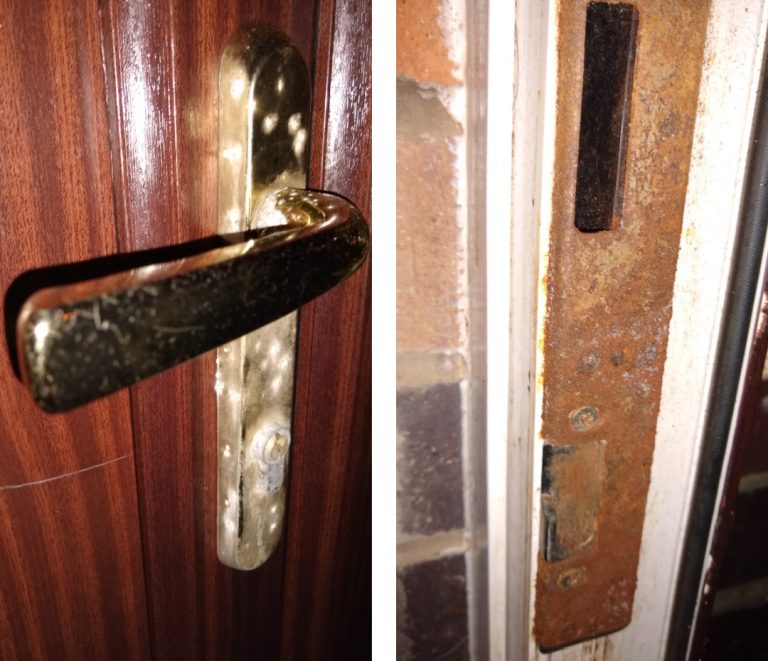
Ian got in touch after reading this article. He says “upvc doors are great if kept clean although the mechanism tends to rust if not sprayed regularly. I use WD-40 or paint with Waxoyl car treatment. I’ve even treated the Sky dish and fixing brackets!”
Rust
What can we say. Anything made of iron that’s exposed to the sea air will rust, so make sure you don’t use it anywhere visible that matters. Or your seaside house maintenance will get a whole lot harder!
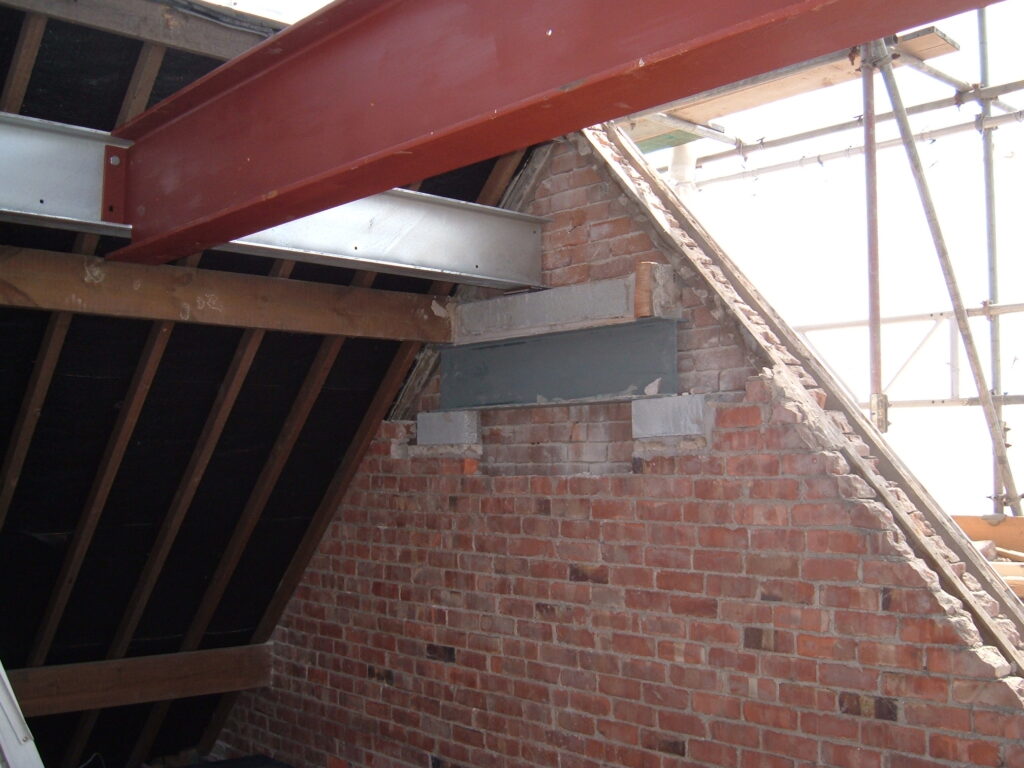
Any girders/RSJ’s/steel joists that you have inside the frame of your house need to be painted with red lead or galvanised. Or they will fail as the damp salty air blows through the structure of your house over the years.
Always use stainless steel or galvanised screws and nails, especially in the fitting of double glazing, cladding, barge boards etc. Or you will end up with tell-tale orange streaks running down them which you won’t be able to clean off.
If you’re buying new garden or drive gates, always buy galvanised ones or suffer the consequences! Painting them isn’t a good idea as (you guessed it) the paint will come off. If you must insist on painting them, wait for 6 months after fitting so that the galvanising can develop a rough bloom. That’s the key for the paint to stick to – but you can still expect to repaint them every so often!
Salty damp air will also rust the things you might not expect, like the springs on your garage door. You should paint them with red lead and check them from time to time to make sure that they are in good condition. We didn’t and quickly had to replace ours. Keep an eye on the mechanism and locks, and also oil the locks and handles on all your doors and windows. They will often cease up, especially the ones that you use infrequently.
Roofs
Should come with a government health warning at the coast! It’s unlikely that you’ll get away without any roof problems over the years, as odd tiles fall off, ridge tiles come loose and barge boards detach. On the highest point of the house and exposed to gusts of up to 80mph in severe storms there’s no wonder. But there are some things you can do to limit the problems.
First of all, make sure that a majority of the tiles are nailed on, rather than an odd one which would typically be nailed on a normal roof. Where you’ve got bits of tiled roof on overhangs or similar, make sure that each one is nailed on. Large concrete roof tiles are heavier and less likely to move about in a wind. But always take advice about whether your roof structure is strong enough for their weight if you choose to re-roof with them.
Roof Edging
Single strip plastic edge is an excellent choice for the edges of eaves, rather than the individual pieces which overlap. These stop the wind from blowing underneath and hold all the tiles safely in place and stop the wind from lifting them up.
Ridge tiles need to be filled with concrete on the underside to stick them on securely, not just dabbed along the edge with a huge void underneath. That way they will be far more prone to coming off in high winds. If you’re having repair work done to the ridge tiles always ask for them to be taken off and re-seated for a longer lasting job, rather than just re-pointing the joints. Keep an eye on them while they’re doing the work too.
Seaside House Maintenance – in the Garden
Fences and Boundary Walls
The wind plays havoc with most things at the coast, including your garden fence.
If you’re in an exposed position it would pay you to have concrete fence posts and base panels, with a strong quality of wooden fence for the infill. Hit and miss panels are also a good option for exposed places, or head on to the wind.
If you buy a cheap wooden fence and instal it in an windy place it won’t last for very long at all. If you are in a very exposed spot it might pay you to use concrete sections for the whole fence.
Algae and cleaning
You should expect to carry our regular seaside house maintenance if you want your property to keep its good looks.
One of the culprits for creating work is the layer of algae and grime that settles on walls and paving by the sea. Over time it turns everything black and dirty. It can easily be removed with jet washing to make things look pristine once again.
The rotating heads that you can get to attach to a jet wash are excellent. They quickly allow you to remove the dirt without getting drowned from head to foot with spray and muck.
Flooding and Waterlogging
We’re lucky here on the Fylde Coast. Huge investment has gone into sea defences, so the area is protected to quite a high standard.
However, no amount of investment would ever fully protect a coastal area from all kinds of flooding. It’s important to make your property resilient and help yourself as much as you can. Be ready to minimise the worst case scenario should any flooding occur.
In low-lying coastal areas like the Fylde, flooding is more likely to happen because of heavy rainfall. Why flooding happens is complex – there’s more advice about it here.
In your garden – make your plot as absorbent to as much water as possible. Solid floors across your garden (concrete, paving flags etc) might seem like an attractive option if you don’t like gardening. But it’s asking for trouble in wet weather. Lawns are a much better option, and you can even get absorbent tarmac for drives.
Seaside Gardening
You’ll also need to be careful about what you plant and where. The harsh, salt laden winds will burn any tender plants. Waterlogged soil will kill off the roots of most normal plants – so don’t plant them in boggy areas.
Don’t let all this put you off from living at the seaside
A little bit of knowledge can help you to ‘seaside proof’ your house, making ongoing maintenance easier in the future. It’s not that it’s impossible to live by the coast – you just have to do things differently. You won’t be able to fight against the weather and win!
Take the environment into account when you make changes to your property. That way you can reduce a lot of the ongoing tasks to not much more than cleaning.
And then you can enjoy your dream life by the sea!
While you’re here…
Have a look at the homepage of the Visit Fylde Coast website for more of the latest updates.
Love the Fylde Coast? Sign up for your weekly email newsletter. Packed full of interesting things it arrives in your inbox all 52 weeks of the year.
Join us on Facebook at our Visit Fylde Coast Facebook Group
Don’t forget to follow us on Twitter @visitFyldeCoast


