Have you ever thought about making compost from your garden waste? It’s a great way to recycle plant matter back into the ground and keep your garden blooming! The barrow full above isn’t quite ready – but it’s well on the way to becoming compost.
During the coronavirus pandemic of 2020, green bin collections were suspended for many residents. It made us think about what we cut down each year, and what we do with it without a waste collection.
Making Compost
Here at Visit Fylde Coast we quickly realised that our lazy ways would have to end! While we haven’t got an enormous garden, our little patch is heavily planted and we do make a fair amount of garden waste. Without our green bin to put it in we’ve gone back to making compost. It’s something that we’ve done a lot of in the past.
There are lots of different ways you can do it. But if you lack patience – and space – like us, then you’ll probably like our way.
Making Compost with the help of a Garden Shredder
I’ve got a very old garden shredder, we think it must be easily 25 years old. It was bought from B&Q – one of their own brand garden tools.
If you’re a regular reader of Chrissie’s Blogs you might remember her writing about the fun and games that we had with it. Kevin had a mighty struggle trying to get the shredder going again, but in the end he succeeded!
So now we’re back in business and can get back to making compost. Here’s how we do it:
Shred
The branches and stems go through the hole in the top of the machine. The blades inside it chop them down into small bits, which come out of the bottom for you to collect in a bucket or box.

Shredders come in different sizes and power ratings. For what was a cheaper one, ours is quite powerful and chops branches quite easily that are about as thick as your thumb.
With stems like roses, shrubs and trees you’ll need to chop the side branches off and shred those separately.
Tip: Don’t try to shred anything with long, fibrous leaves or stems. Things like leaves of phormium or cordylines, or crocosmia. These plants have long strands running along the length of the leaf and they twirl around the mechanism in the shredder and jam it.
You can find garden tools similar to ours on the Visit Fylde Coast Amazon Storefront here. It’s in the Home & Garden list. By following these links to make a purchase we will earn an affiliate commission. It all helps us to keep producing the great content that you enjoy.
Mix
It’s best to mix up the type of material that you’re shredding, because the choppings will decompose more easily. Try to mix woody stem clippings with soft stems from perennials and such like.
Lawn clippings are best mixed into your shreddings. Try not to add them in big clumps as they will ferment and go slimy. It’s a few days since this mown grass was collected and it’s already started to ‘clod’. I just crumbled the clods up into the shredding mix.

I’ve also used grass clippings as mulch in the past. Best to put it onto wet/damp soil and it keeps the moisture in, then decomposing to feed the plants. The only problem is you also tend to get bits of grass growing in your borders too – so you’ll need to keep an eye on it. But it’s ideal at the back of a dry border, especially under hedges etc.
Sack
Tip your compost mixture into some old, heavy duty plastic garden sacks. Don’t compact it too much. Depending on how dry your mixture is you could also add a spot of water to moisten it.

Then fold the top of the sack over to stop rainwater from getting into it. Put a stone or something heavy on top to keep it closed.
Mix Again
Depending on how much time, space, patience and energy you’ve got, you could tip your bags of shreddings out every few weeks to mix them. That’s what we’d done here –

Just tip your decomposing mix out into a wheelbarrow or onto a board. Give it a turn with a garden fork and then bag it back up.
Doing this will mix the bits that are decomposing and dry, aerate it, and speed up composting. In the warmth of summer we’ve had sacks go from shreddings to mulch in as little as six weeks.
Store
We’ve all got one of those ‘messy corners’ in the garden. The out of sight bit where we stash bits and bobs, plant pots, bricks and rubbish!
All you need to do now is store your sack/s in your messy corner and forget about them.
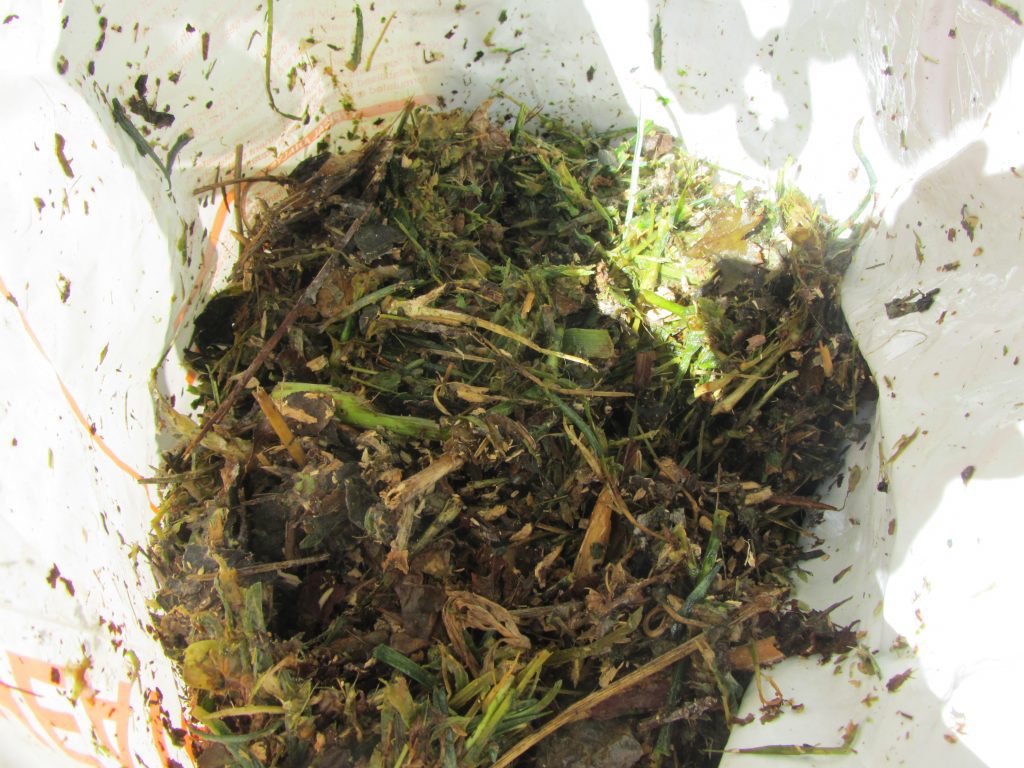
Your home made compost should be ready in a few weeks to months, depending on the time of year when you make it. It’s definitely quicker in the warmer weather.
Other Ways of Making Compost
Of course the traditional way of making compost is to have a compost heap.
Compost Heap
You’d usually have two bins, made out of old wood or pallets, with air gaps around the side. Traditionally you would fill one bin with garden waste. When it’s full you fork it into the empty bin to mix and turn it. While it decomposes you fill the other, now empty bin.

We tried this where we lived before, where we had a really big garden. For us it was a disaster! Left in solid pieces the green waste broke down very slowly and we ended up with mice living in the pile (can you blame them).
I tried compost accelerator granules. And even tried adding fresh wee to the heap (which is of course a great compost accelerator). In the end I abandoned it and went back to using my garden shredder!
Wormery
Another way uses little wriggly worms to digest your food waste and turn it into lovely brown compost. You also get a rich liquid food from this process too.

Have you successfully made compost this way? Have you tried and failed like we did? Leave your stories as a comment below!
Green Bin Waste
Have you ever wondered what happens to the cuttings you put in your green bin? Fylde Council answered the question in one of their autumn enews.
Garden waste is taken to a composting site where it is turned into nutritious soil to help plants grow. It can be used for agriculture, land reclamation and multipurpose composts found in garden centres.
When the garden waste is collected, the unusable materials are removed. Then the remaining waste is shredded and laid out in a pile in the open air to decompose. This process is very similar to what happens in home composter containers however it is actively managed to speed up the process. Due to the amount of waste, temperatures can reach up to 60°C which in turn speeds up the process of decomposition, meaning it can take a matter of weeks to complete.
While you’re here…
Go to the homepage of the Visit Fylde Coast website for the latest updates.
Love the Fylde Coast? Sign up for your email newsletter. Packed full of interesting things it arrives in your inbox all 52 weeks of the year.
👉Join us on Facebook at our Visit Fylde Coast Facebook Group. Plus hundreds of videos to watch on our YouTube channel – from all over the Fylde Coast!
📣JOIN our new VFC WhatsApp Channel for what’s happening, interesting local information, history, communities, events and much more.
Booking a stay? Pick a safe, clean and legal place to stay, at the very best price. Book using the Visit Fylde Coast Accommodation guide.