


Marine litter is a big problem. Litter in the ocean means litter on the beach. To understand it better, the litter at Rossall Beach in Cleveleys was collected, measured and assessed over 12 months, to find out what it was and where it had come from.
Thanks to Joseph Earl for this article. He’s a Lancaster University PhD student who has been working with the Rossall Beach Group to assess and understand its impact on our shore.
Litter in the Ocean: Litter on the Beach
It’s reported that there are 5.25 billion (and counting!) individual plastic items in our world’s oceans. There’s so much plastic in the oceans that the marine ecosystem may be termed a ‘plastisphere’. And that’s before we start accounting for all the other waste materials in the oceans.
This waste poses risks to marine life – of entanglement, drowning and starvation. Plastic also doesn’t biodegrade, it breaks down into ever smaller fragments called microplastics. Chemicals and pollutants can bind to microplastics, which, when ingested by marine life, can travel through cell membranes, accumulate inside their bodies, and ultimately travel up the food chain.
Tackling the problem demands global efforts to both prevent the input of waste into our oceans and increase our clean up efforts. Locally, the Rossall Beach Buddies have been doing an incredible job since 2008, to clean waste from Rossall Beach every month. Through the Coast Watchers citizen science project, we were able to add a monitoring component to these monthly beach cleans. The aim is to better understand the types of waste of the beach, how much is there, and why it might be there.
Monitoring Litter on the Beach
Come rain or shine, our fantastic Coast Watchers volunteers were on Rossall Beach every month for one year between August 2021 and July 2022.
We marked out a dedicated 150-metre-wide sample area of the beach where we repeated our surveys, collecting and recording the types and amounts of litter on the beach. Other beach cleaners were asked to avoid cleaning in that area to allow litter to accumulate naturally between each survey.


Coast Watchers volunteers enjoying the blue, and braving the grey, skies to collect and survey litter on Rossall Beach.
Plastic Dominates Litter in the Ocean
- Over the year, Coast Watchers volunteers surveyed and cleaned over 22,500 items of litter from the sample area.
- On average across the twelve months, we found 1248 litter items for every 100m of beach. That’s three times more than the average amount collected nationally during 2022 Great British Beach Clean.
- Plastic waste unsurprisingly dominated the surveys, accounting for over 77%, or 17000 items, of total waste removed. Plastic fragments and food packaging comprised the bulk of this waste. Interestingly over 1300 more plastic bottle caps were found than plastic bottles! Where on earth do the plastic bottles go?
- Sanitary waste, including everything from wet wipes to nappies, was the second most numerous category. Over 1900 individual items were collected.
- Fishing related waste, encompassing all wire, netting and rope, followed closely behind as the third most numerous litter type.
- Various other materials, including glass, metals and textiles, were also found on the beach, but in substantially fewer numbers.

Winter Waves and ‘Grot’ Spots
The amount of litter collected per month varied substantially over the year. The greatest loads found over the winter months, and the least found over the summer. We recorded the greatest amount of litter in February 2022, when we surveyed over 3600 items. That’s almost five times the amount we collected in July.
Perhaps the dominant driver of this variation in litter quantity is the seasonal wave climate. Larger, more energetic winter waves appear to wash much greater amounts of litter ashore than the smaller summer waves.
Heavily littered ‘grot’ spots were also found on the beach, with litter tending to accumulate in specific areas across our sample area. These ‘grot’ spots tended to appear in sheltered locations which favoured the accumulation of strand line material. Including sea weed and dead vegetation, the litter becomes both tangled within and trapped on the surface of such material. As a result, not only did we find that the amount of litter on the beach varied across the year, the location of it within our sample area was also highly variable.

Waste from direct littering – or the sea?
The vast majority of litter did not come from beach users. Instead, most litter came from the sea, evidenced by its discoloured and fragmented state. This is suggestive of litter which has spent a considerable time exposed to chemical and physical decay processes in the sea. Most litter was found over winter, when beach usage is at its lowest compared with the busy summer. This is further evidence that most of it originated from offshore as litter in the ocean – not from direct littering onto the beach.
Few freshly dropped items were also found, for instance, the number of cigarette ends. They’re a good indicator of direct littering from beach users but remained low, with just 57 found over the whole study period. That’s an insignificant amount when compared with the quantity of predominantly sea-borne plastic fragments (5000+). Humans are, of course, still responsible for the litter entering the sea in the first place. But the fact that so few directly littered items were found reflects well on the good waste practices of Rossall Beach users.
…and sewage overflows
A litter type not associated with direct littering are sanitary items. These likely come from combined sewer overflows (CSO), when excess untreated sewage is discharged directly into the sea. Yet, on Rossall, we found no correlation between the timing of reported CSO discharges and the presence of abundant sanitary waste. For instance, a ‘explosion’ of sanitary waste in February 2022, when almost 700 items were collected from the beach. But this came after a three-month period without any locally reported CSO events. Although untested in this study, water quality may still be affected by such waste, typified by the media and public focus on the impact of CSO events on bathing water safety over summer 2023.

A Cleaner Beach for All
The insights gained from one year of litter monitoring would not have been possible without the fantastic group of highly dedicated Coast Watchers.
We’ve certainly helped to confirm anecdotal, and reveal new, knowledge about the types, amounts and sources of litter found on Rossall Beach. The work has also raised plenty of new questions and unknowns. Particularly regarding the source location and transport pathways of such sea-borne litter.
Locally, we’ll never remove all 5.25 billion plastic items of litter in the ocean. But the fantastic collective efforts of people engaging in beach cleans and citizen science can certainly make Rossall Beach cleaner. By removing litter on the beach it becomes a more pleasant environment for people to visit, enjoy and benefit from.
September 2023
Joseph Earl
j.earl@lancaster.ac.uk
Why is Plastic Litter a Problem in the Sea?
Plastic doesn’t decompose it just breaks down into the tiniest, virus sized microscopic particles. They’re in every sea, everywhere in the world. Tiny sea creatures ingest it and that’s how it gets into the food chain. It’s estimated that by 2050 there will be a greater weight of plastic in our oceans than fish. It takes a great amount of non-renewable resources to make a single use plastic straw. It’s made in 10 minutes, used in 20 and stays on earth forever.
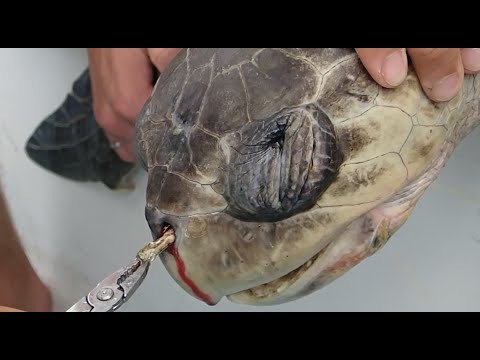
In the water these single use plastics float about and look just like jellyfish and marine animals. You’ve probably seen bits of plastic when you’ve been at the beach and thought it was an animal of some sort. It’s an easy mistake, even with our sophisticated eyes, brains and understanding. So you can see why seals, turtles, fish, birds and other animals mistake plastic bags and balloons for their next meal. It can block – or fill – their digestive systems leading to death from starvation. It’s also been shown that some species of seabirds are particularly attracted by the scent of this plastic junk ‘food’.
Charging for Plastic Bags Worked!
The Marine Conservation Society (MCS) carries out beach cleans around the UK every September to get a snapshot of what litter is found. The results are used to campaign for some important changes to legislation. For example, the MCS began calling for action on single use carrier bags in shops back in 2008. It was instrumental in getting a levy introduced in Wales in 2011, Northern Ireland in 2013, Scotland in 2014 and England in October 2015.
As a result, the number of plastic carrier bags found on UK beaches in their annual surveys fell by almost half between 2015 and 2016. It was the lowest number reported in over a decade, and fantastic news for marine wildlife.
MCS published figures on 22.11.16, based on surveys carried out in September 2016. In 2015 there were, on average, 11 plastic bags per 100 metres of coastline cleaned. But in 2016 there were just under seven – that’s a decrease of almost 40% and the lowest number in the last ten years.
The 5p levy was a small price to pay for fewer carriers at the coast.

What’s the Problem with Bags and Single Use Plastics?
In the water these single use plastics float about and look just like jellyfish and marine animals. You’ve probably seen bits of plastic when you’ve been at the beach and thought it was an animal of some sort. It’s an easy mistake, even with our sophisticated eyes, brains and understanding. So you can see why seals, turtles, fish, birds and other animals mistake plastic bags and balloons for their next meal. It can block – or fill – their digestive systems leading to death from starvation. It’s also been shown that some species of seabirds are particularly attracted by the scent of this plastic junk ‘food’.
While you’re here…
Go to the homepage of the Visit Fylde Coast website for the latest updates.
Love the Fylde Coast? Sign up for your email newsletter. Packed full of interesting things it arrives in your inbox all 52 weeks of the year.
👉Join us on Facebook at our Visit Fylde Coast Facebook Group. Plus hundreds of videos to watch on our YouTube channel – from all over the Fylde Coast!
📣JOIN our new VFC WhatsApp Channel for what’s happening, interesting local information, history, communities, events and much more.
Booking a stay? Pick a safe, clean and legal place to stay, at the very best price. Book using the Visit Fylde Coast Accommodation guide.


