


There’s a LOT to uncover about war and the Blackpool area – so we’ve made a start! This page is a work-in-progress – have you got anything to add?
Did you know? Blackpool was one of the largest military training centres in the world during World War II. Almost 800,000 RAF recruits had their initial training in the town.
80th Anniversary of Battle of Britain
15 September 2020 marks the 80th anniversary of the Battle of Britain in 1940. So it’s an appropriate time to take a look at how the Fylde Coast played a part in the war.
Blackpool Council’s tourism department, Visit Blackpool, released this video compilation. It features two of the iconic fighter planes that took part in the battle, an Illuminations display that includes the lighting up of The Blackpool Tower in red, white and blue, and a performance by Britain’s favourite wartime group, the D-Day Darlings.

War and the Blackpool Area: Spitfires
A huge fundraising effort went into equipping Britain with Spitfire planes during WWII.
Blackpool Spitfires
Blackpool area residents raised funds to sponsor three Spitfires known as
Progress I, II and III.
For the 2020 Illuminations display, one of the replica Spitfires nicknamed Holly, is on display as the centrepiece at Gynn Roundabout in a touching tribute to the Battle of Britain. We went to take a look as soon as it had been installed, just before the Illuminations Switch On.

The Spitfire has been refurbished and converted back into a Mark VB Spitfire by the Blackpool Illuminations team in collaboration with Blackpool’s aviation museum, Hangar 42.
At night, the fuselage is lit with sweeping searchlights and a dazzling laser show.
Spitfire Memorial at Fairhaven Lake
Lytham St Annes residents also raised money to pay for a Spitfire. There’s a permanent tribute to it against Fairhaven Lake, on the seafront at Lytham St Annes.

Enjoyed this video? Make sure you subscribe to the Visit Fylde Coast YouTube channel for all the latest vlogs!
War and the Blackpool Area: Invasion Defences
Did you know that Blackpool was spared from bombing because Hitler wanted it as a personal playground after World War II?
The Fuhrer dreamed of his troops goose-stepping down the Golden Mile and unfurling the Swastika on top of the Blackpool Tower. German intelligence maps have been recovered from a military base and clearly reveal how Hitler had earmarked the safety of Blackpool Tower and the three piers*.
Anti-Tank Defences
Just along the coast at Fleetwood there’s a line of concrete blocks at the seafront known locally as the ‘Tank Traps’.
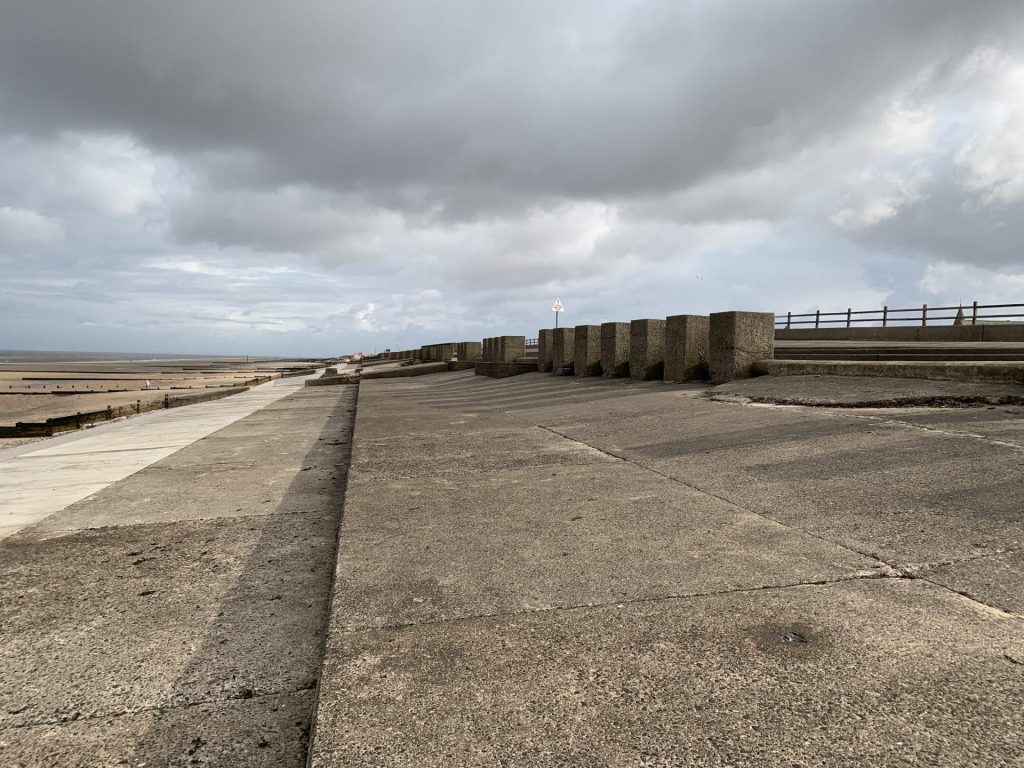
Here at Visit Fylde Coast we’ve got a fair way into establishing that they were indeed anti-tank defences. There’s still a bit more work to do, but we’re nearly there.
Pillboxes
There’s a number of pillboxes around the Fylde Coast. They’re block or concrete dug-in guard posts, usually with holes through which to fire weapons. In effect they’re a trench firing step, hardened to protect against small-arms fire and grenades and raised to improve the field of fire.
There’s a pillbox in Salisbury Woodlands, against the driveway to Blackpool Zoo. Find out more about it here.
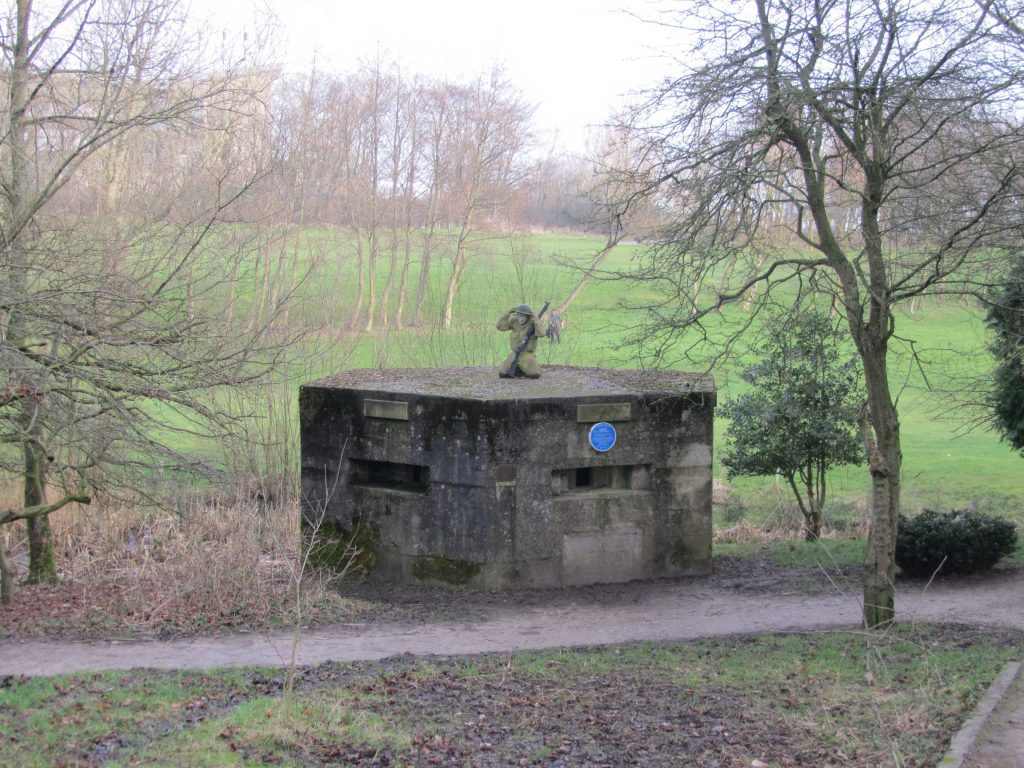
While looking at Google maps we stumbled across another one on Fleetwood Road, opposite Cala Gran caravan park.

After posting this short video, you told us of other pillboxes that you know of, including:
- Rydal Avenue in Fleetwood
- Dorset Avenue in Cleveleys
- Devonshire Road Blackpool, and near Blackpool Airport
- And opposite Trebaron Garden Centre
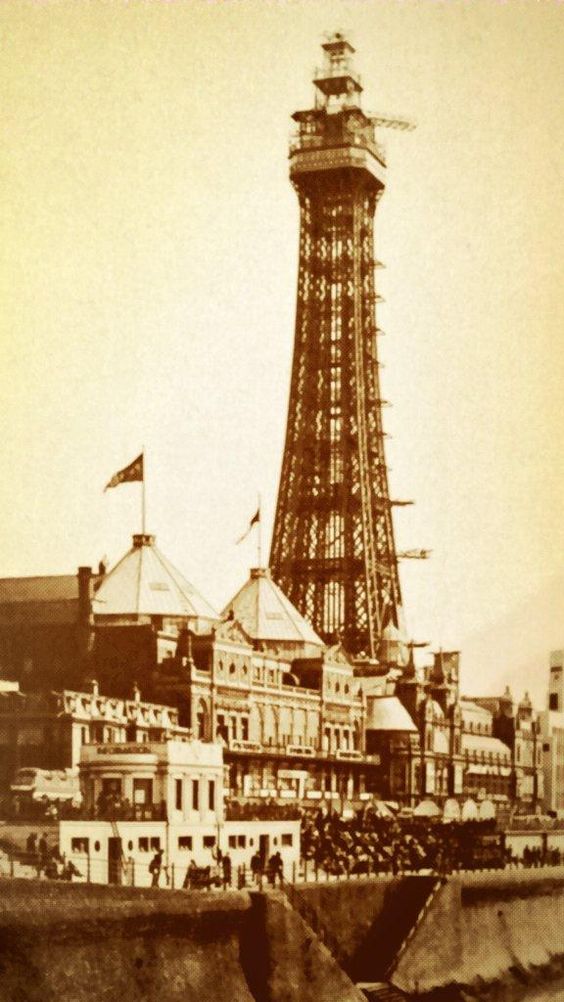
Radar on The Blackpool Tower
The Blackpool Tower has a long and fascinating history, dating back more than 125 years.
But did you know that it was used as a radar mast during World War II?
War and the Blackpool Area: Polish Military Base
Did you know? The Venue (then called The Royal) at Cleveleys became a hospital for Polish airmen during WW2?
After Dunkirk, Blackpool became the administrative headquarters of the Polish Air Force. It was also a manning depot for Polish aircrew, before they were despatched for training or operations.

Numerous Blackpool hotels and clubs were used for their wartime activities. There were so many Poles in town that the Pleasure Beach duplicated all of its signs in Polish!
After the war, many Polish people chose to remain in Blackpool and the large community proved attractive to others. By 2006, with the expansion of the European Union, an estimated 20,000 Polish immigrants lived in Blackpool.
*Source: http://www.militarian.com/threads/hitler-saved-blackpool-from-blitz.4548/
Hidden WW1 Trenches in Blackpool
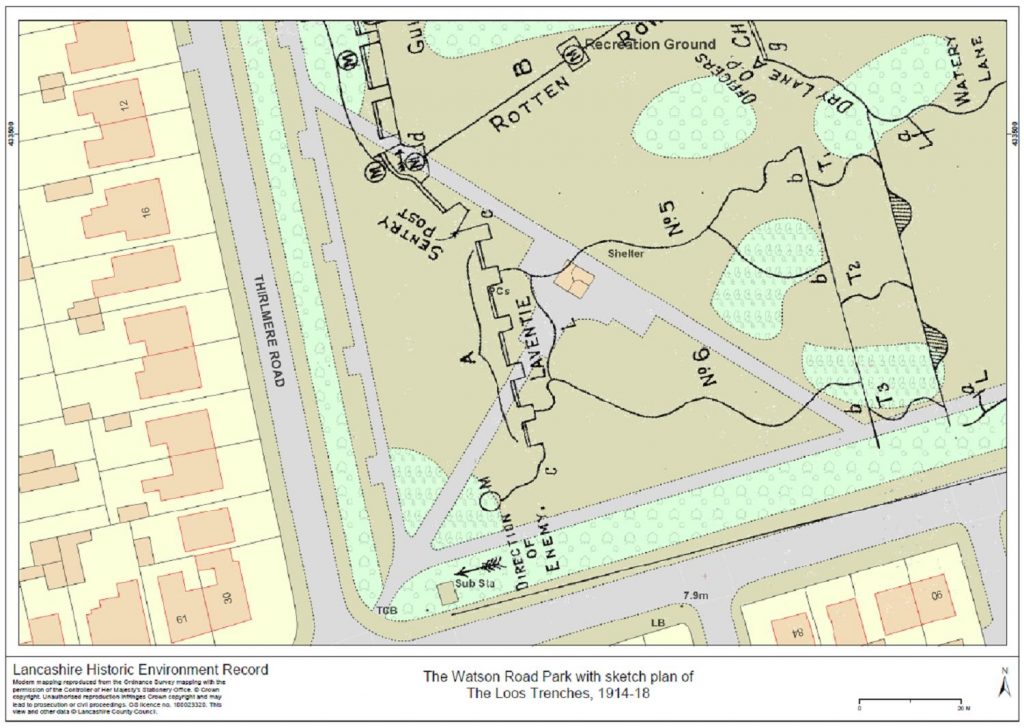
We’re going back to the First World War now. Did you know there are hidden WW1 trenches in Blackpool, concealed under Watson Road Park?
They were filled in in the early 1900’s and remained so for almost 90 years. But in the summer of 2014 a community archaeology event excavated and explored these remains of the past.
Blackpool Council teamed up with the Friends of Watson Road Park, The University of Salford and Lancashire County Council to hold ‘The Big Dig’ for a fortnight in July 2014. Together they looked for the secrets of the old trenches, filled in at the end of the war.

An archaeology team from the University of Salford and local expert Nigel Neil, helped members of the public to get hands-on experience of a real archaeological dig. Including setting out the trenches, hand excavating as well as cleaning and sorting any finds.


The project began after researchers identified an aerial photograph of the park from the 1980s. It showed evidence of a buried trench system (below) similar to other training trench sites across the UK. A Council study then uncovered more information, all of which was incorporated into an exhibition.
Why were there trenches in Blackpool?
There wasn’t any land warfare taking place in Blackpool during the First World War. The replica Loos and Arras trenches were created to help train up the large numbers of volunteers who signed up after the outbreak of the war.
Research turned up this old guidebook. It was printed for visitors to the trenches – in 1916 they were made into a visitor attraction to inform people about the new style of trench warfare. The money raised from the entrance fees was used to support a convalescent hospital for wounded soldiers at Squires Gate.
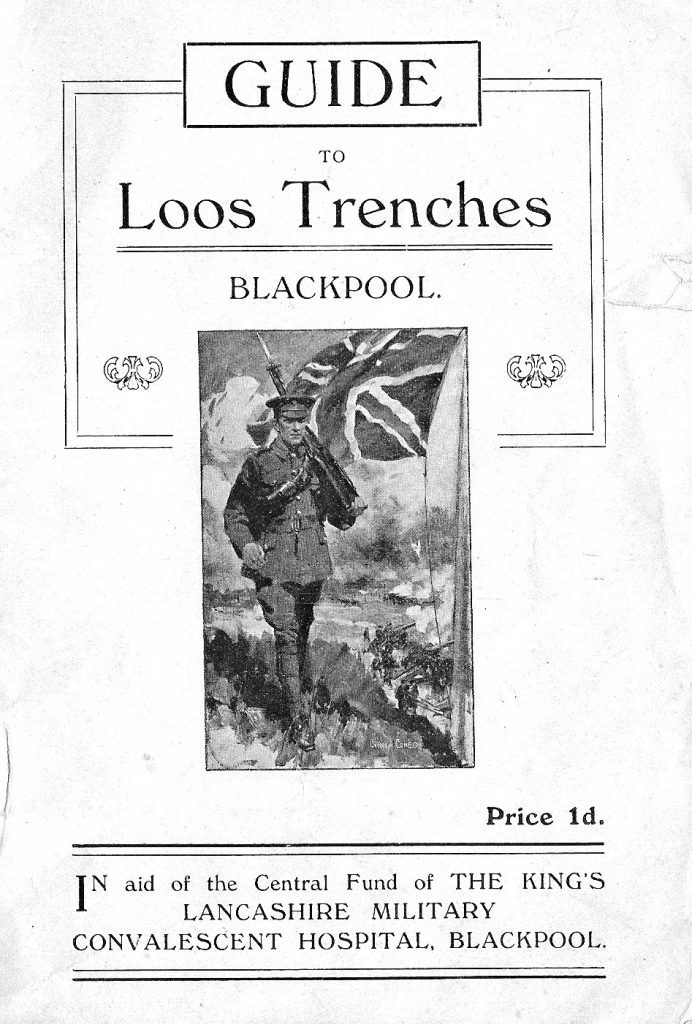
However, after the armistice, the trenches were no longer needed. They were filled in with rubble and soil and the site eventually developed into the Watson Road Park that stands there today.
It’s amazing to think that for years people have enjoyed Watson Road Park without knowing the heritage that lay underneath them.
While you’re here…
Have a look at the Visit Fylde Coast website homepage for more of the latest updates.
Love the Fylde Coast? Sign up for your weekly email newsletter. Packed full of interesting things it arrives in your inbox all 52 weeks of the year.
Join us on Facebook at our Visit Fylde Coast Facebook Group
Don’t forget to follow us on Twitter @visitFyldeCoast


