Local Government Reorganisation (known as LGR) is underway across England, and it’s happening here on the Fylde Coast too. 15 different councils across Lancashire are to be scrapped and replaced with 4. Here’s what it means –
Local Government Reorganisation – 15 Councils made into 4
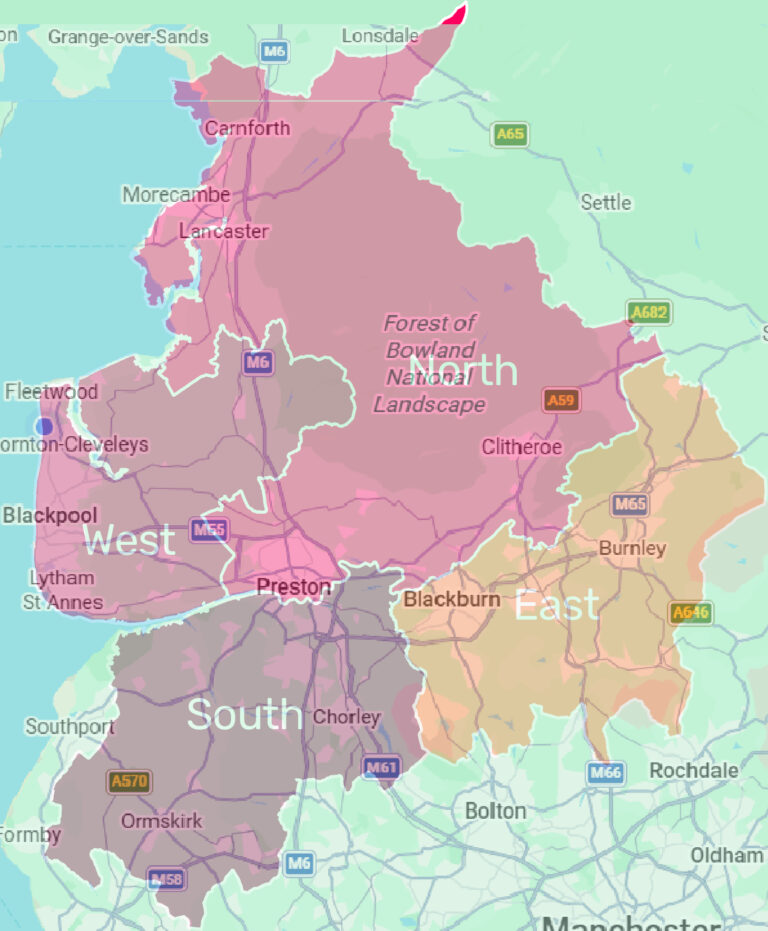
The process has been going on in the background for a considerable length of time. Meetings, debates and discussions about who goes with who and what becomes where. But there’s no denying that Local Government Reorganisation is now well and truly underway. On 16 July 2026 central government made the announcement about how Lancashire would be regrouped. Four new unitary authorities will replace the 15 existing councils. Each area will be served in future by a single authority.
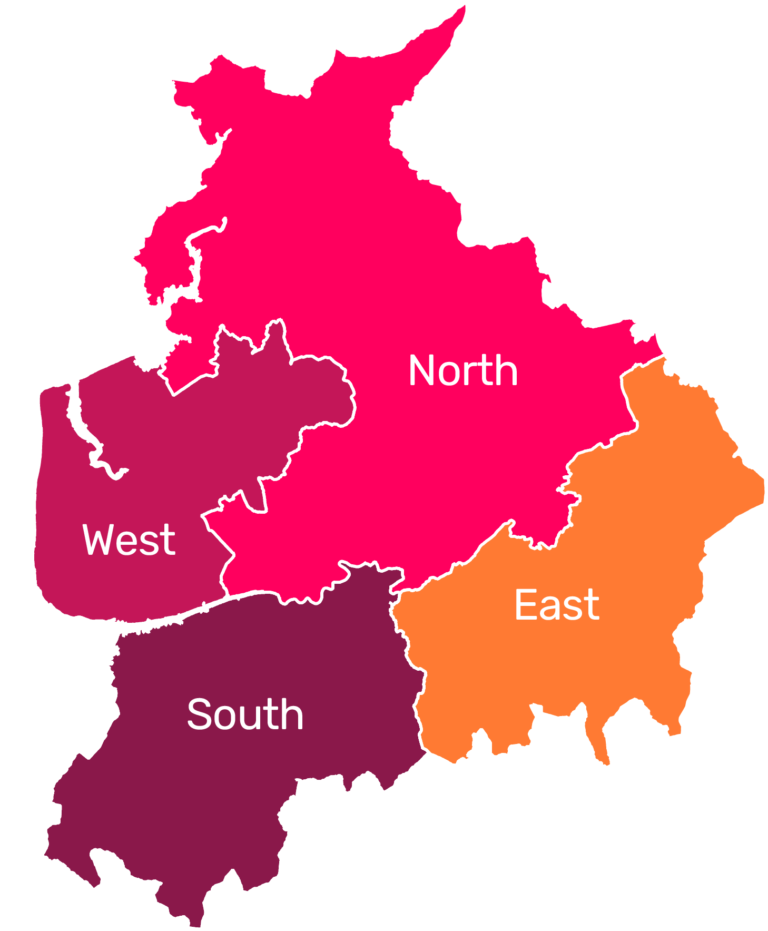
It’s part of a national programme intended to create simpler and more effective council structures. 14 other areas are also underway, across the length and breadth of the country.
Here’s our take on it –

Enjoyed this video? Make sure you subscribe to the Visit Fylde Coast YouTube channel for all the latest vlogs!
What Does it Mean for the Fylde Coast?
Currently there is a mish-mash of demarcation lines here on the Fylde Coast, with four councils to contend with. Blackpool is a unitary authority while Fylde (the south end) and Wyre (the north end) are both district councils, coming under Lancashire County Council (LCC).
A unitary authority (like Blackpool and the new one when it starts) manages everything in an area. Including roads, transport, schools, social services plus parks, street cleansing and literally everything managed by the public sector. A borough council (like Fylde and Wyre) is a second tier authority, which manages tourism, street cleansing, dustbins, licensing and planning etc. But it’s the top tier authority (Lancashire County Council) which looks after highways, schools and social services – all the big-ticket items.
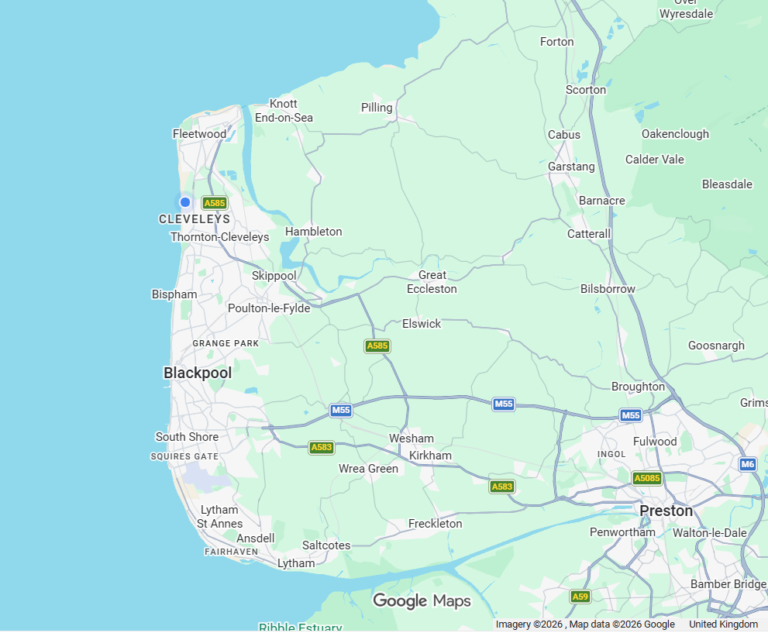
People who live, work in and visit the Fylde Coast don’t see the boundaries, so all this administration is complicated (we’ll come onto that in a minute). Look at a map and the urban areas of the Fylde Coast are naturally set apart from the next city of Preston, but it’s very much a single whole patch. There’s a river estuary top and bottom, sea to the left and fields to the right, so a single administrative area makes sense.
And when you combine the new authority areas with a geographical map, here’s what it looks like –
Pros and Cons of the Existing System…
Confusing…
Being part of a two-tier authority (Wyre and Fylde) means that there are two councils to deal with. It’s confusing for residents who aren’t sure who to contact for queries. Two councils means twice the number of officers and councillors to navigate. It inevitably increases the expense of running public services too.
Slow…
It also makes it difficult to get things done at a local level. A community group, town or parish council, or even a borough council still has to work with/seek permission from LCC for areas which they control. For example street furniture or Christmas lights, if they’re on the public highway or footpath. It’s a barrier to getting things done – adding often a lengthy time and ‘he said, she said’ debate to the process.
Invisible Boundaries…
Boundaries is the other issue. If you live or work here, or love to visit, you’ll see the whole Fylde Coast as a defined area. It feels like it should be one patch. But having four local authorities can be a barrier to joining things up. After the tramway upgrade, LCC withdrew funding for NoWcard holders to use the trams for free at off peak times. Visitors to the area now have to pay to use the trams, even if they have a valid NoWcard. But this also included residents of Fleetwood and Cleveleys for whom it’s a vital transport link, as the tram passes through both towns. It took a strong campaign to get free transport reinstated for Wyre residents.
…but Easier to Navigate
On the plus side, Blackpool, Wyre and Fylde Councils are all relatively small. This means they have a much better knowledge of their patch and develop relationships with groups within it. If you’re part of a community group, parish or town council, it’s relatively easy to find out who to deal with. That may change when it all merges into one.
What about the Debt…
It’s the expensive services which are managed by the unitary authorities. Children’s services, adult and social services, highways, schools and the like are all expensive to run. In fairness, you could spend a bottomless amount of money on each one. As a consequence, almost all unitary authorities in the UK carry debt – Blackpool and Lancashire County Council are no exception.
Blackpool Council has approx £500m of debt, but it also has lots of assets. They addressed the subject head-on in a post on their Facebook page. Saying: “Debt isn’t automatically a bad thing. Most people borrow to buy a home or invest in their future. Businesses borrow to grow. Councils do exactly the same. The important question isn’t whether you have debt. It’s what you’ve done with it. Blackpool Council has chosen to invest.
Blackpool has invested
“We’ve invested in regenerating our town centre through Talbot Gateway, creating thousands of jobs, attracting major employers like the DWP, MoD, the NHS and Blackpool and The Fylde College, plus new quality hotels such as Holiday Inn. That has transformed an area that had been neglected for decades. Most of those buildings are now council-owned assets, increasing in value and generating rental income that helps repay the borrowing.
“We’ve invested in improving housing through building over 400 new council houses since 2014 and improving over 5,000 council houses with things like new kitchens and bathrooms. We’ve also created our wholly owned housing company to buy poor-quality homes, renovate them and provide more than 750 quality homes for local people. Those homes are assets too, while the rental income supports repayment of the original investment.
“We’ve invested in the visitor economy that was struggling fifteen years ago and continues to improve since, with the benefit felt across the wider Fylde Coast. We bought The Blackpool Tower and Winter Gardens, and invested in making them quality assets that everybody on the Fylde coasts uses and can be proud of, so that tourists’ money goes back into our local economy, as well as supporting tens of thousands of local jobs.
“We’ve invested in the Enterprise Zone, helping create more than 2,500 jobs, supporting businesses to grow and strengthening the economy across the whole Fylde Coast. That investment benefits residents far beyond Blackpool’s boundaries.
“These weren’t reckless decisions. They were backed by robust business cases and made because standing still was never an option.”
Debts and Balances…
It’s also widely known that both Wyre and Fylde Councils carry healthy reserves. They have managed to do this through prudent management – and by not being responsible for all those expensive services. But they will each carry a share of the LCC debt into the new arrangement. LCC debt is reported online as being anything between £1.2 and £2 billion – a LOT whichever way you look at it.
Blackpool Council added in their Facebook post “As a unitary authority we fund social care for adults and children. We support vulnerable families, provide SEND transport, protect public health and deliver many other vital services that district councils have never had responsibility for. Those services are significantly underfunded nationally, yet our residents rely on them every single day. Our children’s services are underfunded, but they are also outstanding and give children in Blackpool the best start in life.
“It’s also worth remembering that Blackpool’s borrowing is backed by assets. In fact, the value of our assets is around twice the level of our debt.
“And while some people have focused solely on Blackpool’s borrowing, that doesn’t mention the fact that residents in Fylde and Wyre already contribute towards the significantly larger debt held by Lancashire County Council. That’s not a criticism of Lancashire it’s simply the reality for upper-tier authorities that deliver major public services.
…and no write offs!
Central Government has also stated in the guidelines that they WILL NOT write any existing debt off.
Watch this Space!
The next few years are sure to be interesting. There will no doubt be a lot of jockeying for position as officers and councillors sort out who gets which jobs. But the timeline is set and the transition is underway –
- In May 2027, elections will be held for the new shadow councils to oversee the transition.
- On 1 April 2028, vesting day occurs. Meaning the 15 current county and district councils are abolished and the four new unitary authorities go fully live.
Apparently this new authority is to be called ‘Fylde Coast Council’ although the name is still subject to final rubberstamping by the government.
While you’re here…
Go to the homepage of the Visit Fylde Coast website for the latest updates.
Love the Fylde Coast? Sign up for your email newsletter. Packed full of interesting things it arrives in your inbox all 52 weeks of the year.
👉Join us on Facebook at our Visit Fylde Coast Facebook Group. Plus hundreds of videos to watch on our YouTube channel – from all over the Fylde Coast!
📣JOIN our new VFC WhatsApp Channel for what’s happening, interesting local information, history, communities, events and much more.
Booking a stay? Pick a safe, clean and legal place to stay, at the very best price. Book using the Visit Fylde Coast Accommodation guide.