


Wyre Council secured over £40 million of funding from the Environment Agency for the current major coastal defence project, the Wyre Beach Management Scheme.
What is the Wyre Beach Management Scheme?
The project will help to significantly reduce the risk of coastal erosion and flooding to over 11,000 properties and critical infrastructure in Fleetwood and Cleveleys. It will do this by stabilising the beach with rock groynes and protection for the sea wall at Cleveleys and Rossall Point.

It follows on from the success of the recent Rossall coastal defence scheme. Rossall sea wall completed at £6 million under budget. Which shows local success in delivering value for money and large scale projects. And of course the ‘new’ stepped sea defences at Cleveleys.
Work was due to start towards the end of 2020. Various problems conspired to delay the project though, including Covid, site compound and beach license issues.
See it Working
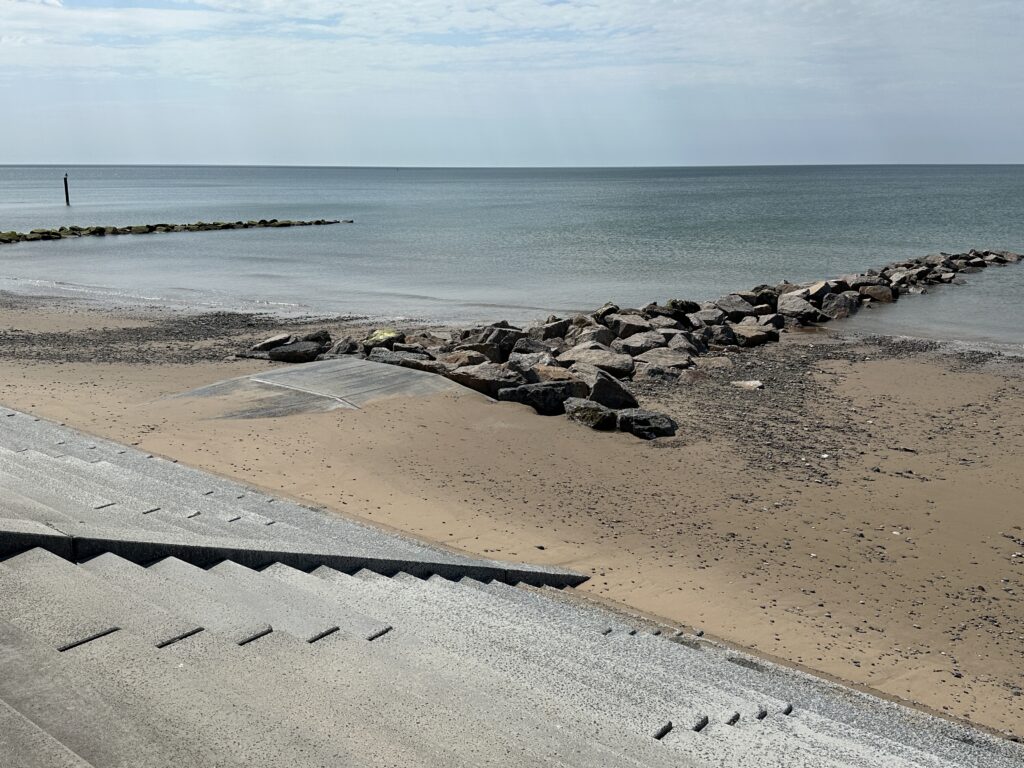
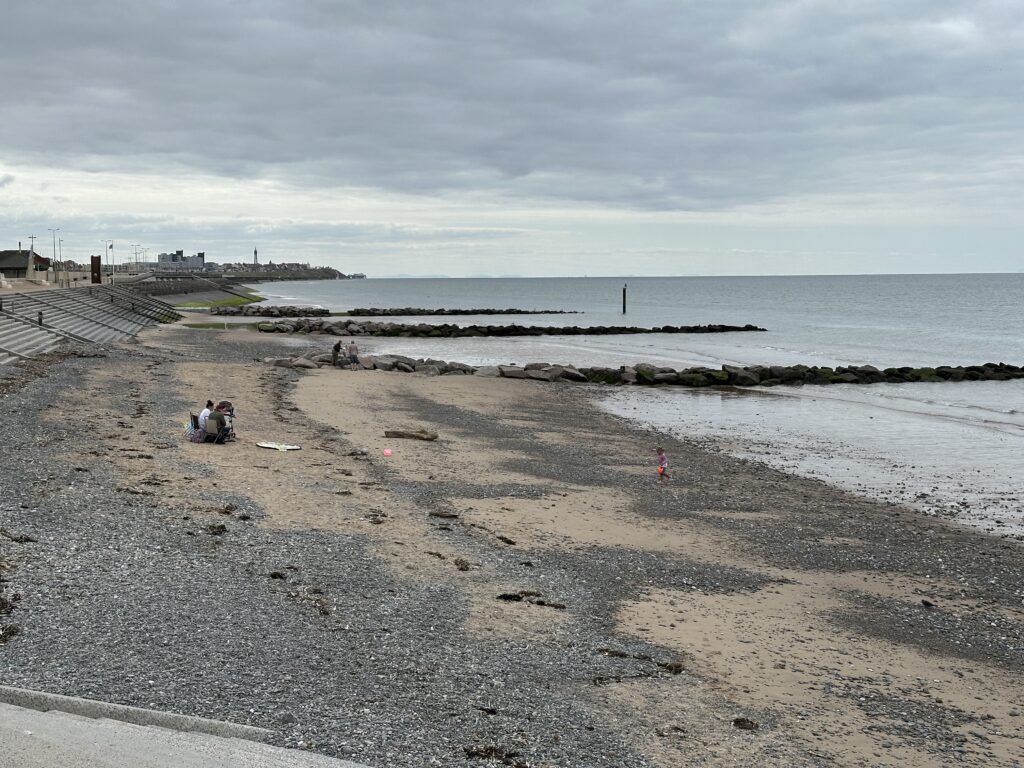
At Cleveleys, the portion of works from the boundary with Blackpool to the seafront cafe is now complete. You can see how the sand is already starting to accrete around the rocks and along the steps between the bays. At high tide the new groynes reduce the energy of the waves even further, as they climb the steps.
What does the scheme involve?
A high, natural beach is the best form of coastal defence that there is. Unfortunately, storm conditions can wash all that precious beach material away without some kind of intervention to hold it in place.
The Wyre Beach Management Scheme aims to keep the sand, gravel and pebbles of the beach in place, even through stormy weather. New rock armour groynes will help to build a high stable beach. In turn this will reduce wave height and energy and the risk of overtopping and damage to the sea defences.
New rock armour toe protection will protect the original sea wall from erosion, should beach levels drop. This way, the beach and sea wall remains an effective defence against flooding and erosion for many years to come.
Consultation with local residents, visitors and key stakeholders has contributed to the final design.
Plans include:
- protecting the toe of the small, old recurve sea wall at Rossall Beach Cleveleys with rock armour, buried under the beach
- construction of rock groynes along the stepped defence frontage at Cleveleys and at Rossall Beach Cleveleys. The new groyne field goes from the boundary with Blackpool at Kingsway to the recently complete Rossall Coastal Defence Scheme at Fairway, Fleetwood. Each groyne includes a crossover ramp – some also have a steel marker pole at the end.
- addition of a new, small sea wall at Rossall Promenade, adjacent to the parking bays
- works around Rossall Point at Fleetwood to include rock armour to protect the toe of the old sea wall and new groynes. This work is from the northern end of the Rossall Coastal Defence Scheme to the boating lakes.
Watch this video which explains in more detail –

Enjoyed this video? Make sure you subscribe to the Visit Fylde Coast YouTube channel for all the latest vlogs!
Why does it seem haphazard?
Construction may seem a little haphazard as active work moves from one area of beach to another. This is to fit around the seasons and try to do work in busy areas at less disruptive times. Generally works will start at the outer edge of the project and work back towards the site compound.
Work started in August 2023 at Westway, continuing southwards to Cleveleys from the Rossall Scheme in front of the school. It’s quieter at that end of the coast during mid-summer and so is less disruptive. Then in September when the holidays are coming to an end, the team began operations at the southern end, continuing from the Shipwreck Memorial at Kingsway, working northwards.
Why is the Wyre Beach Management Scheme Necessary?
Wyre is especially at risk of coastal flooding due to high tides and high waves during storms. This results in beach material moving away from the defences and lowers beach levels, allowing even bigger waves to break. In turn this would increase the risk of erosion, and undermining of the sea defences. This scheme will leave the area better protected against flooding and erosion, after works to construct rock armour protection and new rock groynes.
Carl Green is Head of Engineering at Wyre Council. He explains “This project is essential to help protect Wyre’s coast from future flooding. There will be better protection for 11,000 properties and other infrastructure as a result. We’re working with our partners to help tackle the issue of flooding in the area and this is just one of the projects we’re working on.
“We’re trying to ensure there will be as little disruption as possible to nearby residents and beach visitors. But with rising sea levels and changing weather conditions, we need to act now to protect our coastline.”
How to Find Out More
Jane Littlewood is the Public Information Officer for the project and is available to answer your questions at a weekly drop-in session. You can find Jane at The Venue on Cleveleys seafront, weekly on Thursday mornings between 9am and 12 noon. Have a look at site plans and she’ll talk you through the works on a one-to-one basis.
You can find information signs at the site compounds. Residents also receive individual letters through the door when any disruptive works are about to begin near their homes.
You can also find extensive and regular updates posted online. This page is the overview of the whole project.
- Find the latest updates from Cleveleys beach here
- And the latest updates from Fleetwood beach here
- Keep an eye on the Visit Cleveleys and Visit Fleetwood Facebook pages for regular short photo updates.
- You’ll also find everything explained from the needle to the thread in a series of videos on the Visit Fylde Coast YouTube channel. Here’s the playlist – with the newest video displayed here.
Provisional Tasks and Key Dates for the Project
At Cleveleys
- Site set-up at Jubilee Gardens Cleveleys officially began on site on Monday 5 September 2022. More detailed information available here.
- Phase One beach works (the rock scour protection against the wall at Rossall Beach) began in March 2023 to the end of June 2023.
- Phase Two works (new rock groynes) will take place between July 2023 and October 2026 (subject to planning).
At Fleetwood
- Site set-up at the Sea Cadets car park, Fleetwood began in November 2023. Due to be complete by the end of March 2024 More detailed information available here.
- Rock armour began coming into site in early March 2024
- Beach works started at the end of April 2024 and will be complete by summer 2025
- Removal of the site compound will begin in mid summer 2025, completed by autumn 2025.
New Materials and Waste
Curious about all of those rocks and where they come from? The stones range in weight from 3 to 10 tonnes – and about 4 feet (1.2m) in diameter. They’re a mixture of limestone (a sedimentary rock) and granite (an igneous rock) – but of a similar hardness to each other. They’re coming by road from local UK quarries in the north. The limestone is from Carnforth and the granite from Shap in Cumbria.
Lorries carrying the rocks follow a pre-designated route into site. However, there’s limited storage space at the compounds so after unloading they go to holding areas on the beach. You can tell the wide and higher storage piles from the shorter, slender and quite low profile of the finished groynes.
Black geotextile membrane is the underlayer for the groynes. Exceptionally strong it prevents the rocks from sinking into the beach. It arrives on site in big carpet-style rolls. You might have seen the team using a big steel-beam type holder (known as the toilet roll holder!)
Waste Wood and Metal
Largely broken and even missing in places, the old wooden breakwaters still serve some purpose. So they’re left in-situ until they’re in the way of work taking place, then they’re removed. Securely fastened (and not designed to come out!) the easiest way to remove them is to drag them out with the excavator. With wooden boards separated from metal posts and fixings the waste goes back to the yard. Full loads of scrap are collected and recycled.
Building the Wyre Management Scheme
Phase 1 – Site Compound, Prep Works and Toe Protection
Site Compound: The first few months of work saw the set-up of the site compound and rock storage area in Jubilee Gardens. Some additional temporary works included widening the ramp access to the beach and strengthening the road at the crossing point. A number of utility diversions were made, across the highway access to Jubilee Gardens.
Phase 1: construction work involves adding rock armour ‘toe protection’ to the existing defences between Cleveleys and Rossall. It involves work between Cafe Cove/The Venue and the land water outfall near the Five Bar Gate. That’s an 883m long stretch of seafront. Rock armour is now complete at Rossall Beach, placed under the beach in front of the existing concrete defences. Currently exposed, these large stones will more or less disappear from view once work is complete, buried under the beach.
Site Compound
Sadly, all other alternative places for the compound led to dead ends. That’s after months of negotiating, trying, asking and thinking! The only remaining possibility was Jubilee Gardens, at the south side of The Venue.
With site offices, plant and machinery sited at Jubilee Gardens car park, it’s closed to vehicles during the week. The remainder of the car park will be open seasonally at weekends.
One of the first tasks was to widen and strengthen the access ramp to the beach next to the cafe/opposite The Venue.
The rocks are delivered to the compound, unloaded and transferred to dumper trucks, then transported to the beach. A significant area of green space remains open for public use. The new play equipment has been relocated within the park and will be open for use throughout. As will the skate park and the rest of the play areas. The car park and the green space will be reinstated at the end of the project.
Why Toe Protection is Important
Been to Rossall Beach recently? You’ll know that the beach has eroded badly in the past (Feb ’21). These conditions leave the old curved sea wall vulnerable to erosion and undermining.
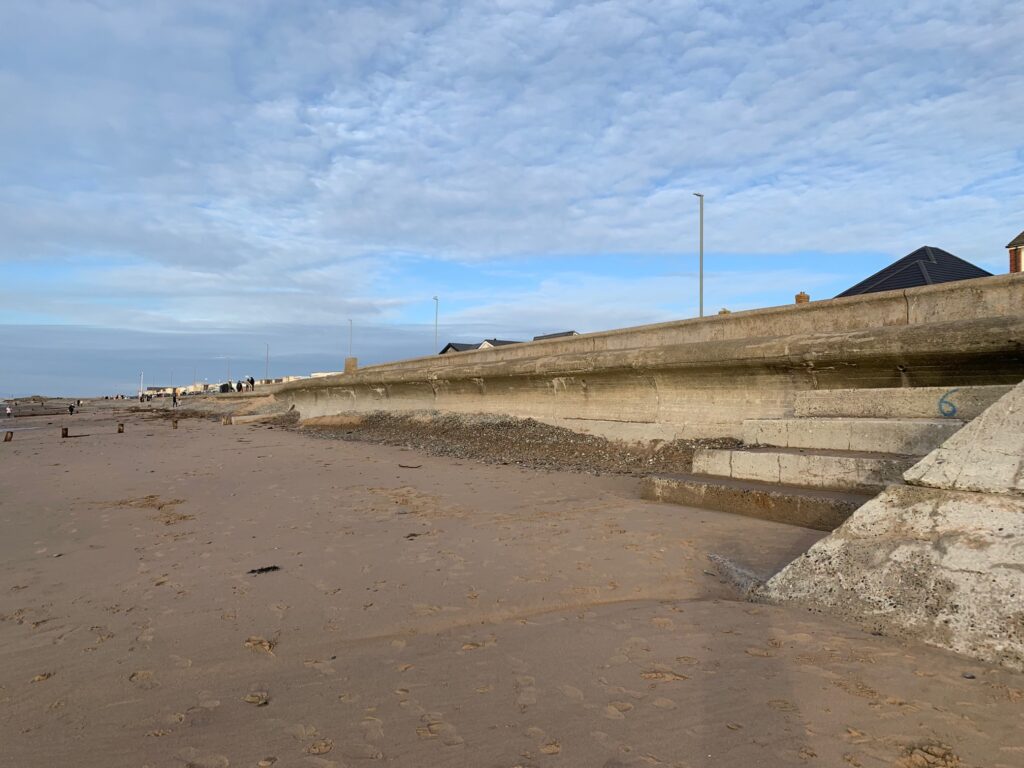
To make matters worse, in places there aren’t any steel sheet piles at the end of the wall (the toe) to protect it from undermining. If there was another storm before it naturally recovered, the big waves would a) come over the wall and b) lead to more erosion of the beach. If unchecked, erosion of the beach could result in undermining and collapse of the sea wall.
Previous Storms
Don’t think this couldn’t happen! It has happened before, in this very spot. There’s more about the 1947 sea wall collapse and rebuild here.
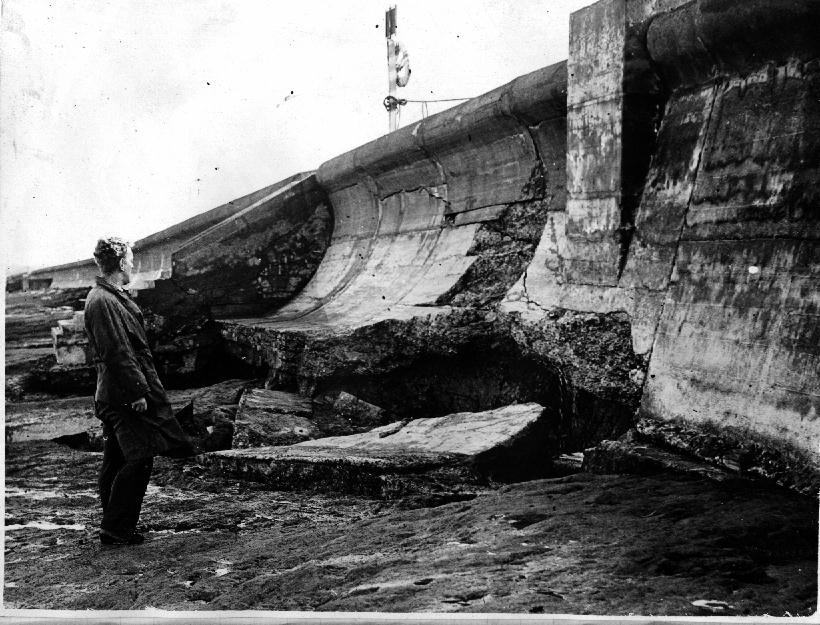
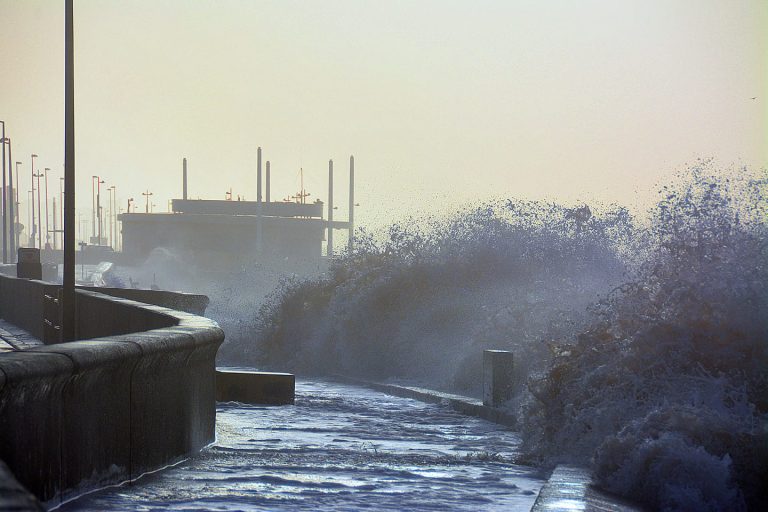
And over the Christmas/New Year period in 2013/14 there were two serious storm incidents in quick succession. The first photo on this page dates back to then – high winds, low pressure and high tides combined to create huge waves and a lot of overtopping.
Look at this series of photos, showing how a high beach quickly became eroded over a short period of time –
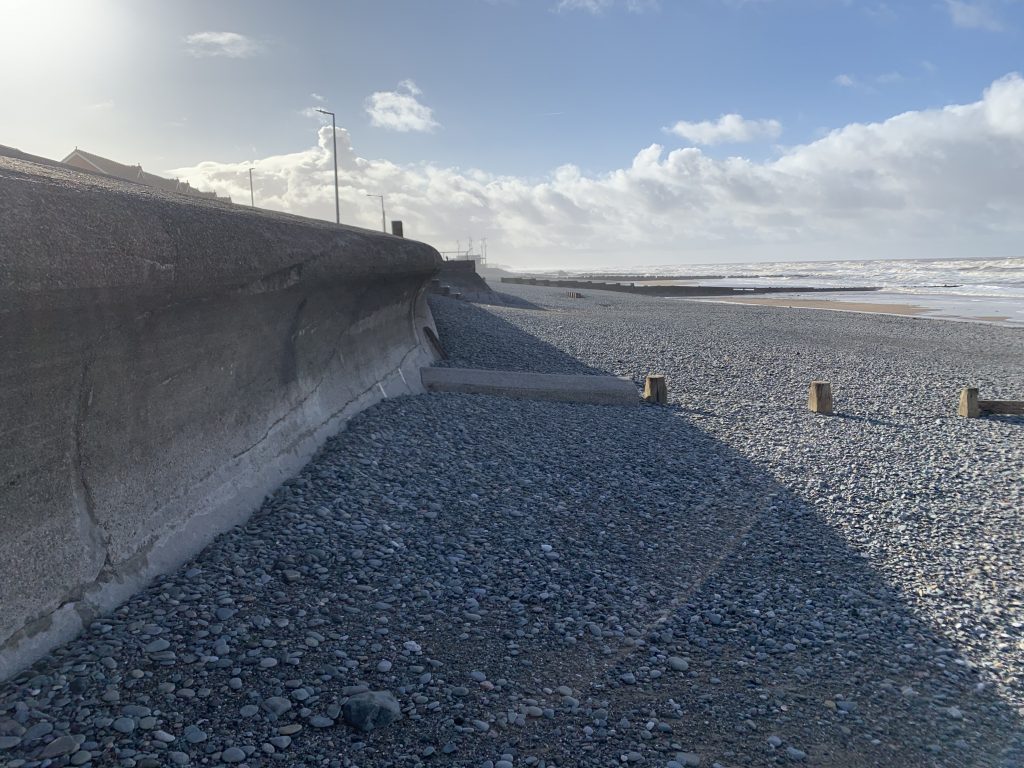
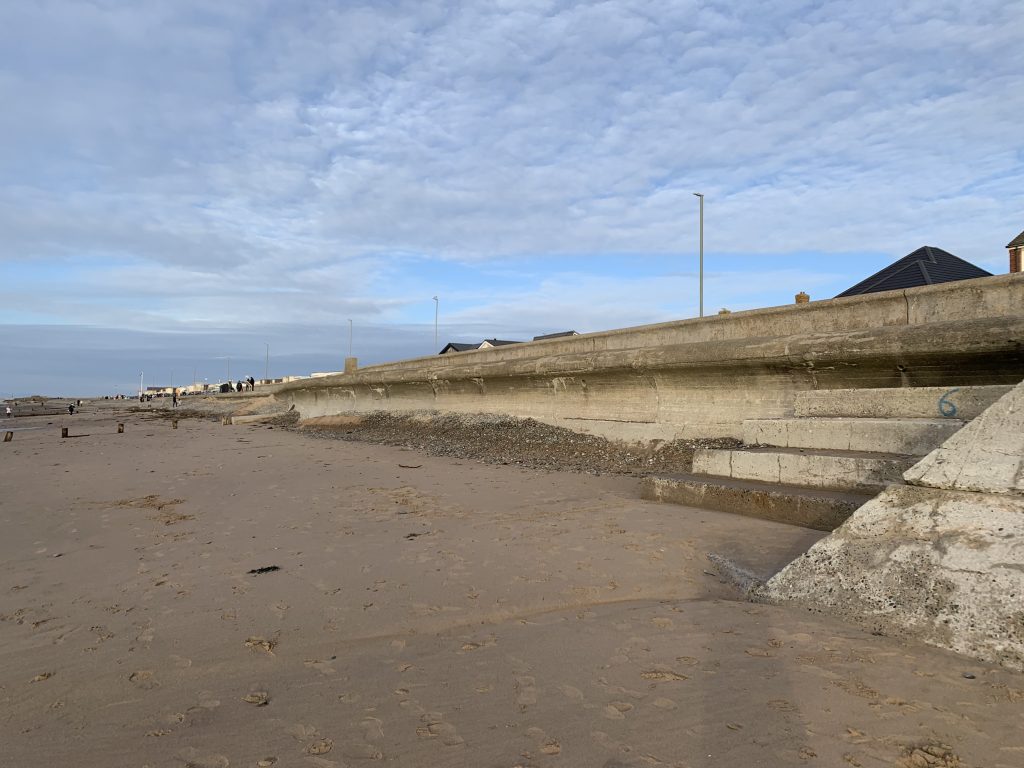
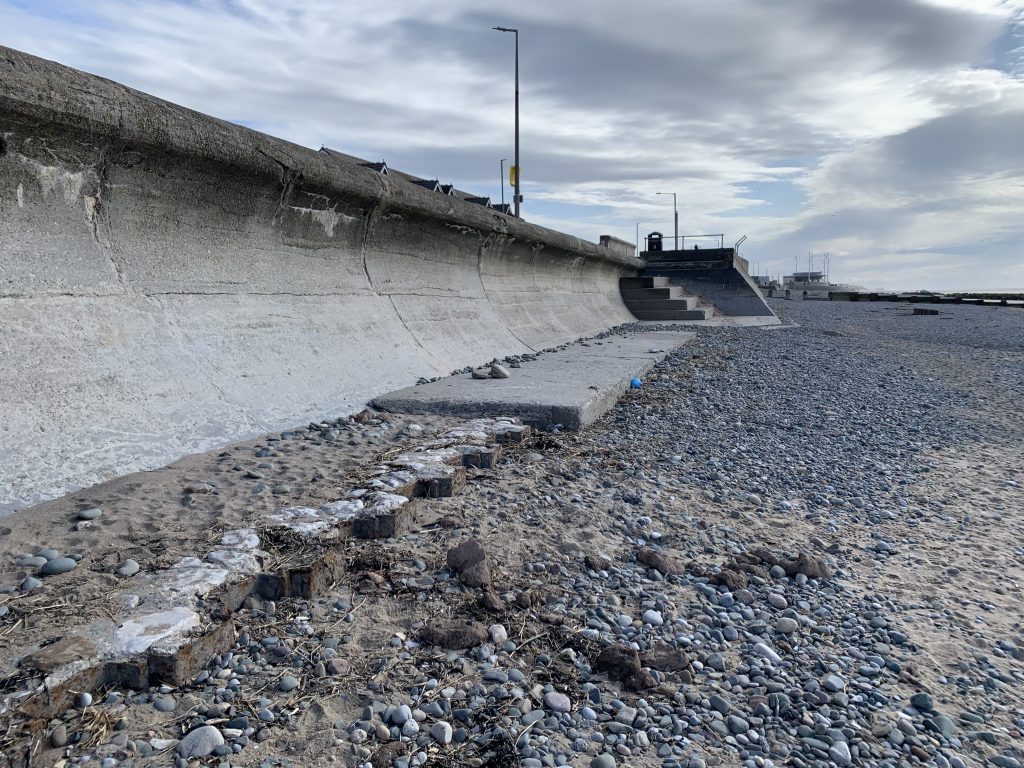
This is exactly why it’s illegal to remove pebbles from the beach. They are a vital part of the natural sea defence. Popping one little pretty one in your pocket isn’t the end of the world. However, too many people arrive at Rossall Beach equipped with buckets, sacks, vans and even trailers, to dig out large quantities and take them away. If everyone did that the beach would soon disappear – and then there would be severe flooding!
Toe Protection Work
The first phase of works will protect the bottom of the old concrete wall (its ‘toe’) with big rocks. It means excavating below existing beach level in front of the existing sea defences and placing new 3-7 tonne graded rock armour in a two-layer thick arrangement. It’s about 6 metres wide, 2.4 metres deep, approximately 4.5 metres below beach level.
The new rock armour provides scour protection to the existing sea defence structures for if and when beach levels drop. It also encourages the deposition and accretion of beach deposits close to the existing structures. And reduces the risk of flooding due to undermining, and subsequent breach of the existing defences.
It’s bound to be disruptive, and you may think the beach looks unsightly, but it’s vital work. The consequences of not doing it and a collapse of the sea wall are just too awful to contemplate. When finished, the rock armour toe protection will largely disappear under beach material. You won’t see it, except possibly during a severe storm if beach levels do drop. As the work is designed to protect to a 1 in 200 year standard, it should be a rare occasion. Beach levels will eventually recover following a storm.
Phase 2
Phase 2 is the wider scheme. It includes further rock armour toe protection and rock armour groynes to create high stable beaches across Wyre’s coastline. With all approvals granted, this work immediately followed the Phase 1 works and will continue for a further 3 to 4 years.
Rock Groynes
New rock groynes are being constructed around Cleveleys seafront and at Rossall Point, Fleetwood. There are two construction areas in this scheme.
- At Cleveleys from the boundary with Blackpool at the Shipwreck Memorial to Westway and the Rossall Coastal Defence Scheme. All about the Cleveleys beach works here.
- And at the north end of the Rossall Scheme, around Rossall Point at Fleetwood. (Plus rock armour to protect the toe of the old wall). All about the Fleetwood beach works here.
- When complete, the groyne field will stabilise the foreshore all the way along this coastline.
The old wooden breakwaters will be removed when they’re in the way of building the new rock groynes. The new ones aren’t necessarily in exactly the same place, but are evenly spaced. The new groyne extends seawards as far as the marker poles. At the shore they join the new toe revetment or the sea wall (depending on location). The purpose of the groynes is to reduce the turbulence of waves close to shore, so reducing erosion of beach material. In turn this allows beach levels to build up naturally as sediment settles out of the water. This creates and maintains a stable high beach – which is an excellent sea defence.
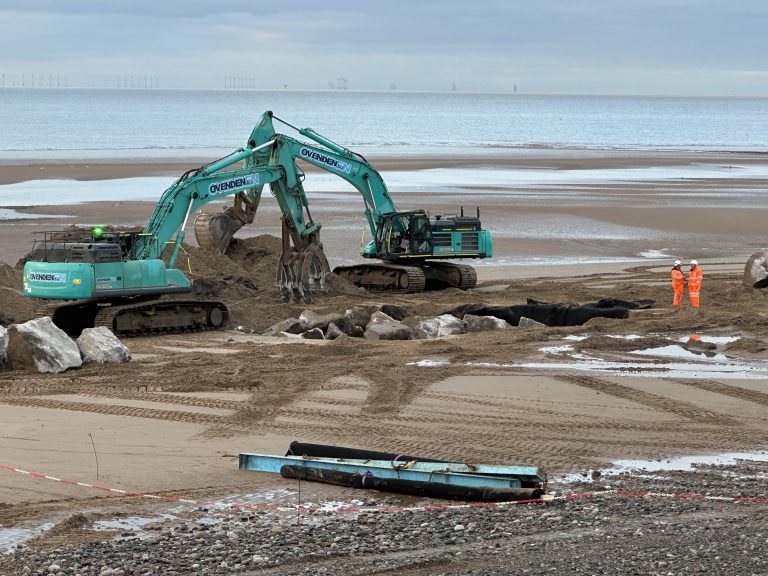
When building the groynes (below), sand is first dug out to form a hole then a black geotextile membrane laid in the bottom. This prevents the rocks from sinking into the beach. Rocks positioned according to size have three touch points with their neighbours for stability. The gaps between them are as important as the rocks. When in final position, the coordinates of each rock are recorded with GPS in the cab of the excavator.
Crossover Ramps
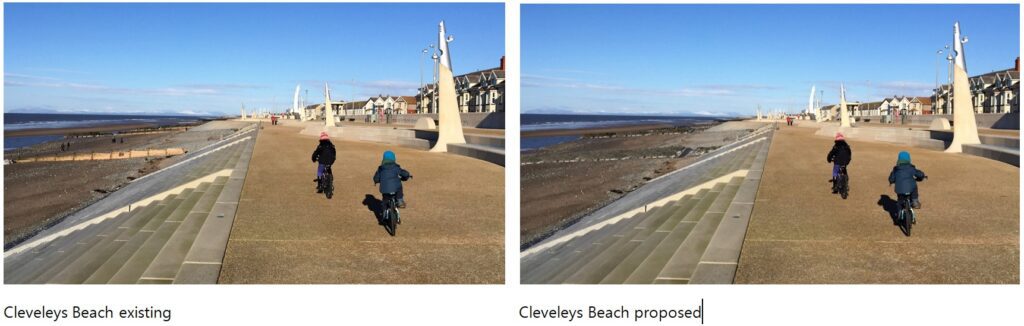
The rock groynes have crossover ramps in them, their position in the ramp will vary according to where the ramp is. Some are quite close to the sea wall, others are further down the beach. Generally they are where the beach levels vary the least over time. Ramps allow access for emergency vehicles and people as the tide comes in, allowing you to walk along the beach, maintaining access to the steps. A fringe benefit is that they’ll create little sitting spots! They’re like the ramps which you’ll find incorporated into the new, nearby Rossall Sea Defences. You can see how they’ll look in these photos.


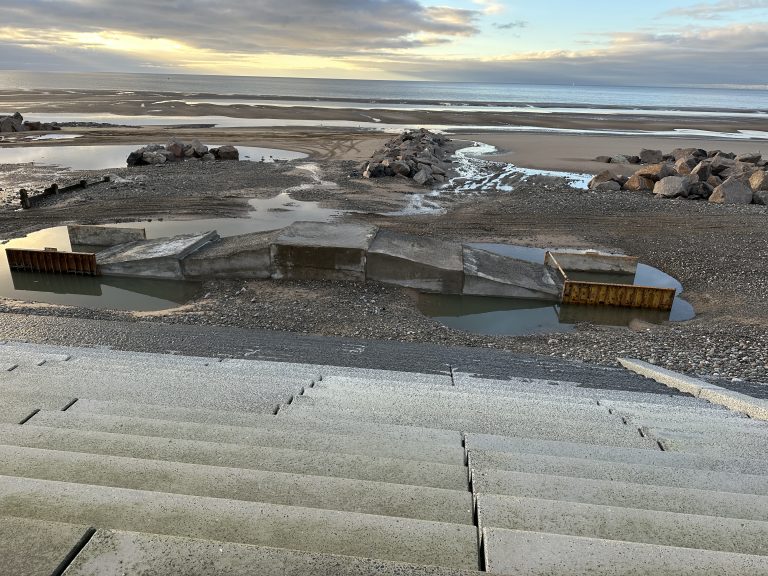
Layers of concrete are cast in-situ on the beach to form the ramps. You might see the workmen digging holes then positioning big yellow metal boxes. These forms create the shape of the ramp when filled with concrete. With the concrete set, the yellow box is removed and repositioned, and so on. The bulk of the ramp is made using ordinary concrete which is why the surface might appear to be crumbling. But a foot-thick layer of super strong (and super expensive!) mix is added to each one to form the finished surface.
Finally, a concrete tie-in is added between the groyne and the seawall.
Groyne Marker Poles
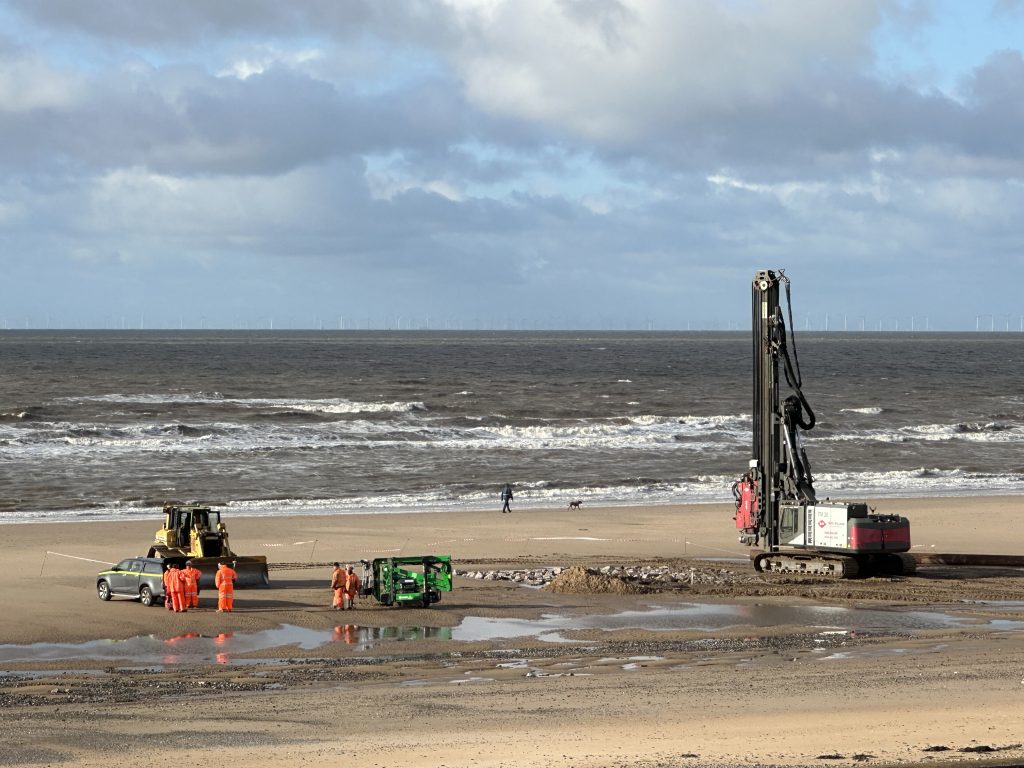
Curious about the tall metal poles which have appeared on the beach? They’re new groyne marker poles. When complete each one sports a green metal triangle at the top. They warn beach users and shipping that large structures are present, which may be submerged at high tide. There isn’t a post at the end of every groyne. But they’re evenly spaced and close together enough to line-up and indicate the presence of underwater hazards.
Installing them is interesting to watch. First, a big hole is dug in the sand and filled temporarily with rocks. This is a ‘piling mat’ or stable surface for the piling rig to stand on when it installs the poles. The huge one-piece poles are delivered to site on long lorries. That’s quite a sight because they’re a whopping 19m long and 50cm in diameter! Next, the piling rig and a crane, along with assorted diggers, will insert the posts into the beach. The rig vibrates the post vertically into the beach, leaving approximately two thirds of it above the sand. A green warning triangle fitted to the top completes the installation.


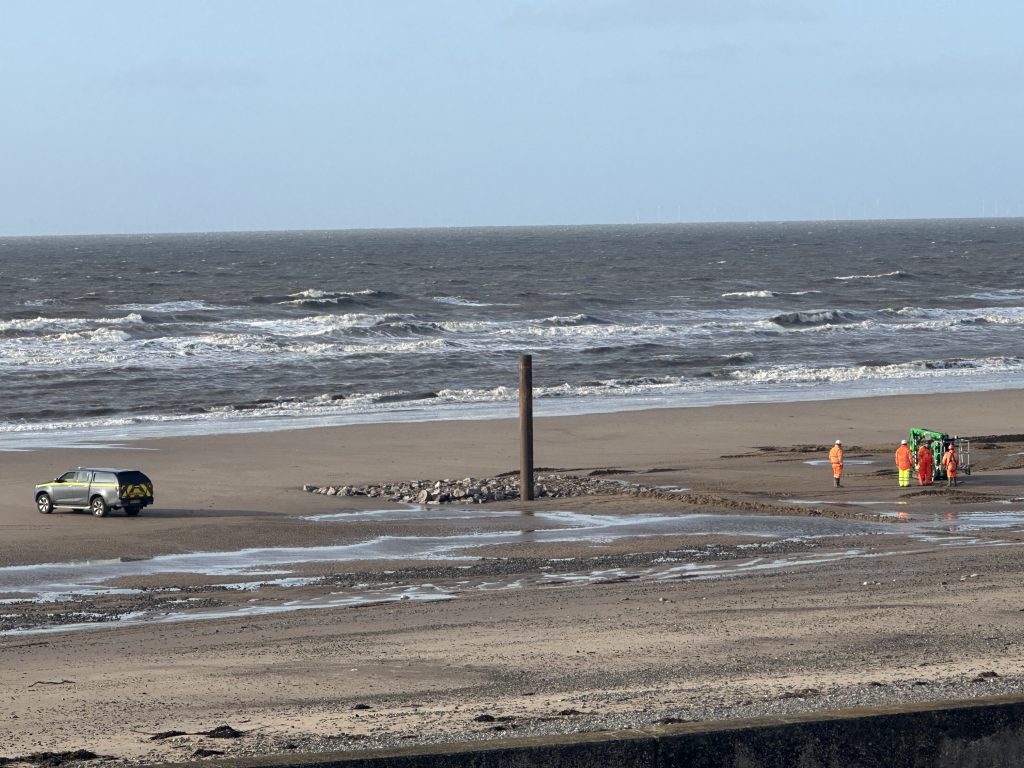

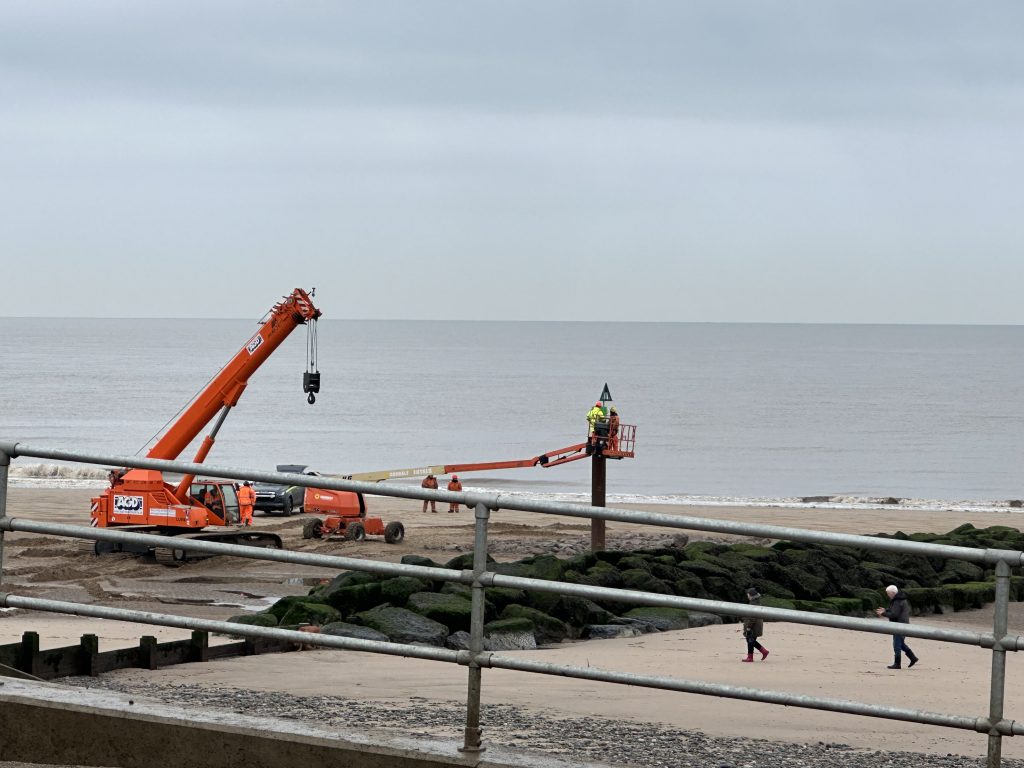
In this short video you’ll see the first of the posts being delivered and installed at Cleveleys –

Supporting the Community
Balfour Beatty is a huge organisation and at each project they aim to be helpful to the people that they’re working among. They’re also members of the Considerate Constructors Scheme (CCS) – which aims to support and drive positive change in the construction industry. The aim of CCS is that sites improve their standards and lessen their overall impact on the communities around them.
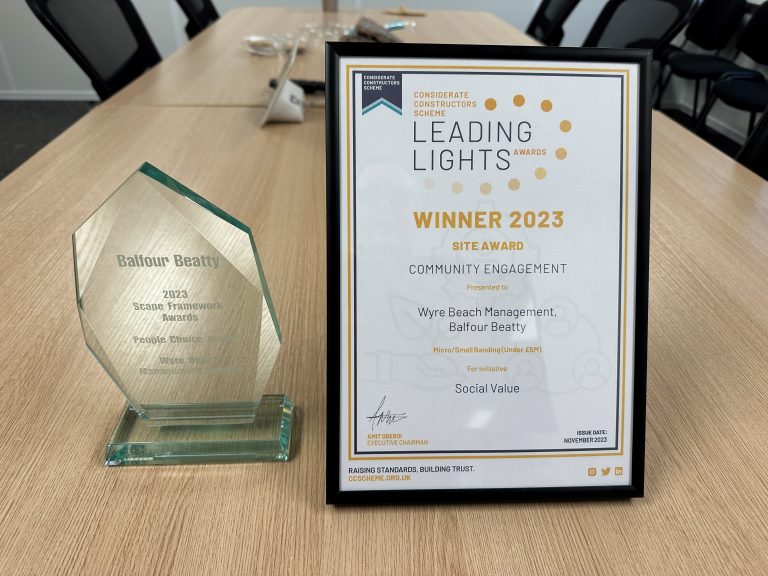
Balfour Beatty are delighted to receive a 2023 CCS Leading Lights Award for the Wyre Beach Management team for the initiative: “Social Value”. And at the same ceremony to be presented with the Scape Framework Peoples Choice Award.
Helping at the Beach
On several different occasions, members of the Balfour Beatty site team have helped out at community beach cleans organised by Rossall Beach Residents & Community Group. Other members of staff have travelled from the regional headquarters at Warrington.


Helping in Jubilee Gardens
Obviously the site compound is disruptive to Jubilee Gardens as it takes up a considerable area of space. It didn’t stop Cleveleys Town Centre Group from holding a brilliant community project there – centring around the creation of a huge mural. The opportunity was taken to use the boards at site to paint a mural around the local Sea Swallow story.
Balfour Beatty were immensely helpful throughout the project. They covered the considerable cost of undercoating the boards and then sealing the finished work. Plus providing use of parking, toilets, and other facilities during the project. The result is a striking piece of work which improves the area no end.
Helping in Cleveleys
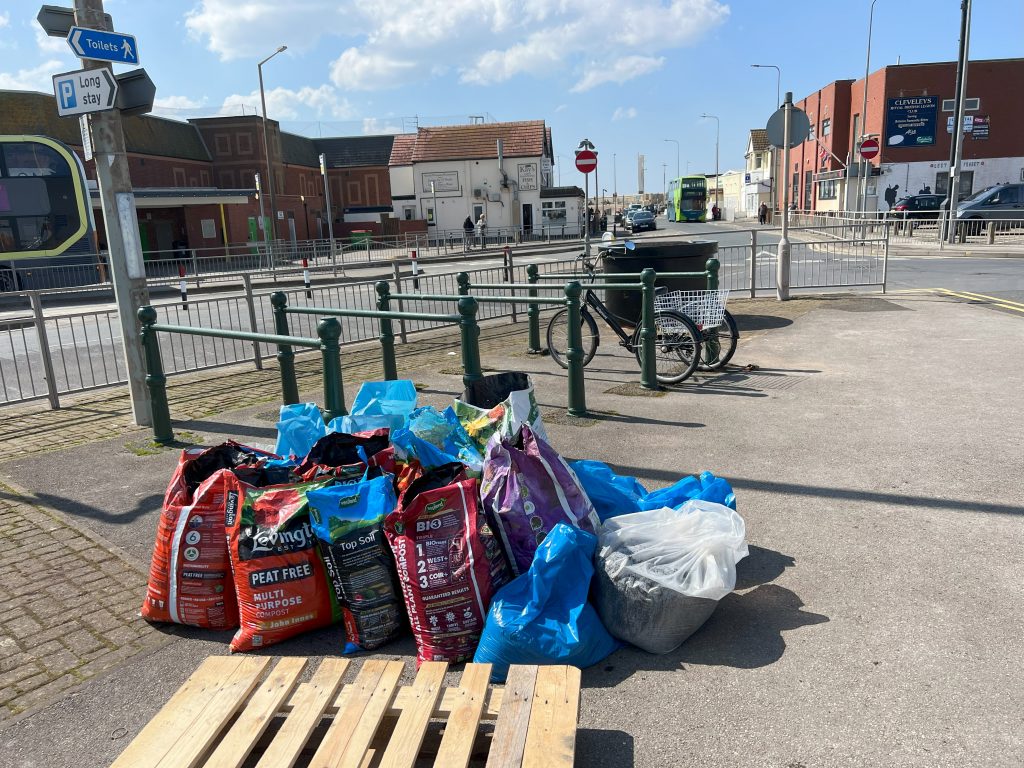
The Balfour Beatty lads came to the rescue in Spring 2023. The Care for Cleveleys team had spare top soil which they wanted to store, to fill another planter another day.
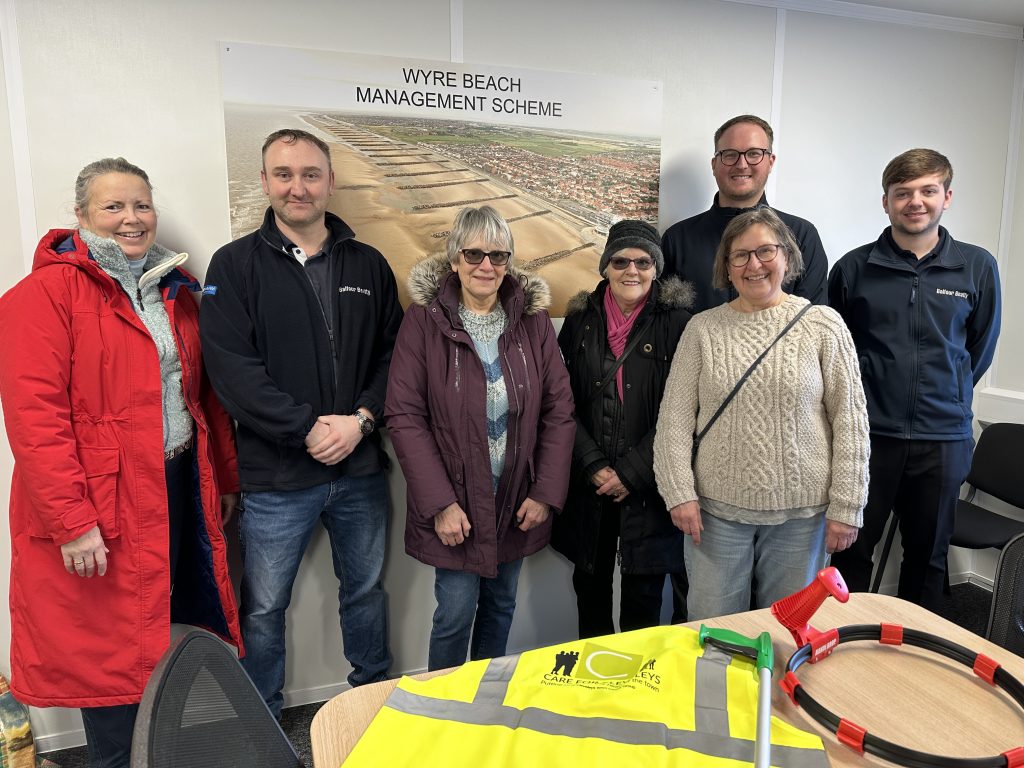
2024 began with a very welcome donation of hi-viz vests, litter pickers and hoops for the Town Centre Group. Completely out of equipment due to the number of people now helping, they can now set up a ‘Lone Litterpicking’ scheme. A similar ‘Lone Beach Cleaner’ scheme has operated very successfully at Rossall Beach for many years.
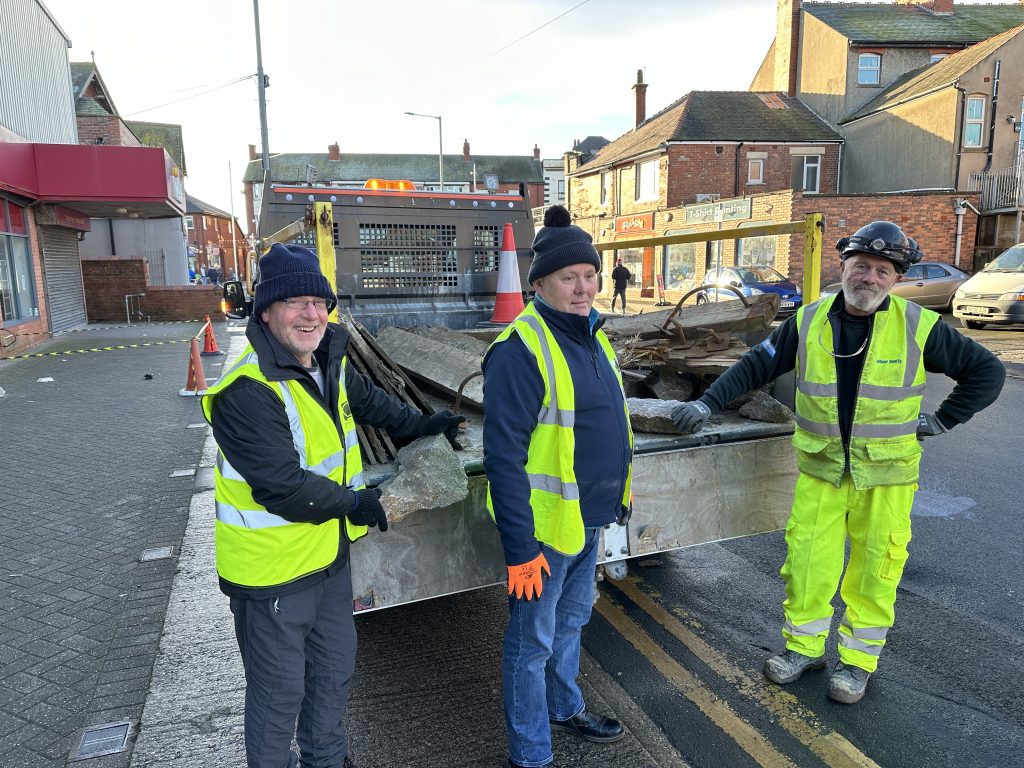
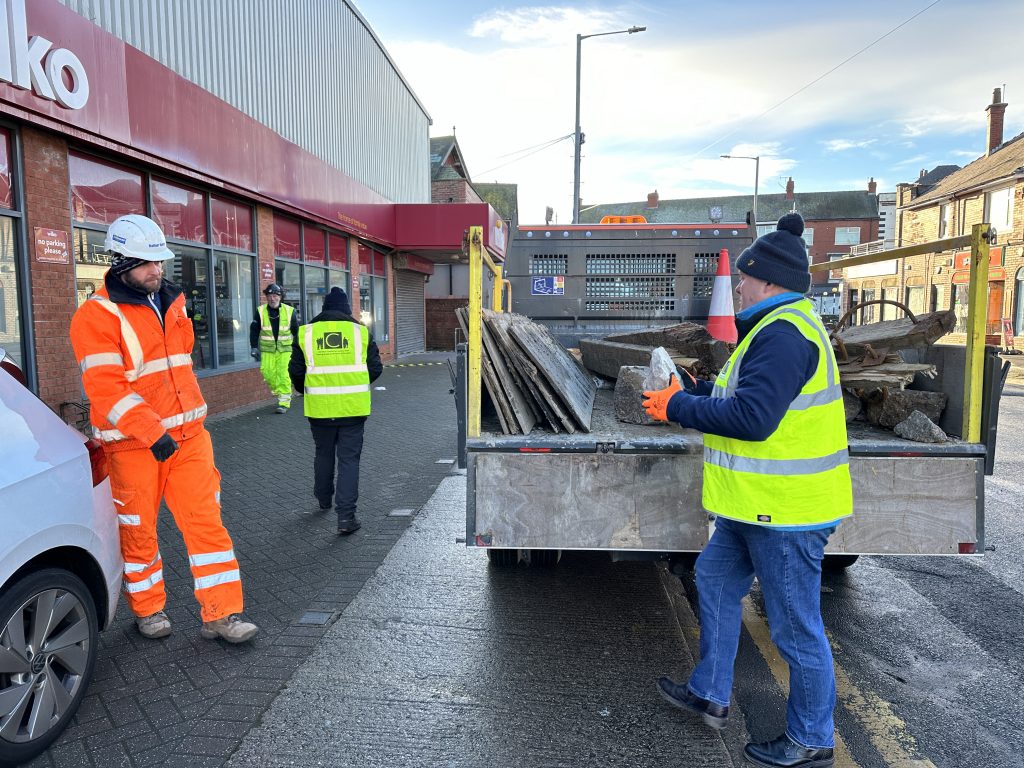
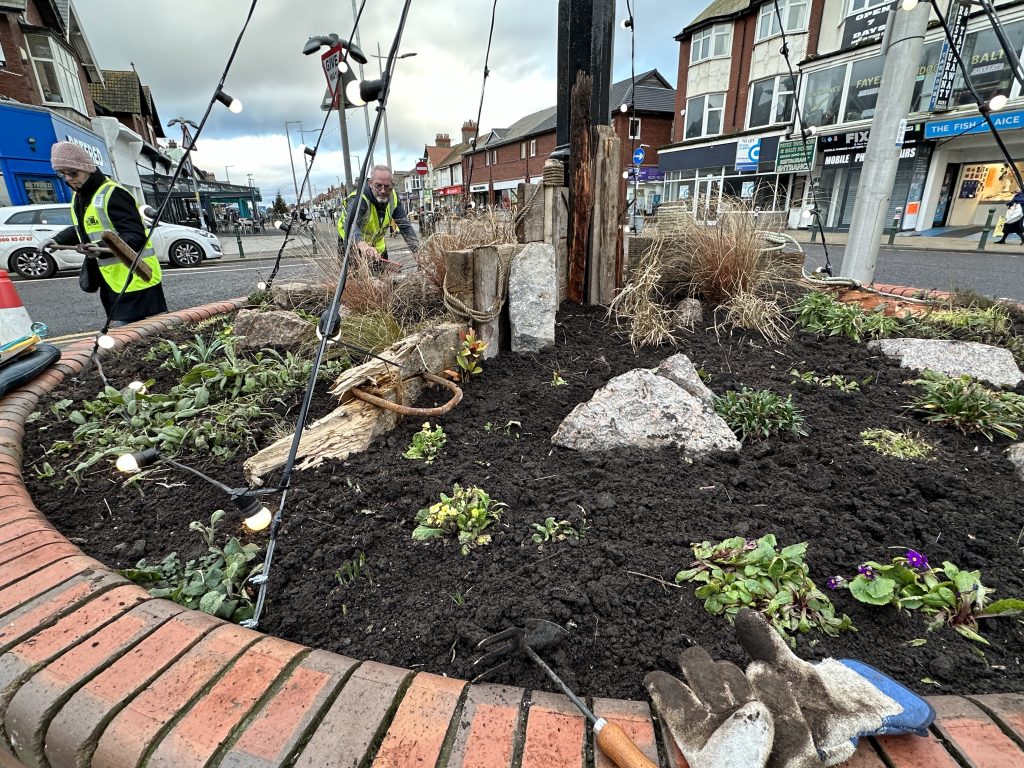
Equipment was quickly followed by a totally different donation – this time recycling materials from the beach. The Care for Cleveleys volunteers have redesigned the town centre clock garden in a seaside theme, using old groyne boards and fragments of broken groyne rock. Not only does this re-use waste materials it celebrates the beach in the town, and the scheme currently underway at the beach.
Helping at Fleetwood
Works are also underway at Fleetwood. The first improvement was surfacing of the Sea Cadets car park. Never previously tarmacked, it was a sea of pot holes. The blacktop was laid when the road was surfaced in the new compound. Local users will benefit from this improvement long after the works are complete.
While you’re here…
Go to the homepage of the Visit Fylde Coast website for the latest updates.
Love the Fylde Coast? Sign up for your email newsletter. Packed full of interesting things it arrives in your inbox all 52 weeks of the year.
👉Join us on Facebook at our Visit Fylde Coast Facebook Group. Plus hundreds of videos to watch on our YouTube channel – from all over the Fylde Coast!
📣JOIN our new VFC WhatsApp Channel for what’s happening, interesting local information, history, communities, events and much more.
Booking a stay? Pick a safe, clean and legal place to stay, at the very best price. Book using the Visit Fylde Coast Accommodation guide.


