

What is Coast Watchers? It’s a collaborative project to collect, record and share interesting information about the Wyre coastline, and how it changes. The aim is to capture, collate and display different forms of data in an easy to understand form.
We all like to know about the weather (good and bad!). The storms, the tides, the moon and levels of sand on the beach. We’re interested in the animals which come and go and the rubbish that gets left behind. The coast is important for our mental and physical wellbeing. The marine environment is interconnected to our lives in all kinds of ways.
It’s a partnership between us here at Visit Fylde Coast and Wyre Council’s engineering team, in conjunction with Lancaster University.
All about Coast Watchers –
COAST WATCHERS NEEDS YOU!
Love walking at the seafront? Like taking photos? Are you bored to tears and looking for something to do?
Then you’ll be interested in joining this new group. Find out how the beach works, contribute to something useful and make some new friends into the bargain!
Lots of coastal data is collected by various different organisations. It’s used for a variety of reasons, like predicting bad weather and to work out when and how our sea defences will be maintained. But it’s not easy to find or understand.
Living by the coast makes us more obsessed with the weather than normal – it has such a big effect on our daily lives. Coast Watchers is aiming to translate all this scientific information into something that Joe Public can understand.
Learn, Contribute & Chat!
Two crucial things are missing so far. Local knowledge and photos. Lots and lots of them. Which is where you come in!
Various activities were planned which can’t happen because of Covid. Instead the new group is going online. You can share what you’re doing, project ideas and ask questions of the team. Then you’ll go out whenever and wherever you want to on your usual walks, uploading your photos online afterwards.
The overall aim is to create a visual daily record of the Fylde Coast. Imagine being able to see daily sunsets and storms, pollution incidents and amazing sights like pods of dolphins! Captured and saved all in one place for anyone to access anywhere.
To join in just send an email for details of the first online session. Email jane@therabbitpatch.co.uk
JOIN COAST WATCHERS – RECORD THE COASTLINE
You don’t have to be part of the group. Anyone can join in with Coast Watchers once, twice or regularly. Help to create a visual record of our coast line through the days, weeks and months.
Together, you, me and all the Coast Watchers are creating a photographic record of the Fylde Coast. A timeline in date order, of views of the beach.
We want to see how the weather changes and how it affects the shore. How the waves move the beach about. When is it stormy and how bad are the storms?

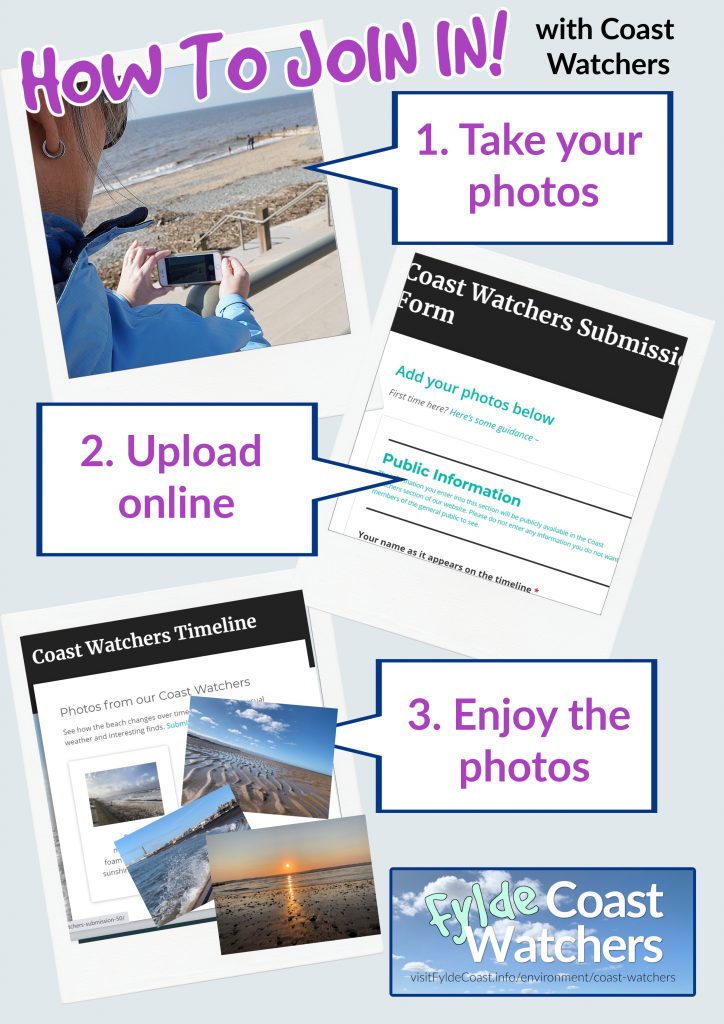
- Upload seafront photos you take while you’re out and about. There’s no special requirements – anything in the general direction of the beach and sea. Submit yours here.
Has a particular beach built up a lot more than usual? Maybe you’ve been out during an exceptionally high tide. Perhaps you’ve seen a deluge of a particular kind of litter? You must have seen an amazing sunset – or a fabulous view!
- Please upload anything unusual that you see on any of the Fylde Coast beaches. Submit yours here.
There’s no such thing as a ‘wrong’ photo, just submit what you take. If something catches your attention we want to see it too!
A photo says a thousand words
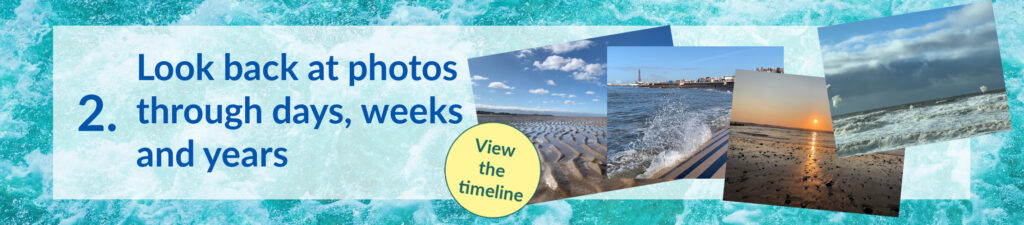
Take a look at the photo timeline. See how the weather, the views and the things that we do at the coast changes over the year.
Hopefully we’ll uncover some interesting things too. For example, people might separately post photos of storms, shifting beaches and a flood of plastic seaside buckets over the course of a few days.
Individually these things might not seem significant, but a sequence of photos together tells a bigger story. It will also show us how far the sea carries things. Take a look at the timeline here.
Lots More Weather Information
We don’t miss a lot here at Visit Fylde Coast. But even we were surprised to find out just how many measuring devices are operating around our shoreline.
Equipment records weather conditions at sea, there are tide gauges and wave buoys. We’re collecting links to all of this fascinating weather stuff here. Have a look at it yourself.
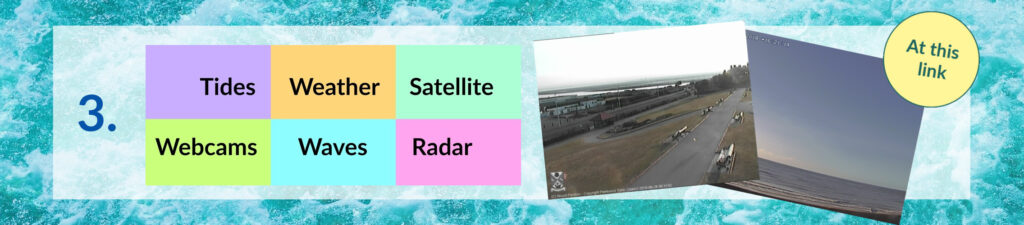
These measuring devices currently exist in isolation from each other. We’re looking at ways to bring everything together in a way that we can all understand.
Don’t forget you can also watch our own beach-cam. Other websites can help you to identify ships at sea, plane tracking and much more.
More about your local Coast
There’s all kinds of other useful and interesting information about the beach environment and the sea. Take a look around the other pages in the Coast Watchers category.
- Find out about Coast Watchers in Cleveleys
- Information about Coast Watchers in Fleetwood
- Coast Watchers Knott End and Over Wyre is on the Visit Poulton website
WHY IS WATCHING THE COAST IMPORTANT?
Here on the Fylde Coast we’re lucky to have mostly man-made sea defences. Most of them new or well maintained and a huge amount of money has been spent on protecting the area. Other areas of the UK coast aren’t so lucky.
For example, cliff top homes in Hemsby, on the Norfolk coast, were at the point of collapsing into the sea. High winds and waves eroded the sand dunes in March 2018. Seeing this brings home just how vulnerable we could be as a coastal community, and why we should always respect the sea.
What do you want to know?
The coast is a fascinating place. If you like this kind of thing it probably fills you with awe and wonder. And a lot of questions!
For example, we’re often asked about the shingle island forming off Fleetwood and why it’s getting so big?’ It’s always been there but why is it now out of the water at high tide, when it wasn’t before?
Those of us who love the coast know that the beach moves about every day. One day there might be a sandbank, the next day a carved out channel. These are ephemeral changes but it takes a longer period of time to measure an actual trend.

Between lots of us (and our photos) we might be able to work out the answer to bigger questions. For example ‘does an 8m tide still reach the same point on the beach now that it did 5 years ago’. Or maybe, what is an 8m tide?
We want to know what you want to know. We want to be able to answer your questions and investigate the reasons behind the things you want to know. Email your question to jane@theRabbitPatch.co.uk and we’ll endeavour to find out!
COAST WATCHERS: THE CURRENT PROJECT
This project has been underway for several years now and it’s had a few unusual twists and turns. Find out more about earlier incarnations further down the page.
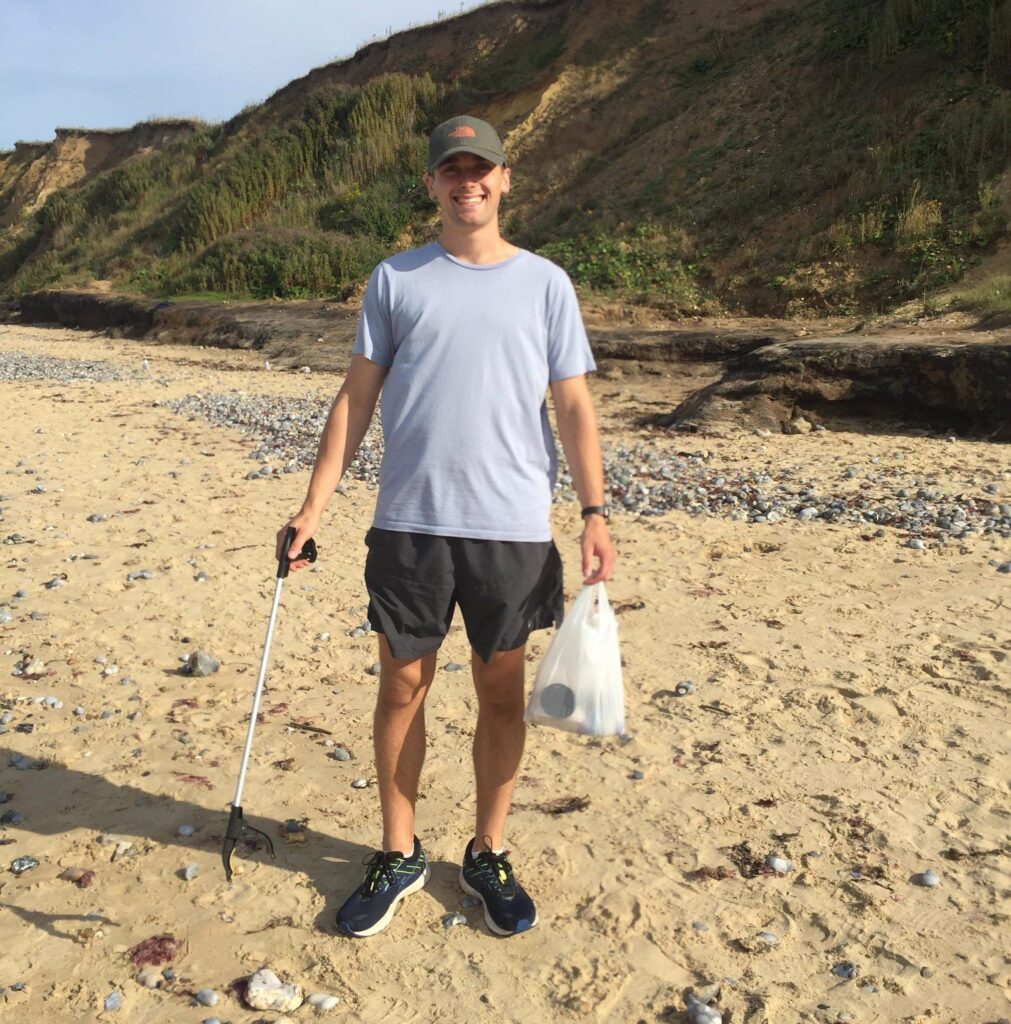
We’re now working with Joseph Earl (above), a PhD student at Lancaster University. In early 2020, with plans to progress in one direction, we found ourselves in the middle of the coronavirus pandemic! It changed the project somewhat – to follow a slightly different direction of research for now.
How Coronavirus Changes our Relationship with the Coast
The world has been propelled into an unprecedented time of change. The coronavirus crisis will have repercussions on our lives for many years to come. It’s one of those defining points in history.
We’re looking at how lockdown and social distancing has affected people’s relationship with the coast.
- How has coronavirus changed the way that people use the coast?
- Can we understand the importance people attach to the coast.
- What effect does the coast have on mental and physical wellbeing?
- Will lockdown affect how people view the coast in the long term?

The first part of this research was an online survey. Joseph is now analysing the results.
How the research pans out over the following two years will very much depend on how coronavirus pans out. It’s a unique opportunity to review how this kind of event shapes habits and how people do things.
Want to get involved?
Rossall Beach Residents & Community Group is the community partner in the project. Come along to beach clean-ups and meetings (when they take place!) for a chat and an update. If you’re involved with the Group you’ll be one of the first to find out what’s happening.
If you’re interested in the weather, photography, computers, beaches, sea defences, science and engineering then get in touch and join in.
It’s important that everyone can understand Coast Watchers and take part. You don’t have to be a rocket scientist – just interested. If there’s anything that you don’t understand or find too complicated please let us know!
I wonder what we’ll come up with next? Stick with us and be part of it.
HOW COAST WATCHERS BEGAN
Coast Watchers began back in the summer of 2017 with Michael Lusty, a Masters student at Lancaster University. He looked at ways of extracting detailed (and useful) data from photos taken by the general public.
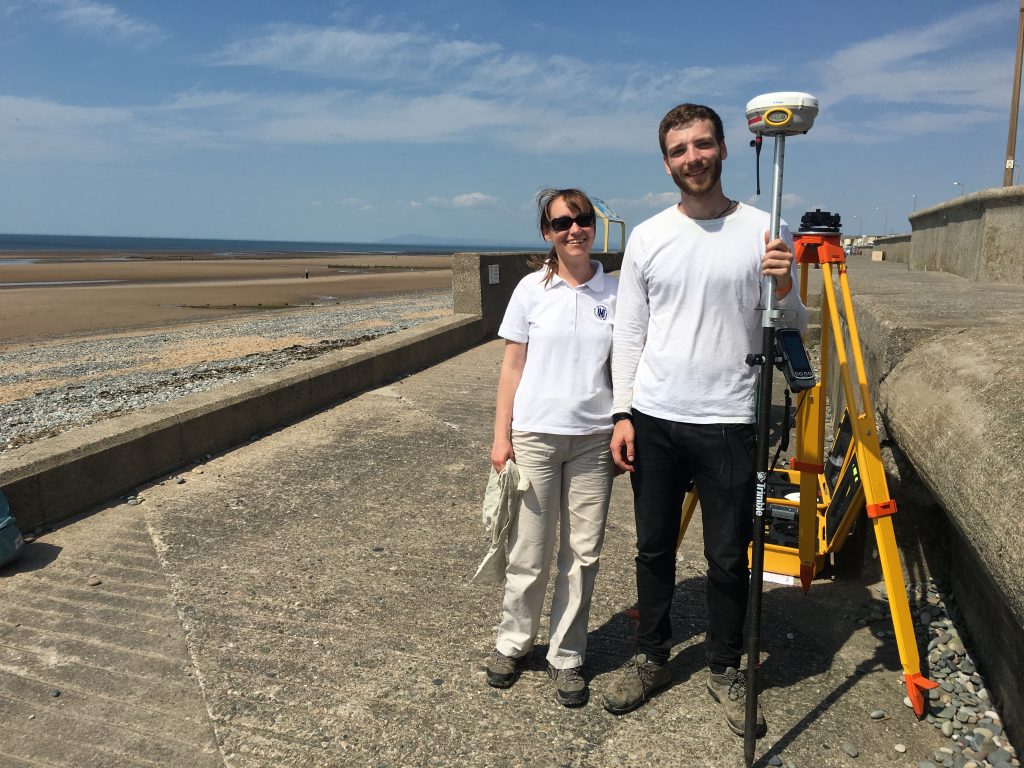
One of the ways is with ‘structure from motion’. That’s where you take lots of photos and the clever whizzy software makes them into a 3D view. The beauty of the 3D view is that it enables us to evaluate the landscape and how it changes over time. Including:
- assessing topography (elevation at all points across a plane)
- comparing volumetric differences – so you’d actually be able to identify the amount of sediment that is being shifted rather than just identifying that there is sediment shift. You can’t do this from 2D images alone – that would just be estimates
- evaluating areas that might be obscured in a single photo alone
Structure from Motion
A lot of background work was done before Rossall Beach Residents & Community Group took part in the first practical field work session in September 2018.
The group met at the Community Centre to learn about how Structure from Motion works. They practised by taking photos of pebbles on the table in front of them.
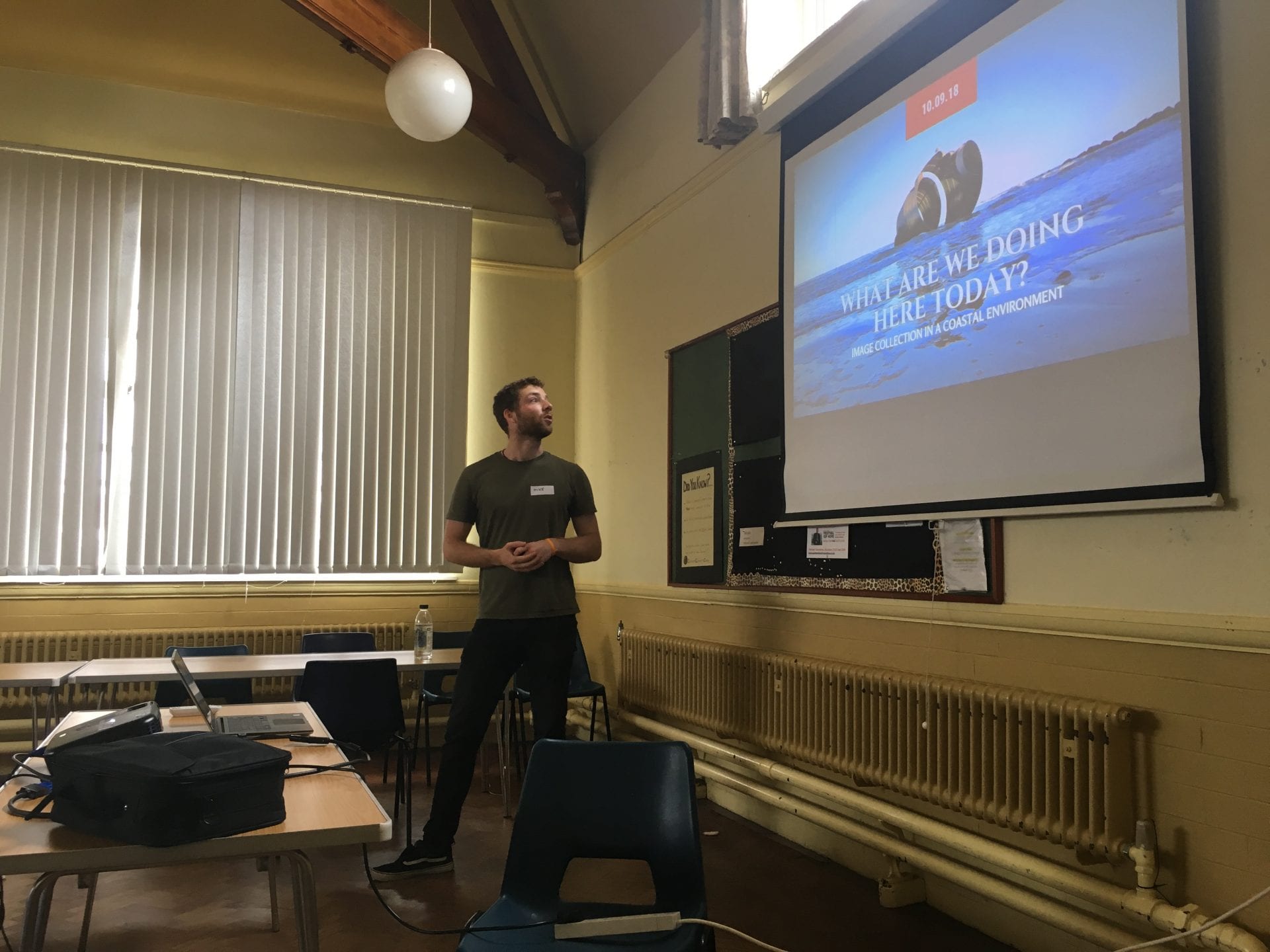
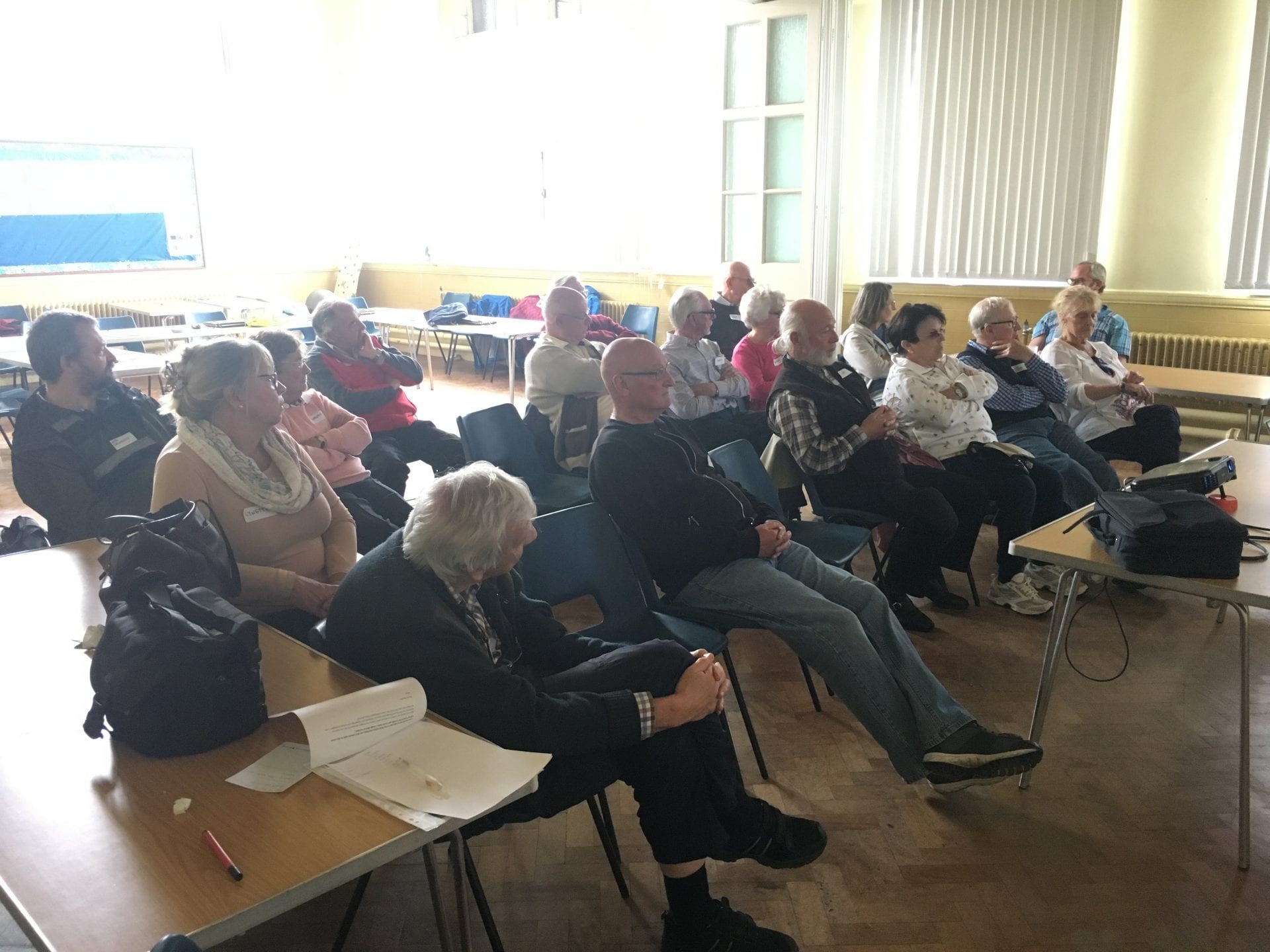
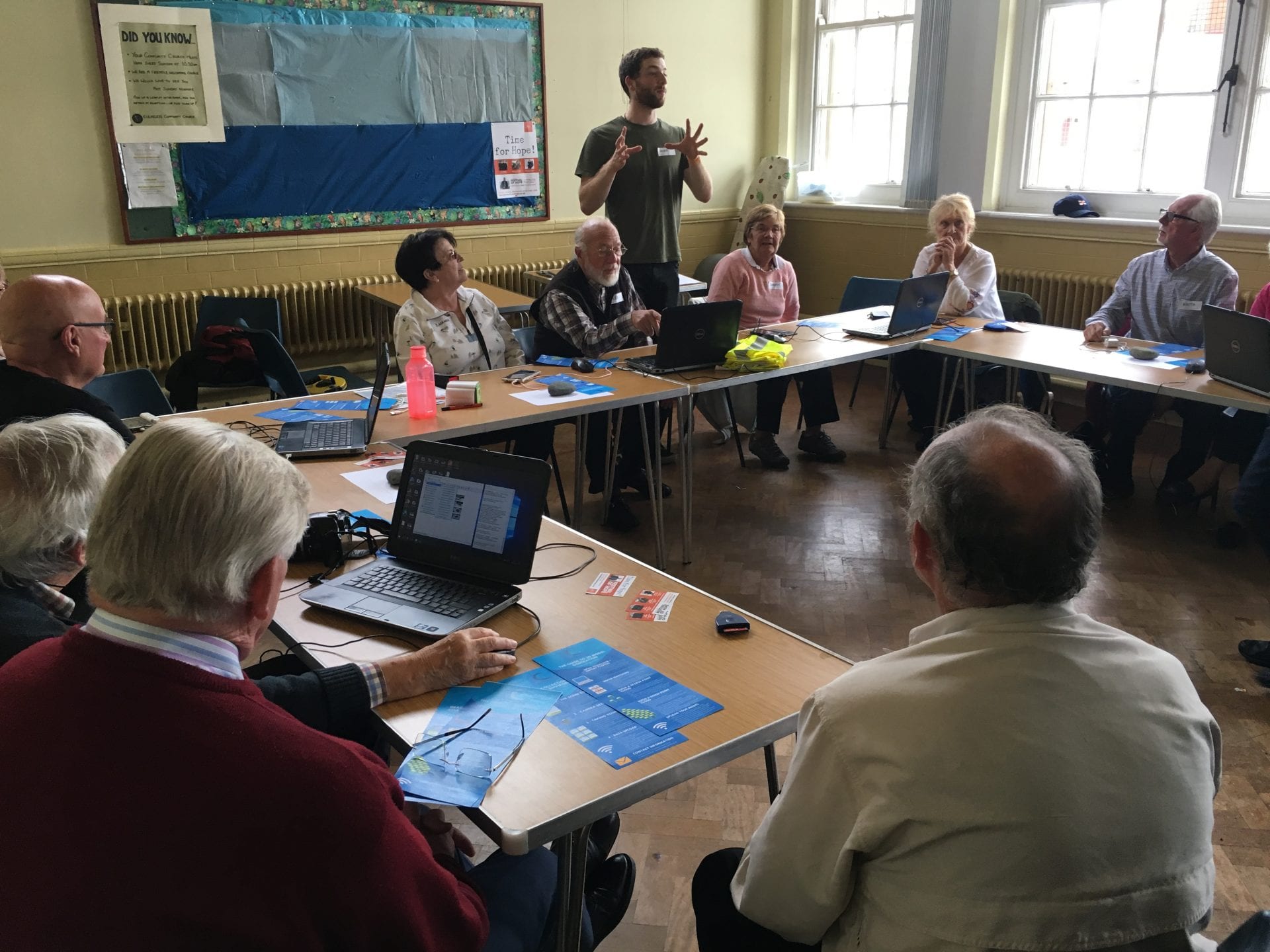
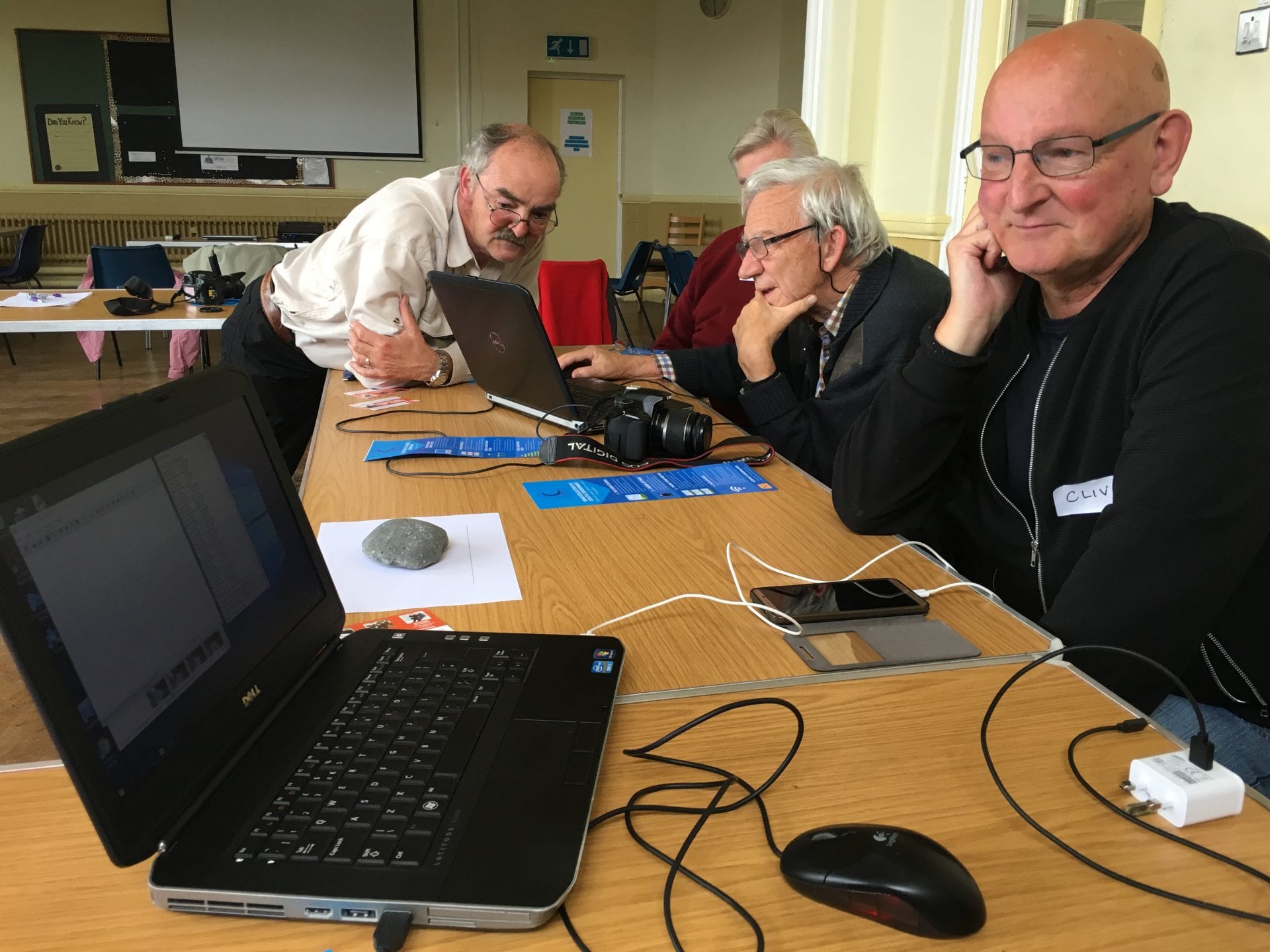
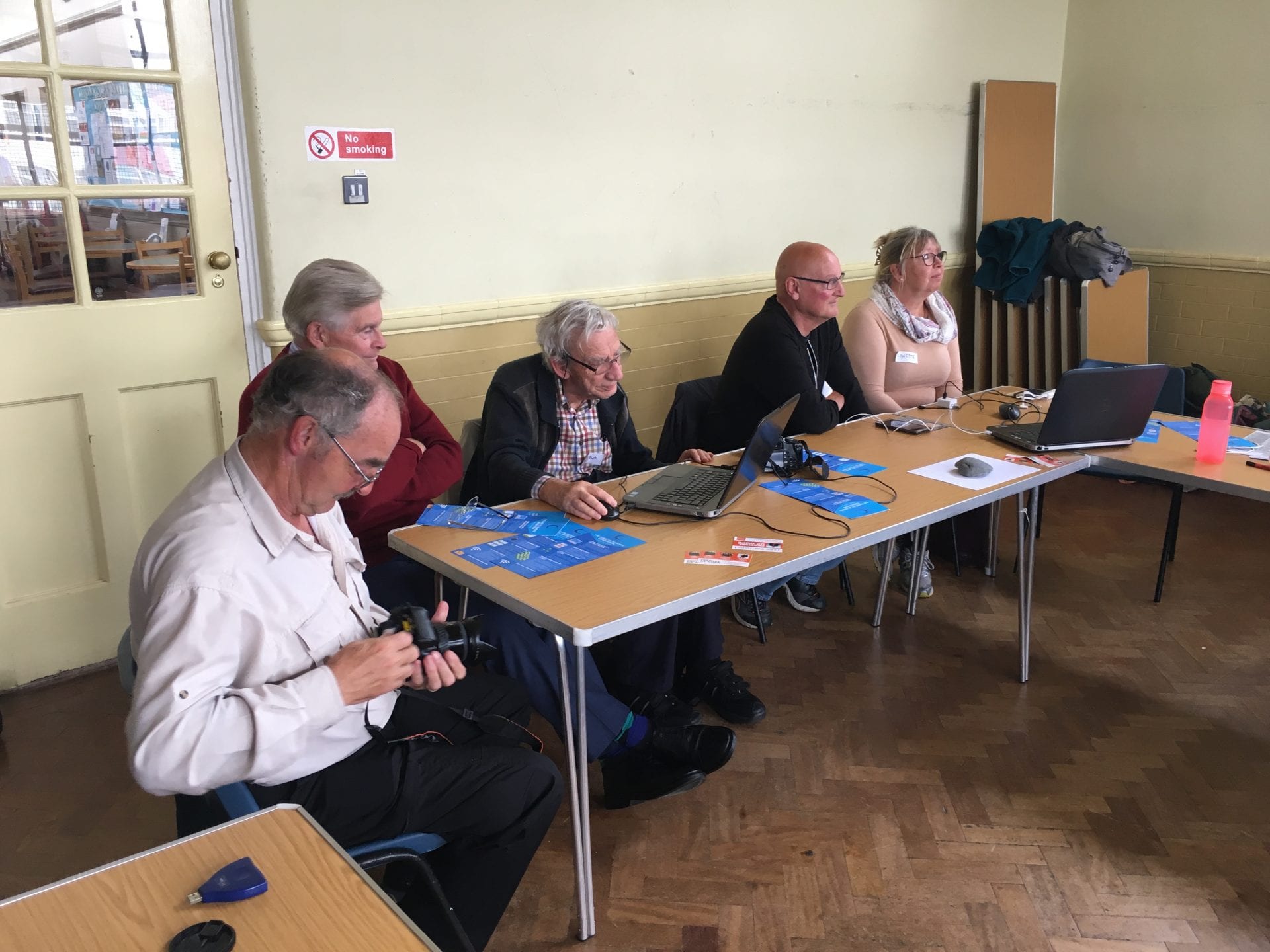
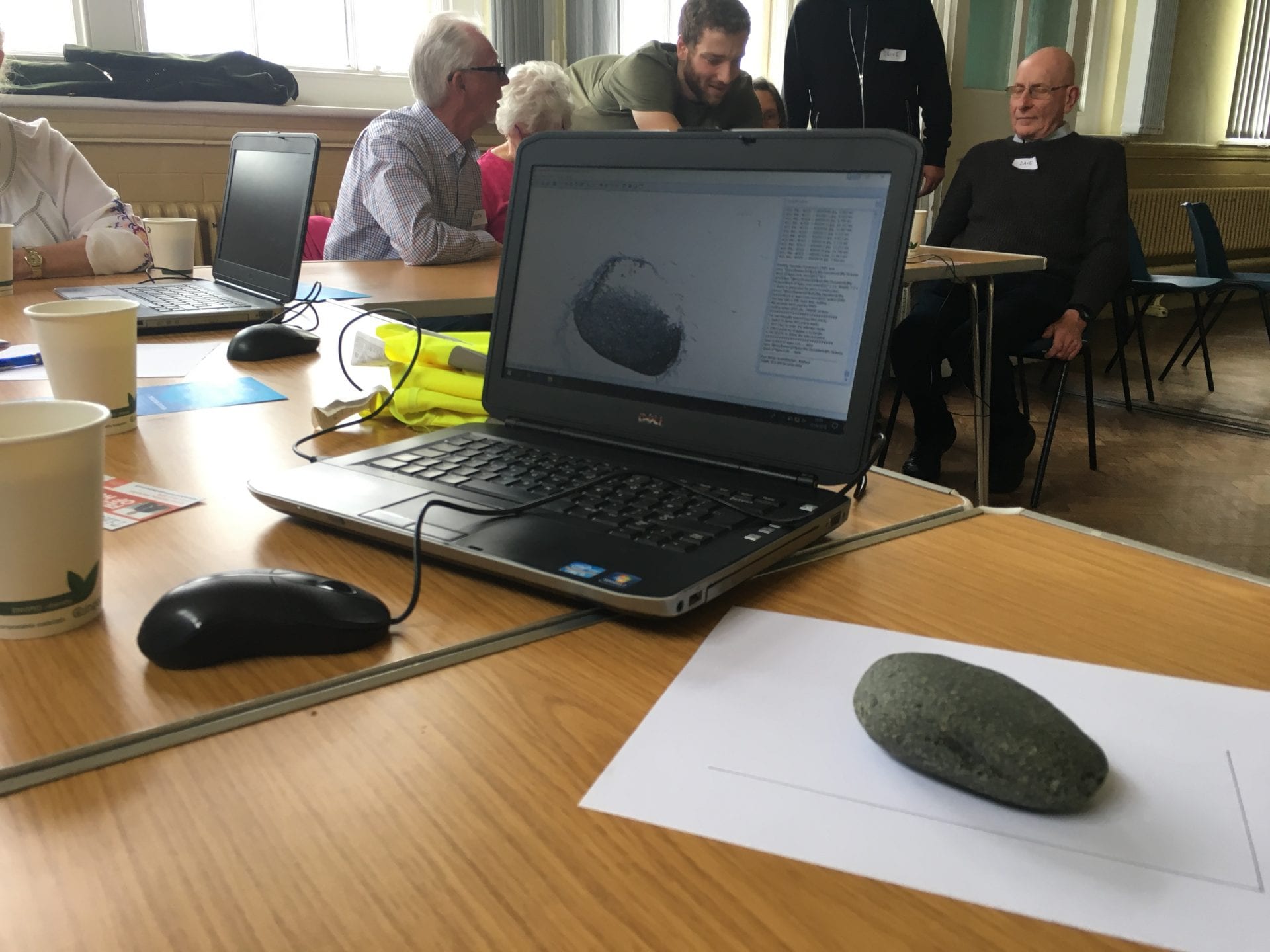
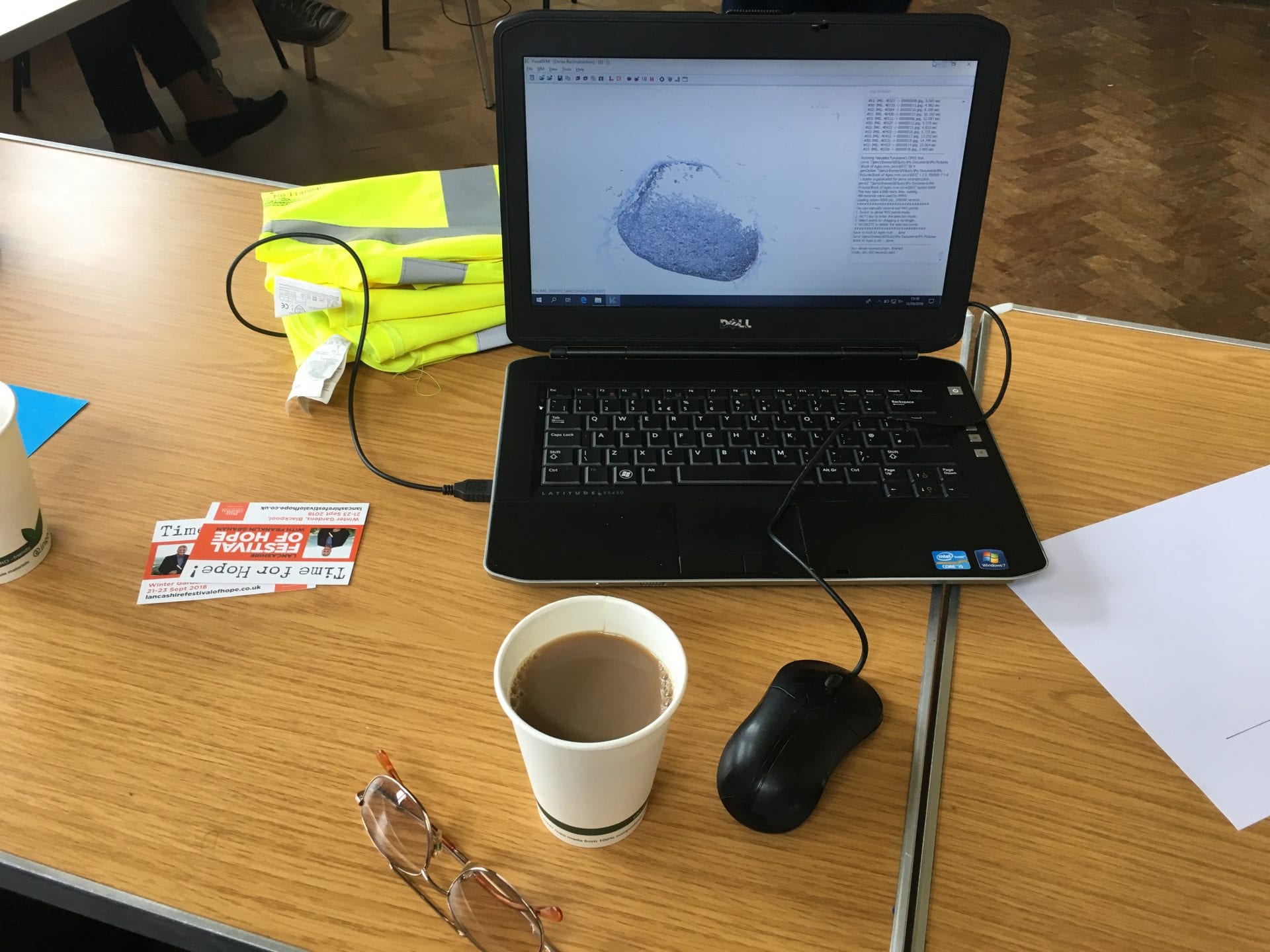
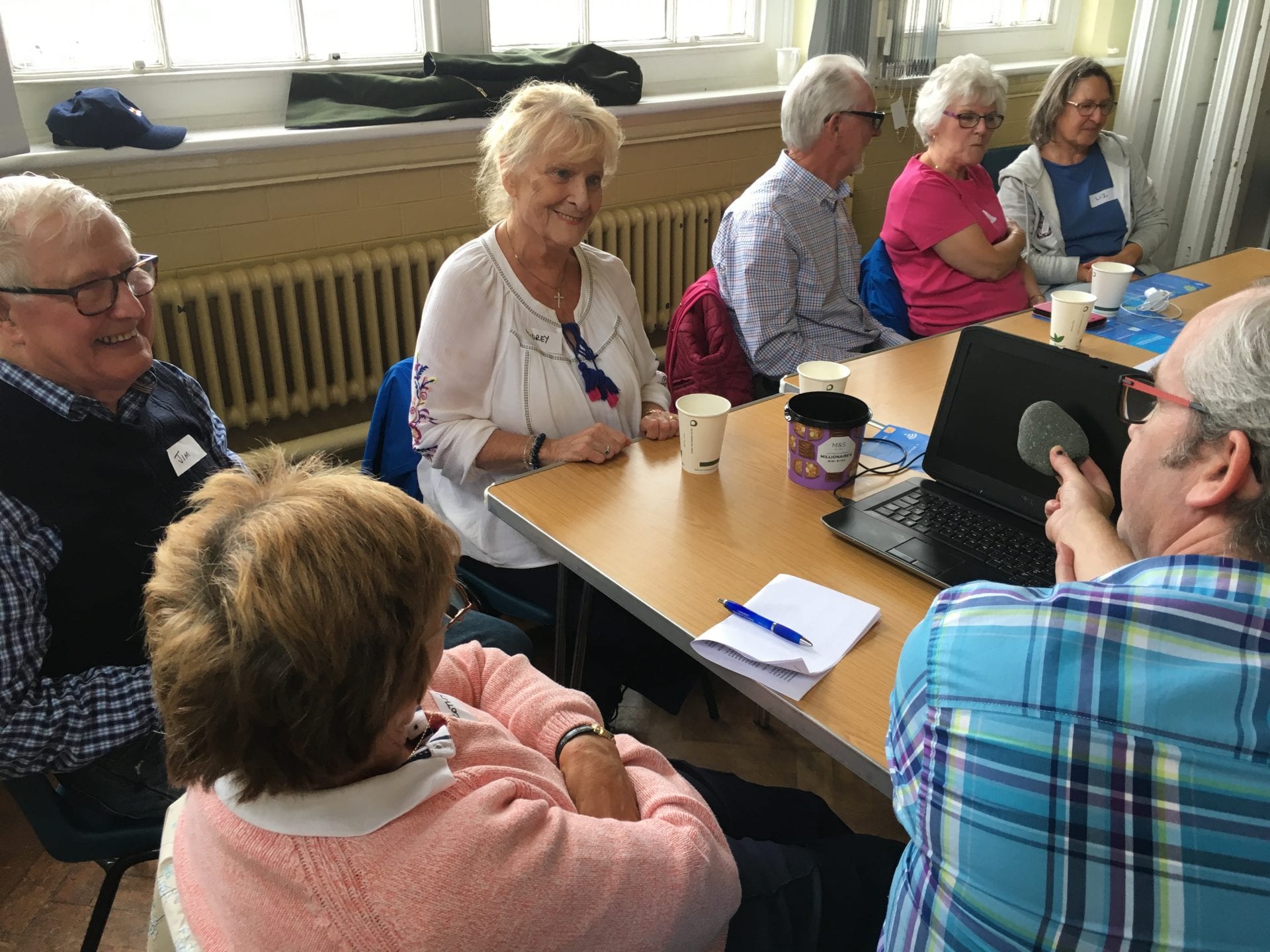
Then the group went out onto the beach at Cleveleys to take site photos.
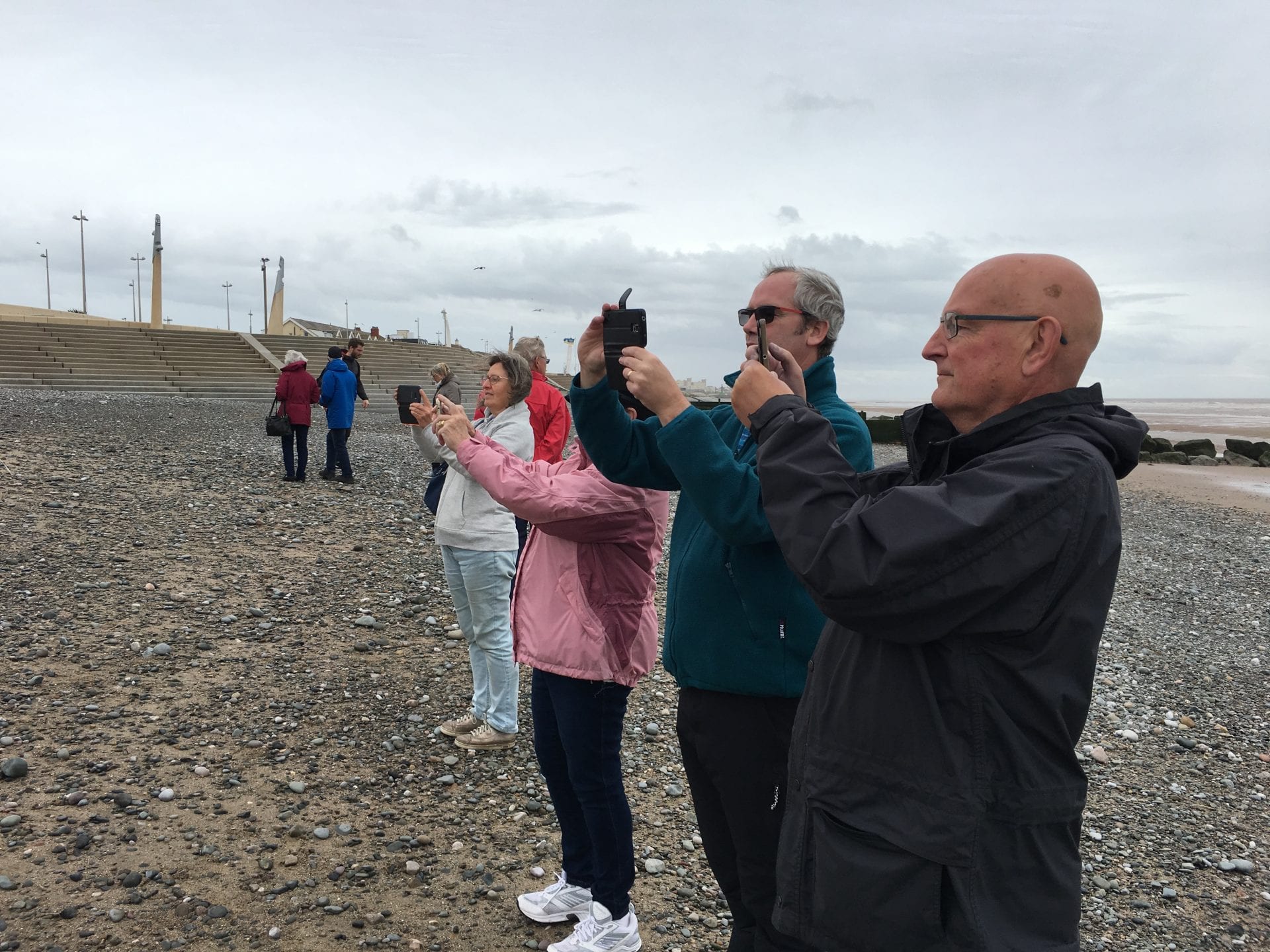
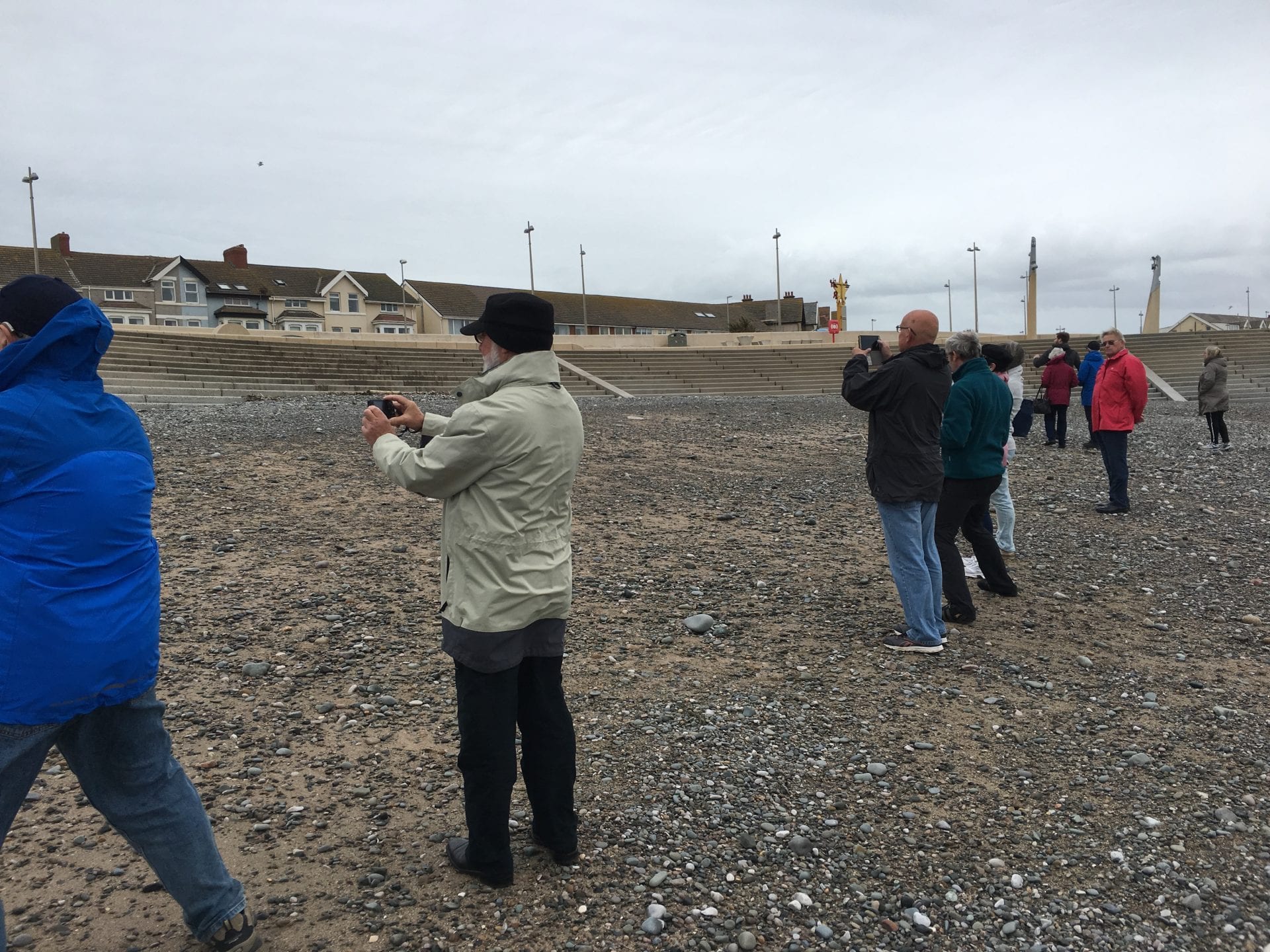
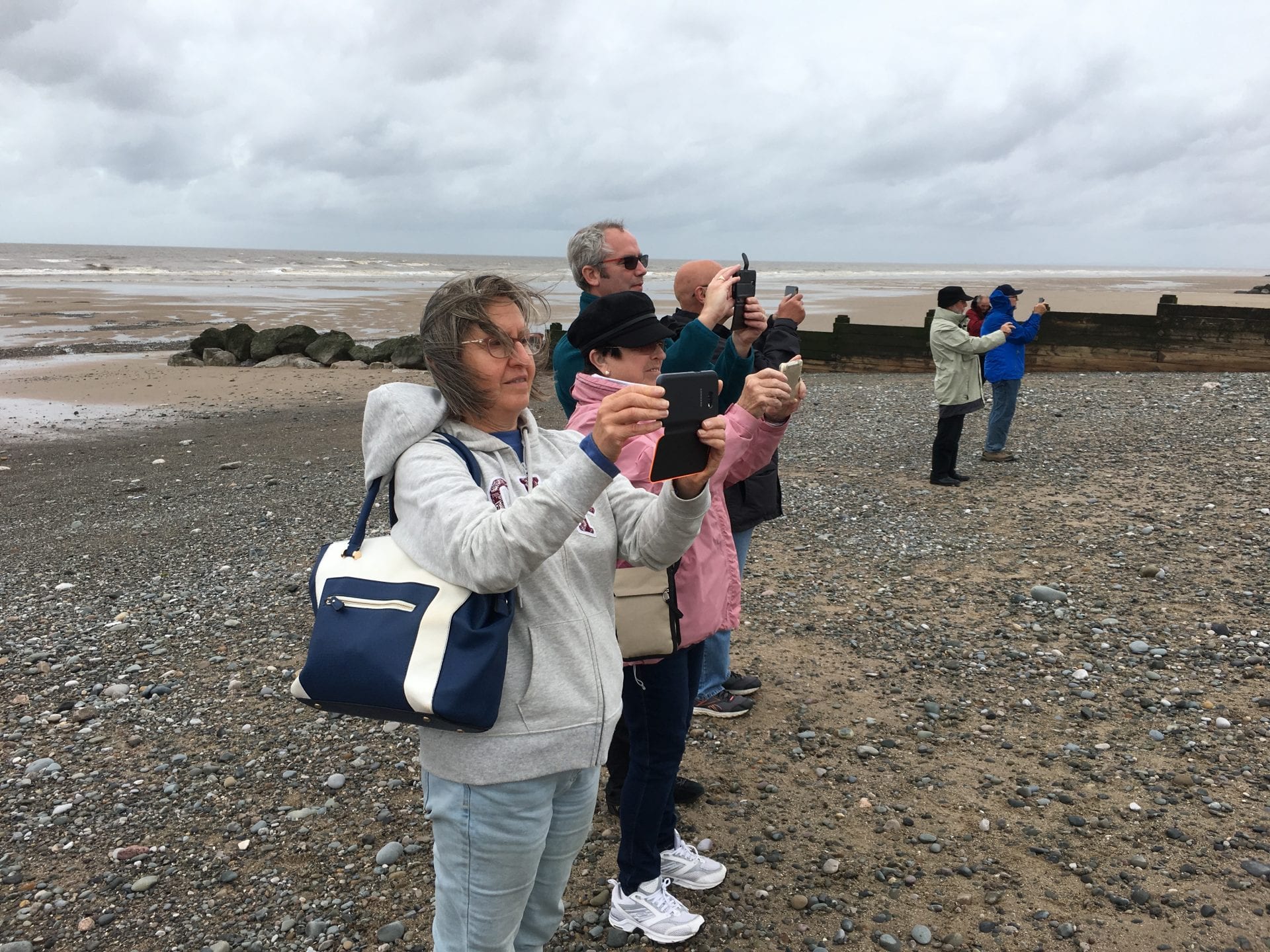
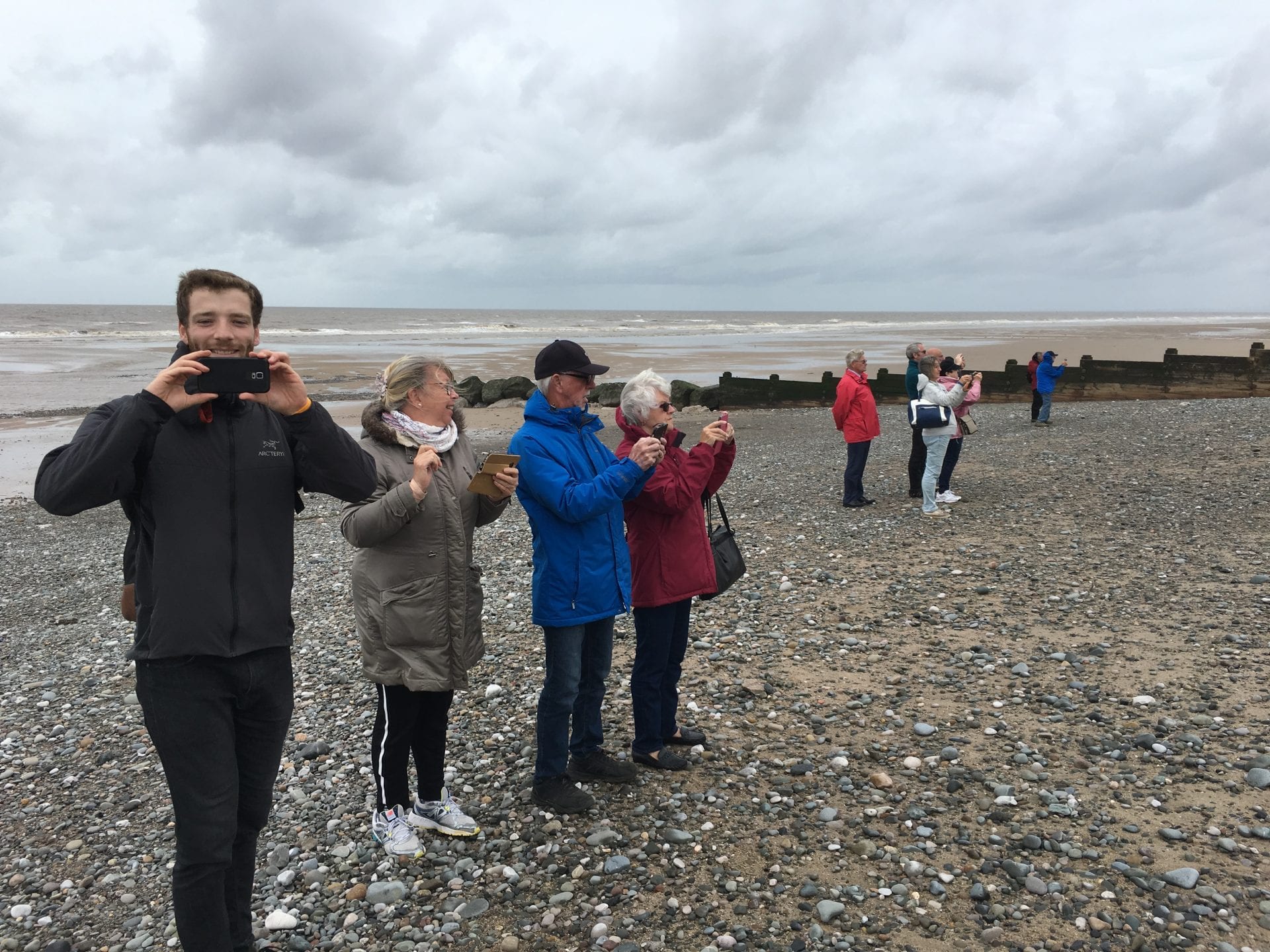

Photos were sent to Michael. He crunched them through the software package to create a 3D version from ordinary camera phone images. Watch this video clip to see how it works.

Transforming flat photos into a 3D image –
The video shows you what the software does to go from lots of single photos to the 3D view. In the clip you can see:
- The images being uploaded into the software package
- Lots of dots appearing as the software creates a ‘sparse cloud’.
- The dots blend into each other in a ‘dense cloud’. You can see detail now and the sea wall. As the video zooms in you can see that it’s still made up of dots.
- The next step is to join all the dots and create a mesh or wire frame. That’s lots of polygons (can you see them?), all joined together to give three dimensional form.
- The final appearance of reality is to add textures and colours to create a lifelike image. (Which is what they do in animated films on TV).
It’s very clever. That simple photos that you take can be made into a sea wall with substance to it.
While you’re here…
Have a look at the homepage of the Visit Fylde Coast website for more of the latest updates.
Love the Fylde Coast? Sign up for your weekly email newsletter. Packed full of interesting things, it arrives in your inbox all 52 weeks of the year.
Join us on Facebook at our Visit Fylde Coast Facebook Group
Don’t forget to follow us on Twitter @visitFyldeCoast


